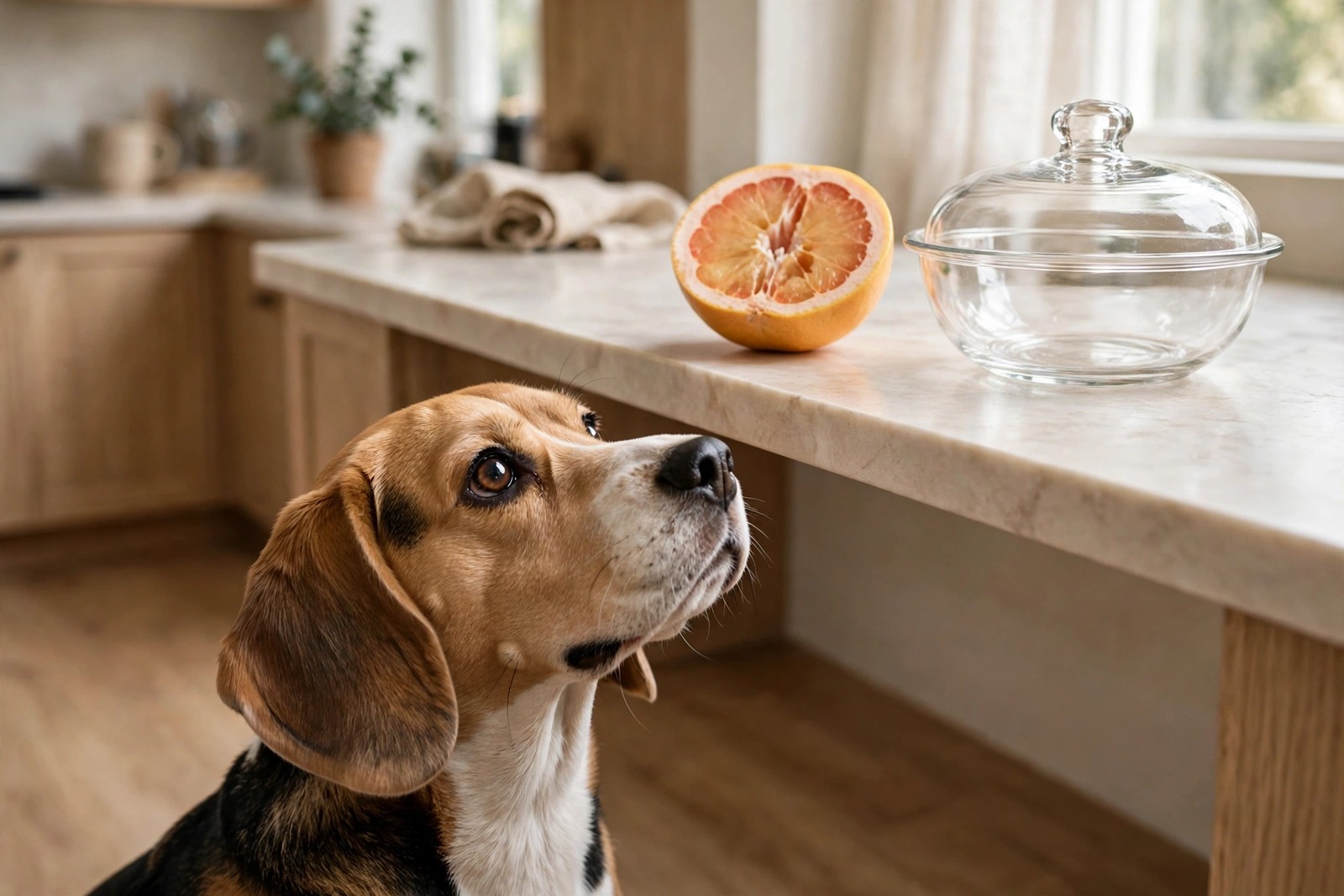
No — do not feed grapefruit to a dog deliberately. Grapefruit fails on every level a shared fruit can fail on. The flesh is sharply acidic, the flavour is bitter enough that most dogs pull away after one investigative lick, and the parts owners throw away, the peel, pith and seeds, are the parts that carry the most problematic oils and compounds. Unlike oranges, which have a narrow safe version, grapefruit has no preparation that turns it into a sensible dog treat.
Flesh, Peel and the Honest Scale of Risk
Keep the scale honest, because grapefruit is often confused with grapes, and the two are entirely different fruits with different risks. A dog that steals one segment of flesh will most likely face stomach upset: drooling, vomiting, diarrhoea or a quiet evening with no appetite. That is unpleasant, not usually an emergency. The peel is a different matter. Citrus peel contains concentrated oils, including compounds that irritate the gut and can affect the nervous system in larger amounts, and the tough peel itself is hard to digest. A dog that chews through a whole discarded peel, or eats several segments with pith attached, deserves a same-day call to your veterinarian, especially a small dog. Candied peel, grapefruit marmalade and grapefruit-flavoured drinks add sugar or concentrated flavouring on top of the same problem and are never a workaround.
Why Dogs End Up Eating It Anyway
Grapefruit usually reaches dogs through routines rather than decisions. It sits in fruit bowls at nose height for a counter-surfing dog, halves get left on breakfast tables, and peel goes into open compost caddies or onto garden beds as a supposed cat deterrent, where a dog finds it first. Half a grapefruit used in a diet plan and abandoned on a worktop is exactly the sort of forgotten food a dog raids. If your dog takes medication regularly, there is one more reason to keep grapefruit out of the picture and to mention any accidental eating to your veterinarian, because grapefruit is well known for interfering with how medicines are processed, and your vet is the right person to judge whether that matters for your dog's prescription.
Grapefruit trees and dropped fruit create the same exposure outdoors in warm gardens. Windfalls split open where they land, soften in the sun and invite exactly the peel-chewing that carries the real risk, so a dog with garden access under a fruiting tree needs the fallen fruit picked up as faithfully as the kitchen is tidied. Citrus essential oils, scented sprays and peel-based cleaning products concentrate what the peel carries, so they belong in closed cupboards alongside the fruit itself, well away from bowls, bedding and any surface a dog licks.
What to Do After a Grapefruit Raid
Remove what is left, including peel within reach, and note how much seems to be missing and whether the peel went too. Watch for vomiting, diarrhoea, drooling and unusual sleepiness over the rest of the day, and make sure water is available without forcing your dog to drink. Call your veterinarian the same day if the peel was eaten, if vomiting repeats, if a small dog ate several segments, or if your dog simply seems unlike itself. Do not offer rich food to settle the stomach; plain rest and observation serve better until your vet advises otherwise. Pin the ban where breakfast happens: KinsLe Care Teams carries the grapefruit rule on the household's feeding duties, so every helper meets it before a segment is ever offered.