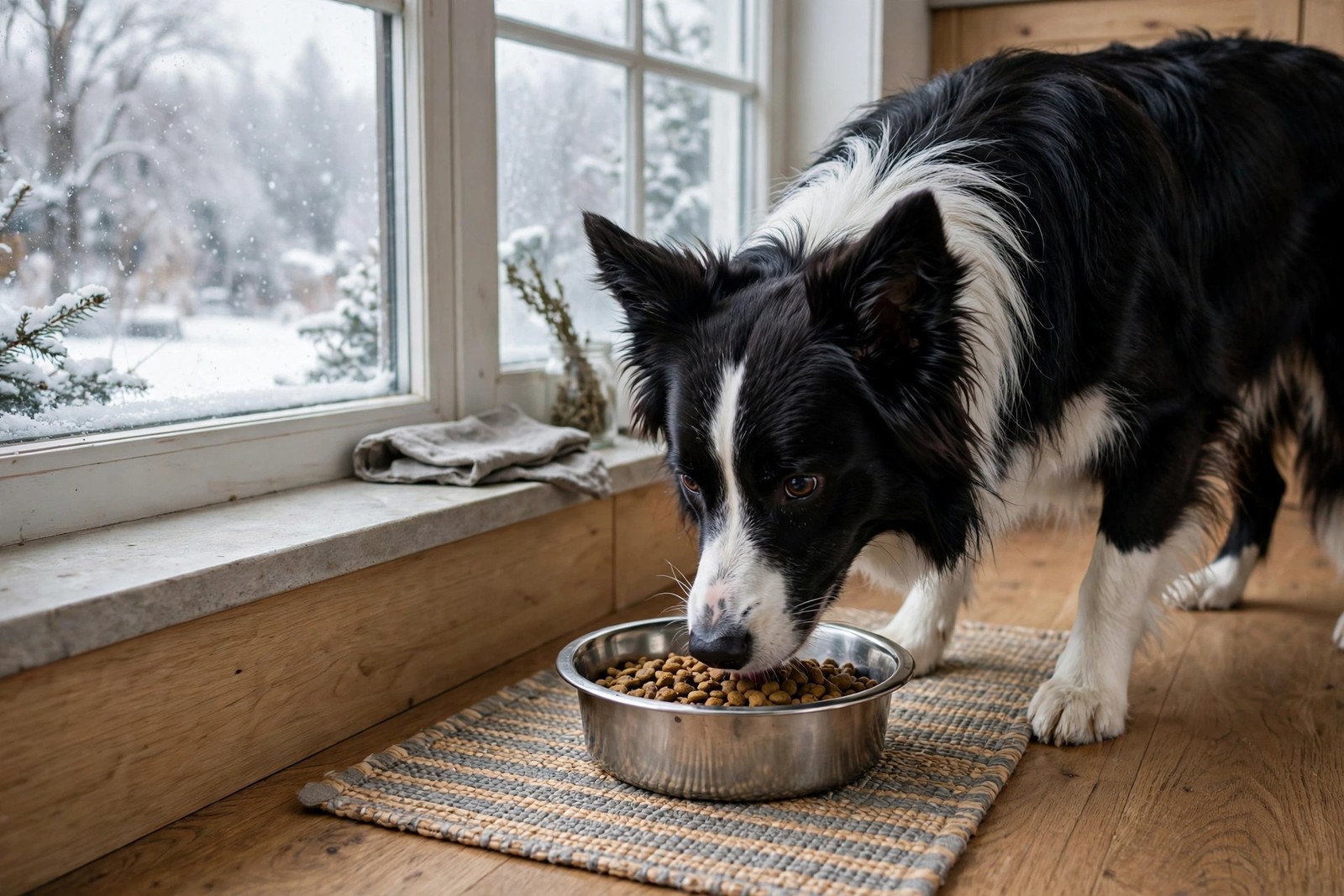
For the great majority of dogs, no: the bag stays the same in January and July. A complete food that suits your dog's life stage already covers their nutritional needs in every season. What genuinely shifts across the year is how much energy your dog spends — and that is a portion conversation, not a new-food conversation. Switching foods with the seasons usually creates digestive upset and picky eating without solving anything.
Why Indoor Dogs Barely Notice the Seasons
A dog who lives in a heated home, walks the same routes, and plays the same games burns roughly the same calories in winter as in summer. Shorter daylight may trim a walk here and there, but for a typical pet the difference is small. These dogs do best on boring consistency: same food, same measured portions, same feeding times, with body condition checked by hand every few weeks. You should be able to feel ribs under a thin fat covering without pressing hard, and see a waist from above and the side.
The Dogs Who Do Need More in Winter
Cold itself costs calories when a dog is actually in it. Dogs who may legitimately need larger winter portions include:
- Working and sporting dogs training or competing through the cold months, whose workload rises rather than falls
- Dogs who spend most of the day outdoors in genuinely cold climates, especially lean, short-coated, or very active ones
- Dogs whose exercise increases in winter because their owners hike, run, or play more in cool weather
For these dogs, increases are usually modest and gradual — a small step up, then a week or two of watching weight and condition before another step. Large jumps invite loose stools and unwanted weight gain.
Summer's Mirror Image
Summer changes run the other way. Many dogs voluntarily move less in heat, walk at dawn and dusk instead of midday, and burn less as a result; keeping winter portions through a lazy, hot August is a quiet route to extra pounds. Appetite itself may dip on very hot days, which is normal if your dog is otherwise bright, drinking, and eating normally by evening. What matters far more than food in summer is water: refresh bowls daily, carry water on walks, and treat a dog who stops drinking in heat as a same-day veterinary concern.
How to Make Any Adjustment
Change one variable at a time. Keep the same food and adjust the measured amount by a small step — roughly a tenth of the daily portion is a sensible increment — then reassess body condition after two weeks. If you truly must change foods, for a life-stage or veterinary reason rather than a seasonal one, mix increasing amounts of the new food into the old over five to seven days. Weigh your dog monthly if you can; a trend on the scale settles arguments that guessing at the bowl cannot. Puppies, seniors, pregnant dogs, and dogs with medical conditions sit outside this general picture, so ask your veterinarian before adjusting their portions seasonally.
The calendar, in other words, is the wrong tool — your dog's ribs, workload, and water bowl are the right ones. With KinsLe's Care Teams, you can set the current portion as an assigned feeding duty and have each completed meal timestamped, so a winter increase or summer trim is actually what every person in the household serves.