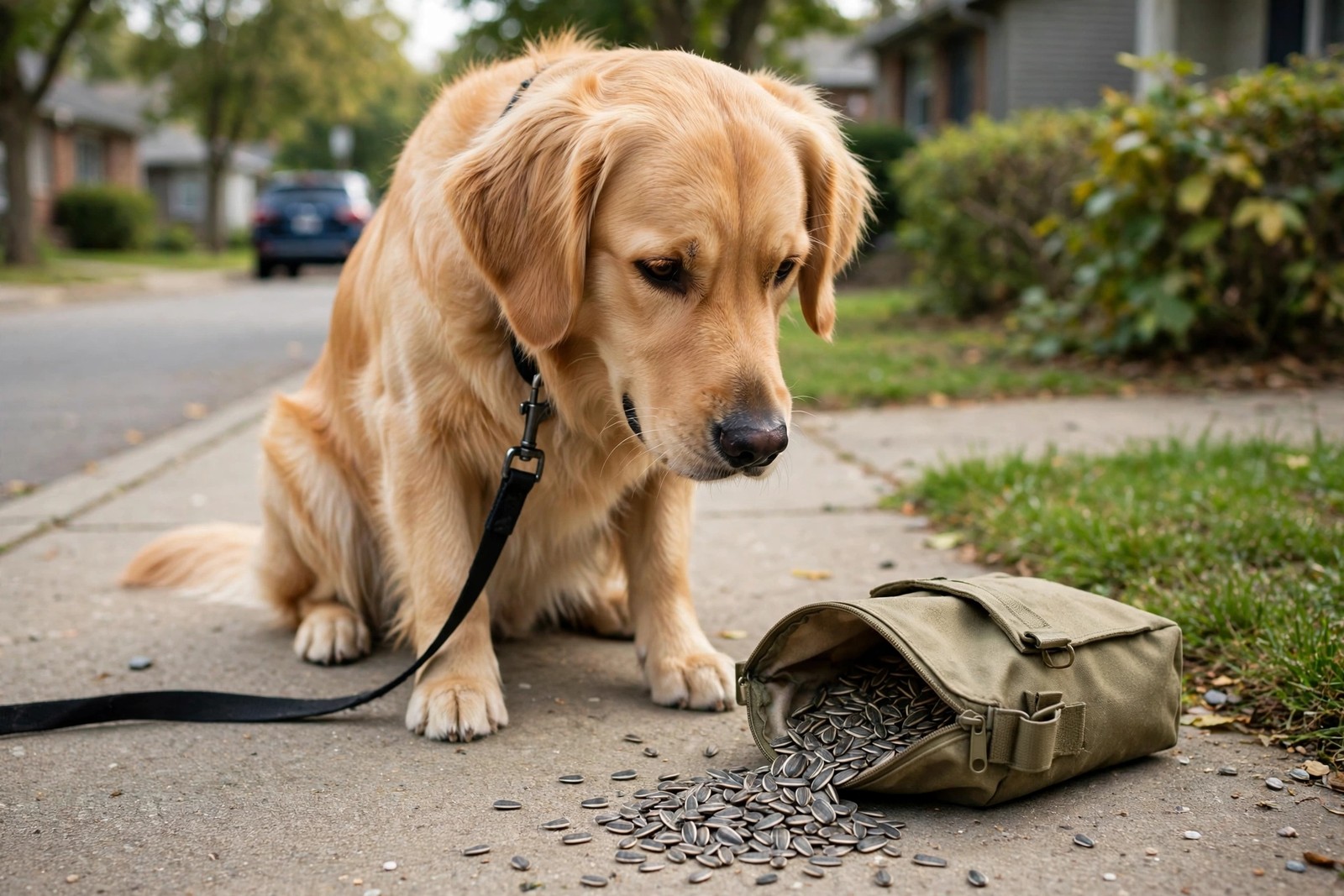
Yes, a dog can eat sunflower seeds, but only in one narrow form. The safe serving is the soft kernel from inside the shell, plain and unsalted, given in a pinch rather than a handful. Anything beyond that narrow form needs a closer look, starting with the shell, the salt and the flavourings that turn a harmless kernel into a poor choice.
The Shell and the Seasoning Are the Problem
A dog should never eat sunflower seeds in the shell. Shells are hard and sharp once chewed, a dog cannot digest them, and swallowed pieces can scrape and irritate the mouth, throat and gut on the way through. A dog who raids a bird feeder or a spilled snack bag may crunch through shells before anyone notices, and that dog needs watching for coughing, drooling, vomiting or a sore and reluctant mouth afterwards. Flavoured and salted snack seeds fail for a different reason. The salt load in a seasoned handful is far beyond what a dog needs, and coatings can include garlic or onion powders that do not belong in a dog at all. Roasted plain kernels with no salt are acceptable, and raw plain kernels are acceptable too. The colour of the packet and the snack aisle branding tell you nothing useful, so read the ingredient line and look for one entry only: sunflower seeds.
How Much, and How to Serve It
Treat kernels as a garnish, not a food group. A pinch of about a teaspoon of shelled kernels suits a medium-sized dog, and a small dog needs less, closer to a few kernels at a time. Sprinkle the pinch over a regular meal, or hand kernels over one by one during training, where each kernel works as a tiny and countable reward. Sunflower kernels are rich in fat and calories for their size, so every pinch comes out of the day's treat allowance instead of landing on top of full meals and full treats. A dog who receives kernels daily on top of an unchanged ration can gain weight quietly over a winter. Introduce kernels on a single day first, starting with two or three, and watch the stool over the following day. Soft stool, gas or a skipped meal means the serving was too rich or too large, and the next attempt should shrink or stop. A dog whose veterinarian already manages weight, digestion or a fat-sensitive condition needs that veterinarian's view before rich extras join the rotation at all.
Storing Seeds and Keeping the Rule Clear
Store shelled kernels in a sealed container inside a cupboard or a fridge, out of reach of a dog who can counter-surf, and check stored kernels for a stale or rancid smell before serving them. Rancid fats upset stomachs, and old kernels lose the appeal that made them useful as rewards. Keep bird seed and wild bird feeding stations in mind too, since fallen seed mixes often include shells, grit and other ingredients that were never meant for a dog to graze on. Children need the rule in plain terms: kernels from the treat pot are fine to share, seeds from a snack packet or the floor are not. One shared rule prevents the recurring accident here, which is a well-meaning second or third helping from a different person. Put the pinch rule where the food lives, either on the container itself or in the feeding notes that each helper follows. In KinsLe, a Care Teams duty for the evening feed can carry that note directly, naming the pinch, the plain kernels and the shell ban beside the task itself.