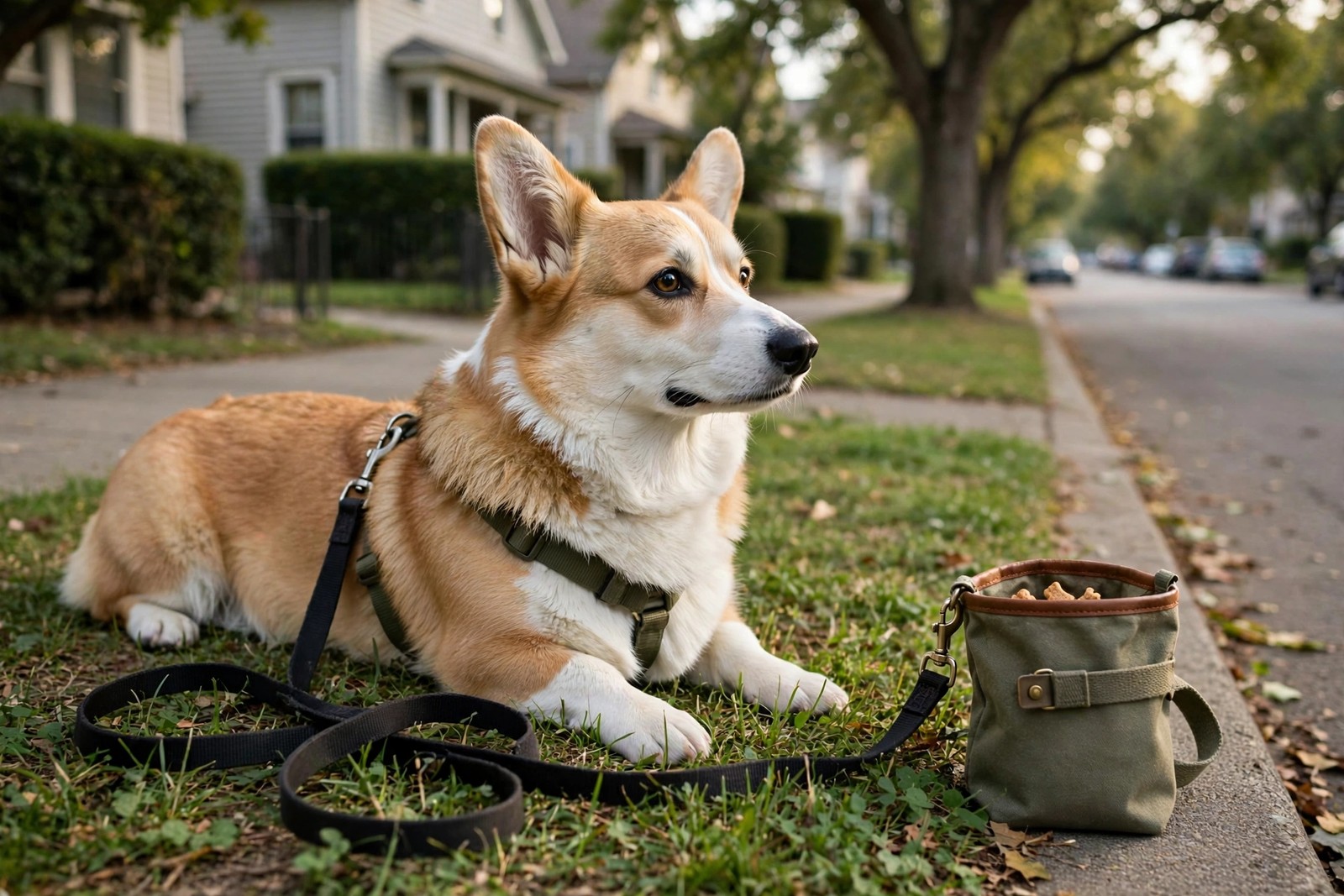
The answer depends on which Corgi shares your home. An adult Pembroke Welsh Corgi typically weighs up to about 28 lb, which converts to about 13 kg, and many adults sit between 25 and 28 lb (about 11 to 13 kg). Males tend toward the top of that span and females toward the lower part. The Cardigan Welsh Corgi is a separate, larger breed despite the similar name and shape, and Cardigans typically weigh 25 to 38 lb (about 11 to 17 kg). Judging a Cardigan against Pembroke figures, or the reverse, produces the wrong target before the assessment even starts.
Reading Condition Along a Long Body
Corgis carry a long back on short legs, with a deep chest and a level topline in ideal condition. Fat gathers along the ribs and belly in this build, and the first sign is often a midline that begins to sag or a waist that disappears when viewed from above. Run your hands along the full length of the ribcage. Ribs should be easy to feel under a thin covering for the whole span, not only near the shoulders. Viewed from above, the body should narrow slightly at the waist behind the ribs rather than forming a uniform tube from chest to hips.
Legs complicate the visual judgement. Short legs make a normal Corgi body sit low, and owners can mistake a correct dog for an overweight one or forgive real padding as breed shape. The hands settle the argument, and a monthly weigh-in confirms what the hands report.
Why Extra Weight Matters More Here
Every additional pound hangs from a long spine supported by short limbs. Surplus weight increases the load that the back and the leg joints manage with every step, stair, and jump down from furniture. Owners cannot change the breed's geometry, and weight is the variable fully within household control. Keeping a Corgi lean is therefore a structural decision as much as a nutritional one, and any dog who shows stiffness, reluctance to climb, or altered movement deserves a vet assessment in which weight forms part of the discussion.
Herding heritage adds a management wrinkle. Corgis were bred for long working days and retain hearty appetites suited to that workload, while household life delivers a fraction of the exercise. The appetite arrives at full strength regardless, and measured portions must arbitrate between the dog's expectations and the dog's actual day.
Portions, Exercise, and Vet Checks
Weigh meals rather than scooping them, count treats inside the daily allowance, and build exercise gradually for a dog who needs to lose condition. Low-impact, steady activity suits the build better than repeated jumping, and ramps or steps for furniture reduce the leaps that load the back. Recheck weight monthly and expect safe change to look slow, because crash reductions risk muscle loss in a breed that needs its supporting muscle.
A Corgi who gains despite verified portions and honest treat accounting deserves a vet visit, since a vet can investigate possibilities such as thyroid conditions that feeding discipline cannot correct. Equally, a dog who drops weight or loses enthusiasm for walks merits prompt attention rather than a larger bowl.
Ground clearance gives Corgi owners one more practical gauge. The breed rides low by design, and a belly that begins to brush through wet grass, mud, or shallow snow on routes the dog once cleared cleanly may be reporting added depth rather than added weather. Combine that observation with the rib check and the scale before you conclude anything, because coat thickness also changes the silhouette across seasons. Two signals together justify a portion review.
A long back hides slow change from everyone who sees the dog daily, and KinsLe Care Teams keeps your Corgi's monthly weigh-in and weighed ration in one shared record that exposes the trend.