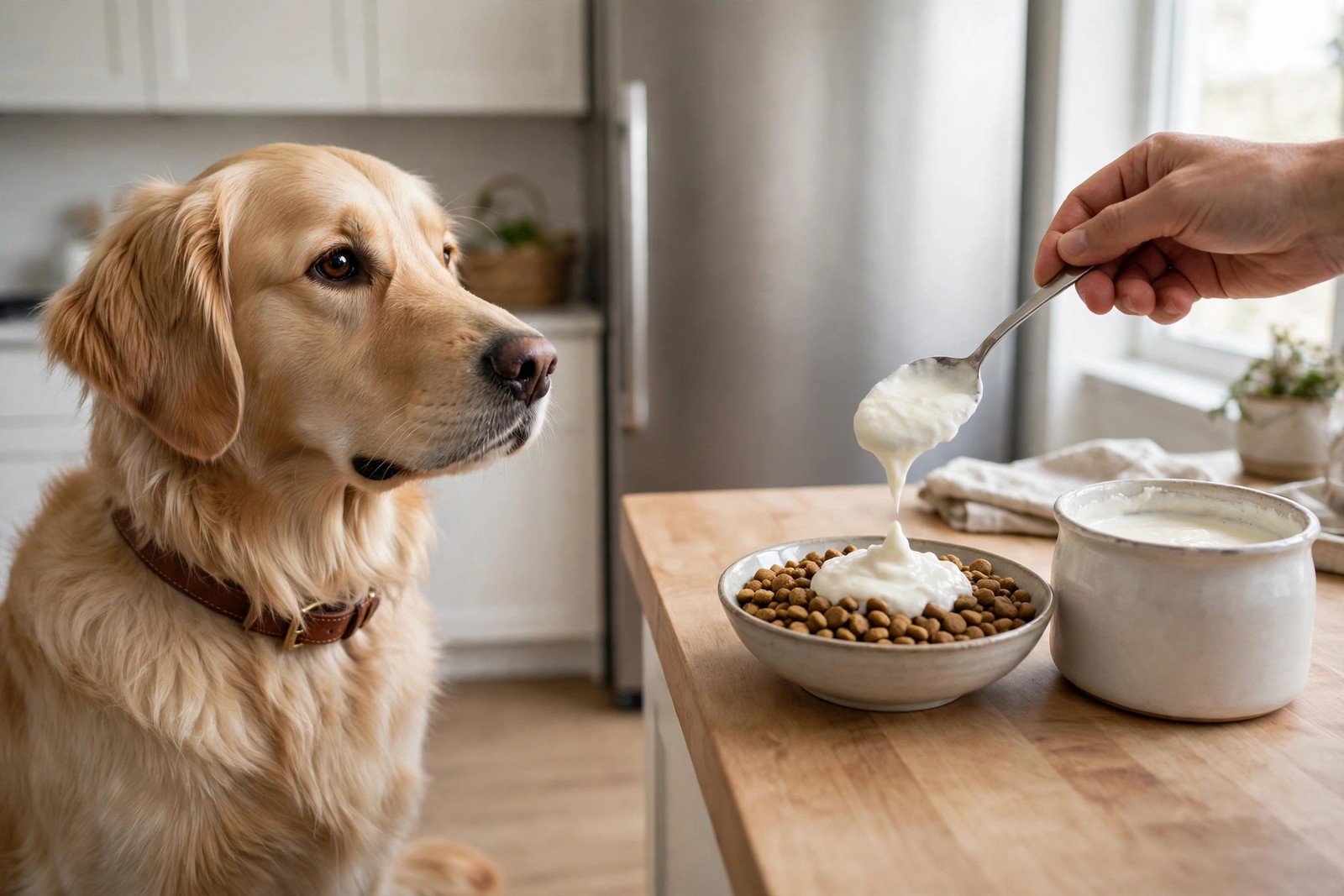
Yes — most dogs can have plain, unsweetened kefir in small amounts: one teaspoon for a small dog and up to one tablespoon for a large dog, a few times a week. Kefir is milk fermented with live cultures, and those cultures are the whole reason owners reach for it, hoping to support a comfortable gut. Fermentation does genuinely help tolerance, because the cultures consume part of the milk's lactose before the dog ever tastes it. What fermentation does not do is remove lactose entirely or turn a dairy food into a medicine, so kefir sits in the same careful category as every other dairy extra.
Starting a Kefir Trial Properly
Begin smaller than the full serving: a lick or half a teaspoon on the first day, then the stated teaspoon-to-tablespoon measure once you have seen a normal stool and a settled stomach. Spoon kefir over a regular meal rather than offering a bowlful to lap, because a measured spoon keeps the portion honest and slows the eating down. Serve it cold from the fridge, and do not stir it into hot food if the live cultures are your reason for offering it, because heat destroys the cultures you are paying for. If gas, soft stool or itching follows the trial, stop and accept the answer your dog has given; a food that disagrees with a dog brings no benefit worth pushing through discomfort to reach.
Plain Only: Flavours and Sweeteners
The kefir shelf is full of versions a dog should never taste. Fruit-flavoured and sweetened kefirs carry added sugar, and any sweetened product deserves a label check for xylitol, a sweetener that is dangerous to dogs and that turns up in some reduced-sugar foods. Flavourings, thickeners and fruit preparations add ingredients with no purpose for a dog. Choose a plain kefir with a short ingredient list, ideally just milk and live cultures, and treat anything with a flavour name on the front as human food. The same discipline applies to kefir grains shared between households and homemade batches: know what went into the ferment, keep it refrigerated, and discard a batch that smells sharp, looks separated beyond normal, or has sat past its best, because a dog's stomach is not the place to test a doubtful ferment.
Storage, Serving Ideas and Honest Limits
Keep kefir refrigerated, use it within the date on the pot, and put the spoon down rather than double-dipping between the dog's bowl and the pot you also eat from. A spoonful freezes well in a small ice-cube tray, which makes a slow, cooling summer extra, but freezing does not extend the portion: one cube made from the stated measure is still one serving. Kefir is an extra, never a substitute for a complete diet, and it is not a treatment for diarrhoea, allergies or any diagnosed condition; a dog with ongoing digestive trouble, a weakened immune system or regular medication deserves a veterinarian's view before live-culture foods join the routine. Puppies still nursing or newly weaned do not need kefir either, because their nutrition should come from their mother or a complete puppy food. Buy the smallest pot you will finish, because an opened pot that lingers invites exactly the doubtful-ferment problem described above, and a fresh small pot keeps every serving inside its best quality. A dated entry in the KinsLe Pet Passport about the first kefir serving gives a sitter or veterinarian a clear record of whether dairy agreed with this particular dog.