
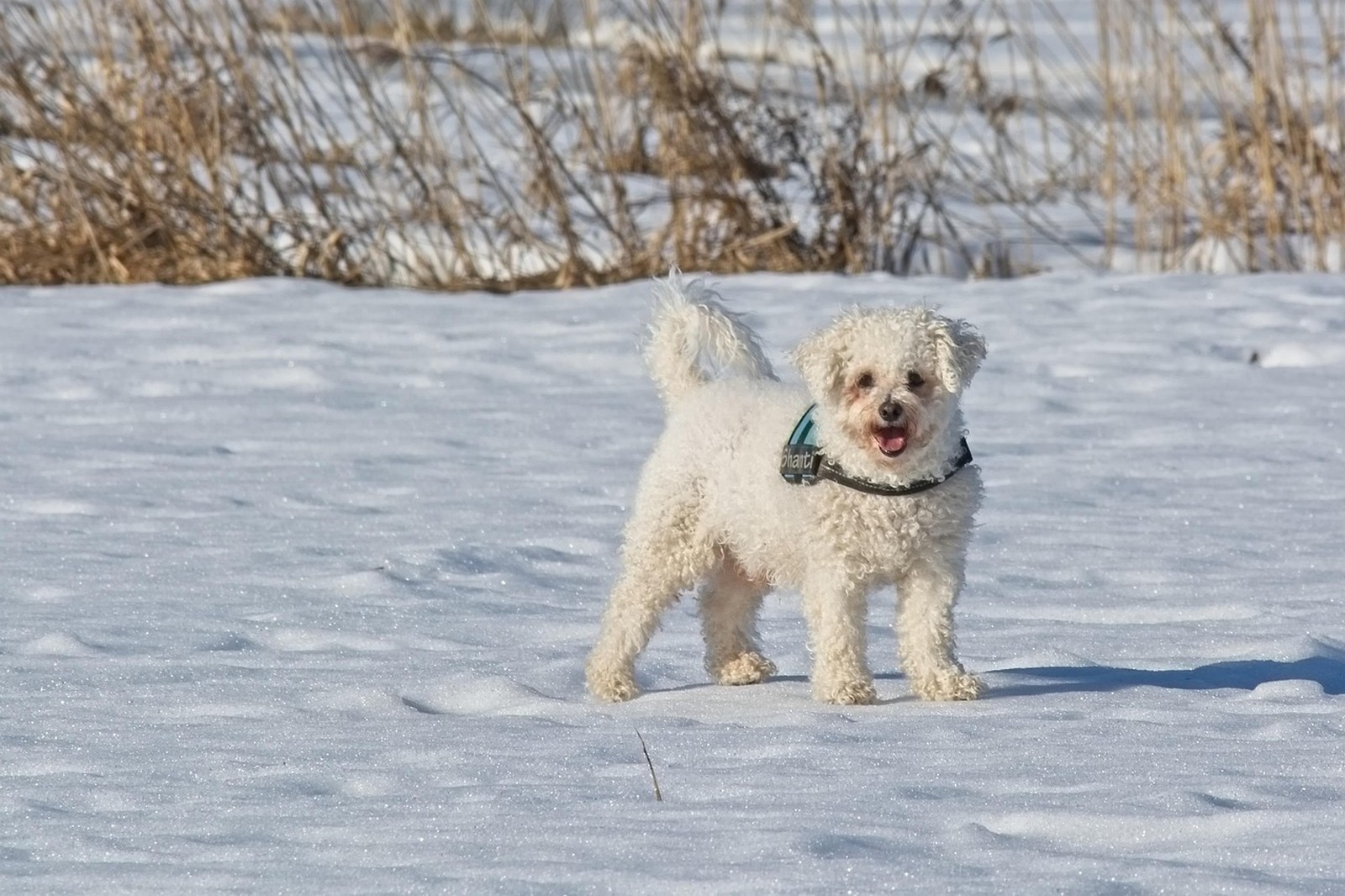
The daily amount for an adult Bichon
A typical adult Bichon Frise, a small dog with a moderate energy level, needs about one to one and a half cups of complete food across the day. Serve it as two meals, morning and evening, rather than one bowl, so portions stay modest and the routine is easy to monitor. Dogs at the smaller or quieter end may need a little less; a young, bouncy Bichon who walks and plays a lot may need the top of the range or slightly beyond it.
Use the cup range to start, then let body condition decide. Under the white, cloud-like coat you should be able to feel ribs without digging, and there should be a gentle waist when you look from above once the hair is settled. If you cannot find the ribs, the bowl is too generous, whatever the packet suggested.
Puppies, frequent meals, and sensitive stomachs
Bichon puppies need their food divided into three to four small meals a day, because a small puppy cannot eat a day's worth in two sittings and needs steady fuel for growth. Reduce the number of meals gradually as the puppy matures, keeping the total measured the whole way through.
Some Bichons have somewhat sensitive digestion and skin, so consistency helps twice over. Keep to one complete food that suits your dog, change foods gradually over several days if you switch, and introduce new treats one at a time in tiny amounts. That way, if stools loosen or itching flares, you have changed only one thing and can identify the likely culprit. Persistent digestive upset or itchy skin is a conversation for your veterinarian, who can help you sort out whether food is involved, rather than a reason to rotate through food after food at home.
The sociable dog's hidden calories
A Bichon is bred to be company, and company in most homes happens around food. The breed's daily risk is less the measured bowl than the accumulation around it: a corner of toast, a treat for settling nicely, a second treat because a child wants a turn, and a dental chew that is larger than it looks. Against a total of little more than a cup, those extras are not extras at all; they are a substantial part of the day.
Set a household rule that all treats come from one small daily pot taken out of the measured ration. When the pot is empty, affection continues but food stops. Weigh your Bichon periodically, because gradual gain is invisible under that coat and easy to miss until a harness suddenly fits snugly.
Older Bichons and changing needs
Senior Bichons often need slightly less food as walks shorten, but keep the two-meal structure, which suits a smaller stomach and lets you notice quickly if appetite fades. Dental disease is common in small older dogs, so a Bichon who starts eating slowly, favouring one side, or leaving harder pieces should have her mouth checked. Contact your veterinarian if appetite drops for more than a day, if weight changes in either direction without a feeding change, or if vomiting or diarrhoea keeps returning, and seek same-day advice for a puppy who stops eating and becomes dull or shaky.
Keeping a small allowance honest
When the whole day's food is barely more than a cup, one unrecorded handful from a second person distorts everything. KinsLe Care Teams lets each helper log your Bichon's meal or treat pot as given, so the evening feeder can see exactly how much of that small allowance has already been used.