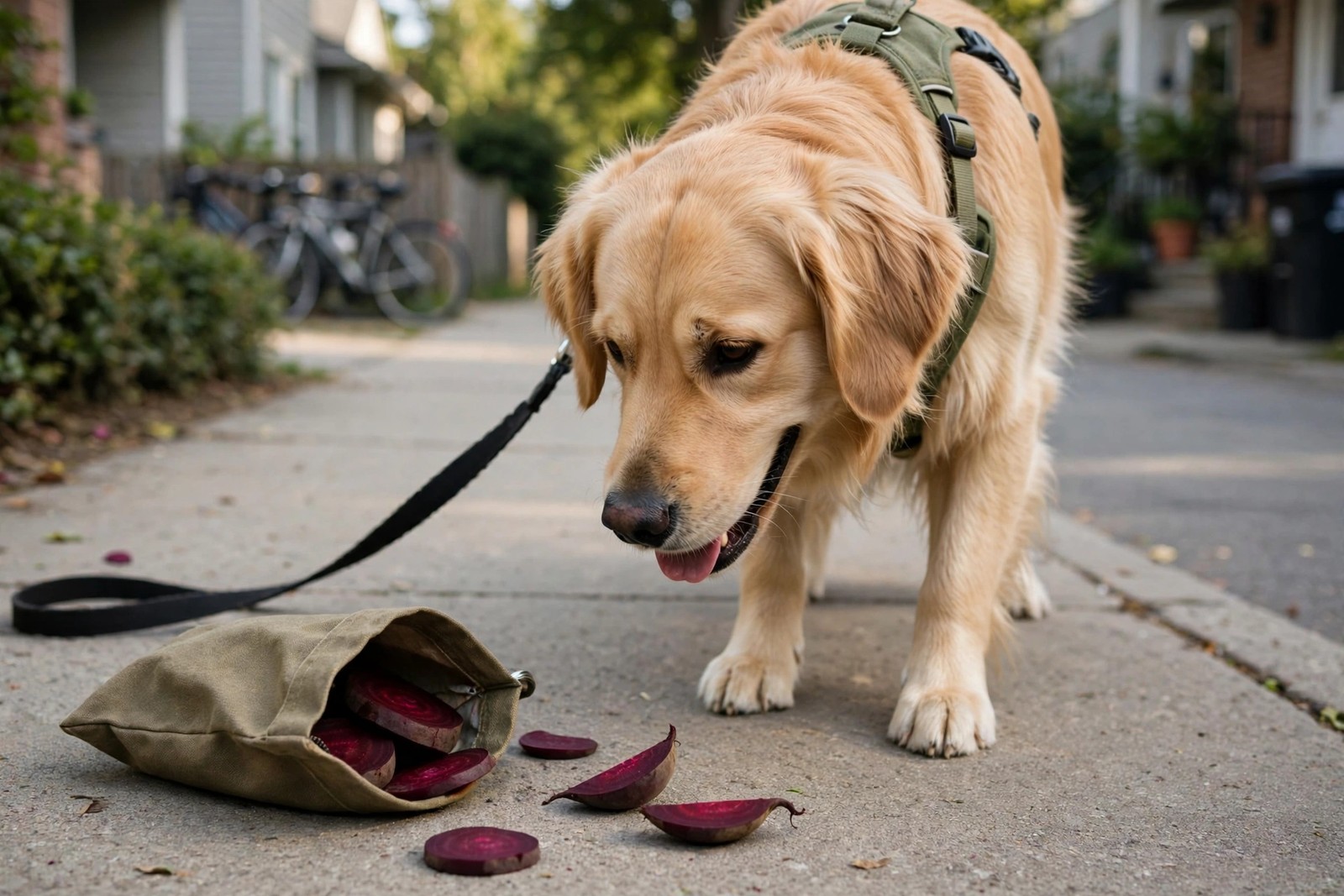
Beets earn a cautious yes for dogs when they are cooked plain and cut small. The root is sweet and fibrous, raw beet is hard work for a dog's digestion, and pickled or canned versions bring vinegar, salt and brine that a dog does not need. One side effect is worth knowing before the first serving: the pigment can tint urine and stool pink, which looks alarming and is simply the colour passing through.
What Actually Matters Here
What matters is preparation and portion, not the beet itself. Boil, steam or roast it with no seasoning, let it cool, and chop it into pieces matched to your dog's size so nothing is gulped down in a hard lump. A few pieces alongside the normal meal is a sensible serving; beet is an extra, not a vegetable course, and its natural sugar and fibre argue for occasional rather than daily appearances. Puppies, very small dogs, and dogs with sensitive digestion should start with a single piece and earn a second serving only after a settled day.
Dogs with a health condition, or on a prescribed diet, sit outside the general rule — ask your veterinarian before adding new vegetables, beets included. For a healthy adult, the trial is simple: one new food at a time, in a small amount, with the response watched honestly rather than hoped for.
Steps That Make the Difference
Serve beets the same careful way each time:
- Wash the beet and cook it plainly, with no pickling, vinegar, salt or seasoning
- Cut cooked beet into bite-sized pieces for your dog's size
- Start with a few pieces beside the normal meal, not a bowl of beet alone
- Expect pink-tinged urine or stool and do not mistake the pigment for blood
- Watch appetite and stool over the next day before serving it again
- Drop beets from the menu if loose stools repeat, and mention it at the next vet visit
Keeping It Going
Keeping a short note of the beet trial — the amount, the day, and how the stool looked afterwards — turns guesswork into evidence within a fortnight, and it gives your veterinarian something concrete if digestion stays unsettled. Serve beets from the dog's bowl rather than from the chopping board, so the new food stays a planned extra instead of a scavenged habit. One shared record of the trial keeps the whole household consistent, and Care Teams in KinsLe is built for exactly that handover: the beet serving can be assigned to a family member as a duty, and the finished task carries its own timestamp.