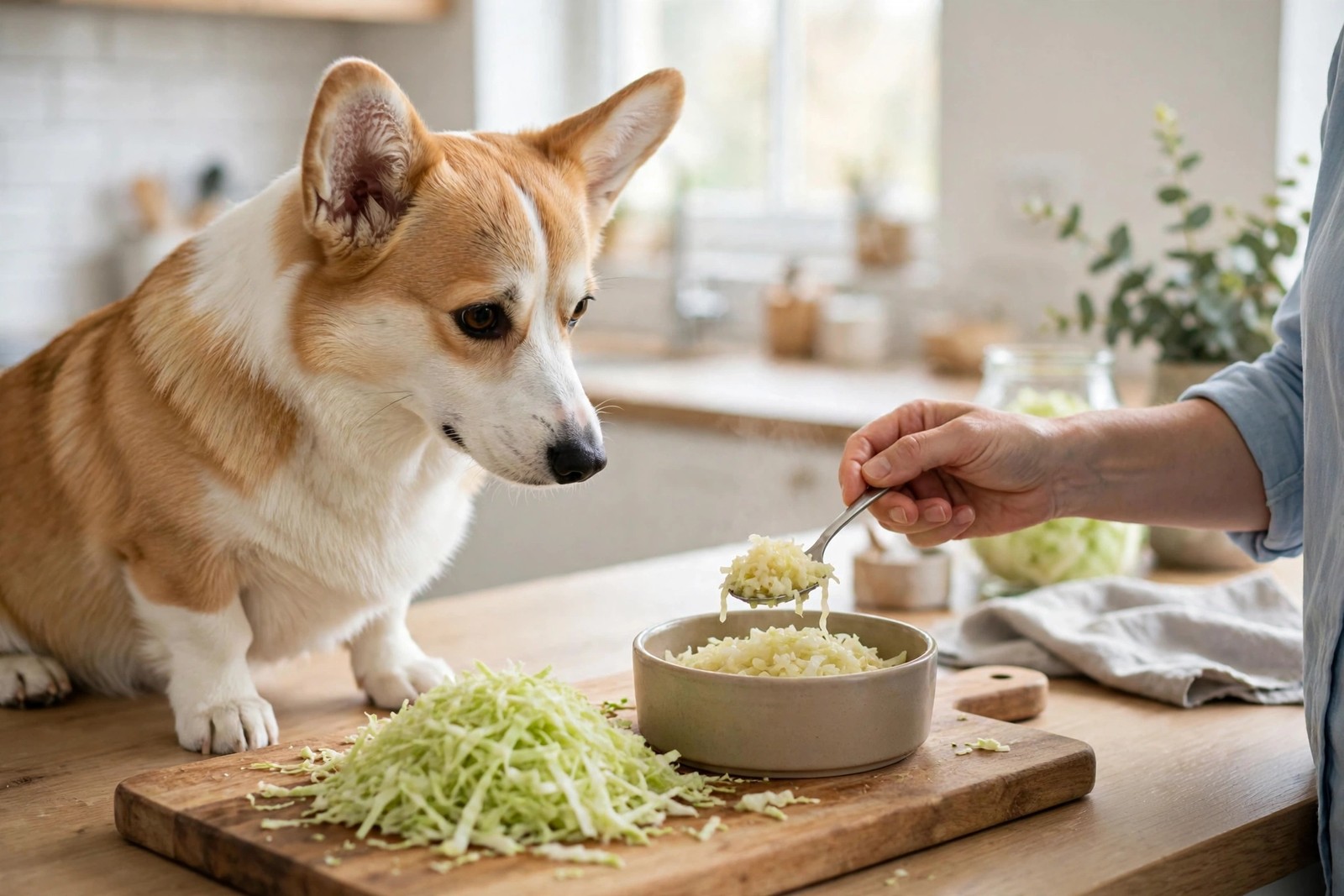
Yes, dogs can eat cabbage in small amounts, raw in thin shreds or cooked plain, and many dogs genuinely enjoy it. Cabbage is inexpensive, crunchy, and easy to share from your own cooking, provided it arrives in the bowl in the right form and the right quantity.
Form Decides How Well It Goes Down
A thick wedge of raw cabbage is hard work even for a strong chewer and can be swallowed in fibrous chunks that ferment heavily. Shred raw cabbage finely and offer a small pinch scattered over food, or cook it plain until soft and serve a spoonful as a topper. Cooking softens the fibers, makes the serving easier to digest, and reduces some of the gas-producing effect, so cooked is the sensible starting form for puppies, seniors, and dogs new to vegetables. All cabbage colors are acceptable, green, red, or savoy, but cabbage in dressed form is not: coleslaw carries mayonnaise, sugar, and often onion, and fermented cabbage dishes are salty and strongly flavored. Plain leaves from your own prep are the whole story.
Expect Gas, and Plan Around It
Cabbage ferments in the gut more enthusiastically than most vegetables, so flatulence after a first serving is normal rather than a warning sign by itself. Start with a teaspoon-sized amount for a small dog or a tablespoon for a large one, then wait a full day before offering more. Increase slowly over a week if the stool stays formed and the gas stays tolerable. Introduce it on an evening when guests are not expected if you want an honest first assessment. Loose stool, stomach rumbling that clearly bothers your dog, or repeated vomiting means cabbage does not suit your dog at that amount; cut back or retire it, because no vegetable is obligatory.
The Thyroid Point, In Proportion
Cabbage and its cabbage-family relatives contain goitrogenic compounds, substances that can interfere with thyroid function when eaten in very large amounts over a long period. For a healthy dog eating a few shreds twice a week, this is not a practical concern. It becomes a reason for real restraint in two situations: a dog fed large daily quantities of cabbage-family vegetables as a major part of the diet, and a dog already being treated for thyroid problems, whose owner should ask the veterinarian before making cabbage a routine extra. Keeping cabbage occasional and small solves the issue for almost every household without needing to avoid a perfectly pleasant vegetable altogether.
Where Cabbage Actually Earns Its Keep
Its best use is bulk without calories. A spoonful of cooked cabbage stirred into a reduced portion gives a dog on a weight plan a fuller bowl and something to chew through, which helps the smaller meal feel finished. Shredded raw cabbage also adds texture interest for dogs bored by plain food, and a single crisp leaf can serve as a short shredding activity for a supervised dog that enjoys tearing food. Do not use cabbage to bulk out meals for a dog that is losing weight unexpectedly; that pattern needs a veterinarian, not a fuller bowl. Noting the cooked, spoonful-sized limit in KinsLe through Care Teams keeps cabbage at garnish scale for every feeder in the house, which is exactly where this vegetable belongs.