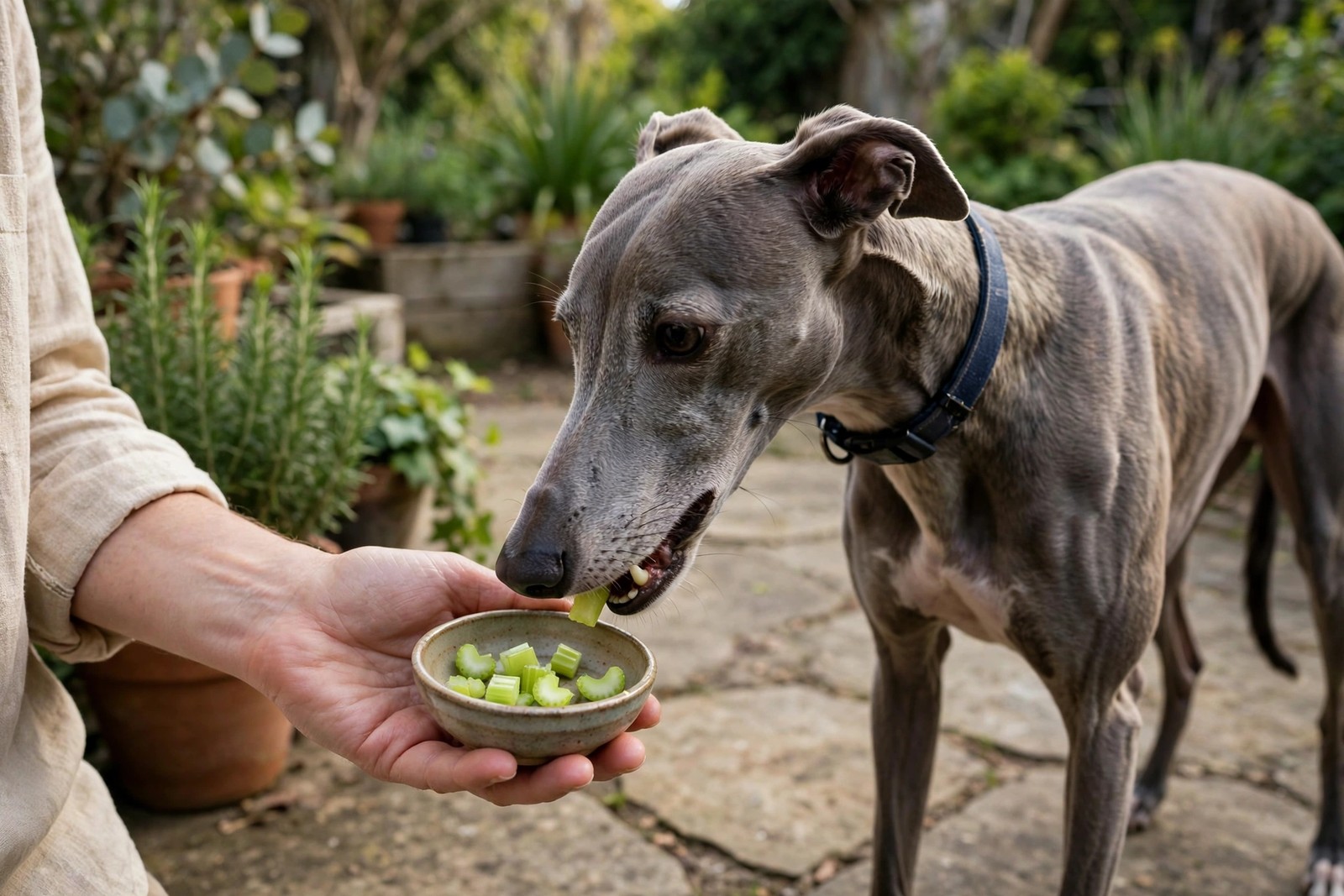
Yes, dogs can eat celery in small amounts as an occasional treat. It is crunchy, hydrating, and very low in calories, which makes it attractive for dogs on a weight plan, but celery has a texture problem that decides whether it is served safely: its strings.
The String Problem and the Right Cut
A celery stalk is held together by long, tough fibers running its full length. A dog that bites off a long section can end up with a stringy mouthful that resists chewing, trails from the mouth, and can gag a dog that tries to swallow it partly chewed. The fix is simple and complete: cut stalks crosswise into short pieces, roughly half an inch for a medium or large dog and thinner slices for small dogs, so no piece contains a long string. Wash stalks thoroughly first, since celery grows close to soil and its grooves hold grit. The leafy tops are fine in small amounts mixed with the stalk pieces. Serve pieces plain: ranch-style dips, peanut-style spreads in quantity, and salted snack preparations all turn a light vegetable into something rich or salty that defeats its purpose.
What Celery Does Well
Celery is mostly water and fiber, so a handful of pieces gives a dog the experience of a real snack for very few calories, which is genuinely valuable for the dog whose meal has been reduced and who patrols the kitchen hopefully at family snack time. The crunch also makes celery pieces a workable low-value training reward for easy repetitions at home, where you need many rewards and cannot spend the day's calories in ten minutes. Celery has a mild diuretic effect, so a generous serving may be followed by an extra urination trip; that is expected, but it is one more reason to keep servings sensible and not to offer a pile of celery last thing at night. Breath freshening is often claimed for celery, and chewing crunchy vegetables does give mild mechanical cleaning, but it is not a substitute for tooth brushing or dental checks.
Portions and First Trials
One stalk, cut up, is a full serving for a large dog; half a stalk suits a medium dog and a few thin slices a small one. Offer a couple of pieces first if your dog has never had celery, and watch the stool, since fiber changes can loosen it for a day. Some dogs find celery's slightly bitter, watery flavor uninteresting and will drop the piece and walk away; that is a preference, not a problem to solve, and cucumber or carrot usually lands better with those dogs. Puppies can have tiny soft inner-stalk pieces once they are eating solids confidently, but the string rule matters most for them, so slice thinner than you think necessary.
Keeping It a Hand-Fed Treat
Celery is sometimes left whole in gardens or on low compost heaps, and a dog that helps itself to whole stalks misses the safety step entirely, so garden access during harvest is worth managing. At home, treat celery like the prepared food it needs to be: washed, sliced, and handed over in counted pieces. Putting that preparation step into KinsLe through Care Teams ensures a sitter or family member preps celery the same way you do, short pieces with the strings cut through, instead of handing over a whole stalk because it looks like a natural chew.