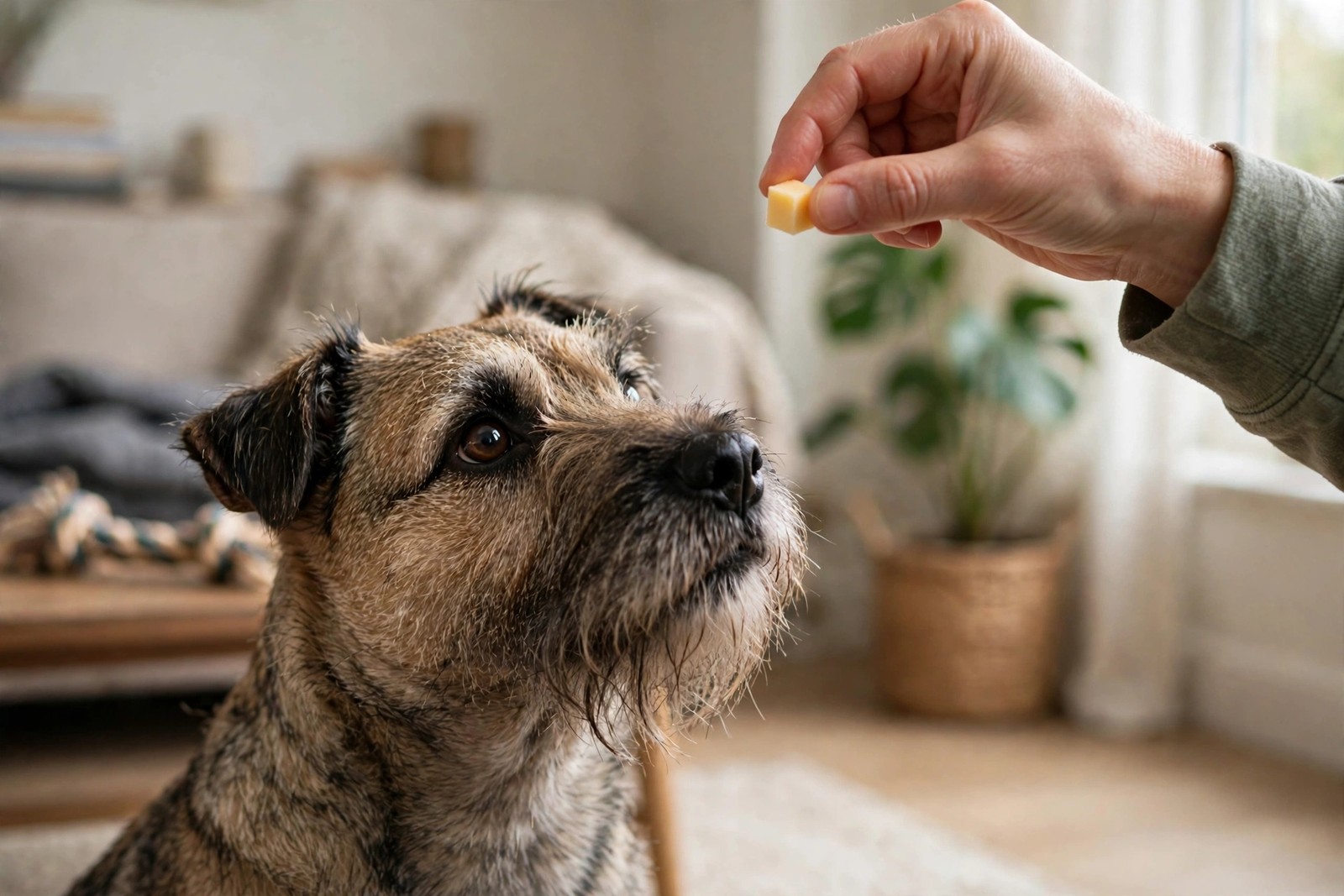
Yes, most dogs can eat cheese in small amounts as an occasional treat. Cheese is the treat many dogs will work hardest for, which makes it genuinely useful, but it is also salty, fatty, and built on lactose, so the portion discipline matters more with cheese than with almost any other people food.
Lactose: The Limit Most Owners Meet First
Puppies are born able to digest milk sugar; most adult dogs produce far less of the enzyme that handles it, so lactose often passes through partly undigested and ferments. The typical result of an over-generous cheese serving is gas within hours, then loose stool or a single episode of vomiting. A pea-sized cube or two is a serving for training purposes, a matchbox-sized piece is far too much for most dogs in one go, and a dog that reliably gets an upset stomach from any cheese should simply not be offered it, because the same reward value can be had from a small piece of cooked chicken. Hard, aged cheeses tend to contain less lactose than soft, fresh ones, which is why many dogs tolerate a little hard cheese better than a spoonful of soft cheese.
Which Cheeses Sit Where
Plain, mild cheeses in small pieces are the reasonable end of the range, and plain cottage cheese in a spoonful is often the gentlest option of all, though it still counts as a treat. Move with caution around strongly flavored, salty, or processed slices and spreads, which concentrate salt and additives. Some cheeses are off the list entirely. Blue and mold-ripened cheeses can contain compounds produced by their molds that are risky for dogs, and moldy cheese from the bin is a separate hazard in its own right, so both belong in a closed bin. Cheese baked into garlic bread, onion-topped dishes, or chili-spiced snacks inherits those ingredients' problems as well. Cheese-flavored crisps and crackers are mostly salt and oil and are not a loophole.
The Jobs Cheese Does Brilliantly
Used deliberately, cheese earns its place. A pea-sized piece is a high-value recall reward that can compete with distractions when ordinary treats cannot. A small soft piece molded around a tablet persuades many dogs to take medication without a struggle, provided your veterinarian is content with that method for that medicine. Cheese is also the traditional emergency bribe for nail trims, ear checks, and vet-visit handling, precisely because it is rare enough to stay exciting. That rarity is the system: if cheese appears daily at family snack time, it loses its power and gains its side effects. Dogs on low-fat or low-salt diets for medical reasons, and dogs prone to pancreatitis, should skip cheese unless their veterinarian specifically allows it.
Household Rules That Keep It Tiny
Cheese escapes portion control at fridges and cutting boards, where rind trimmings and grating scraps fall to an attentive dog. Agree that cheese for the dog comes only from one designated small container of pre-cut cubes, so the amount is visible and finite, and that dropped scraps during cooking are picked up rather than donated. Logging cheese, its cube size, and its training-only status in KinsLe through Care Teams keeps that agreement in front of everyone who feeds your dog, so one person's special reward does not become the whole household's everyday treat.