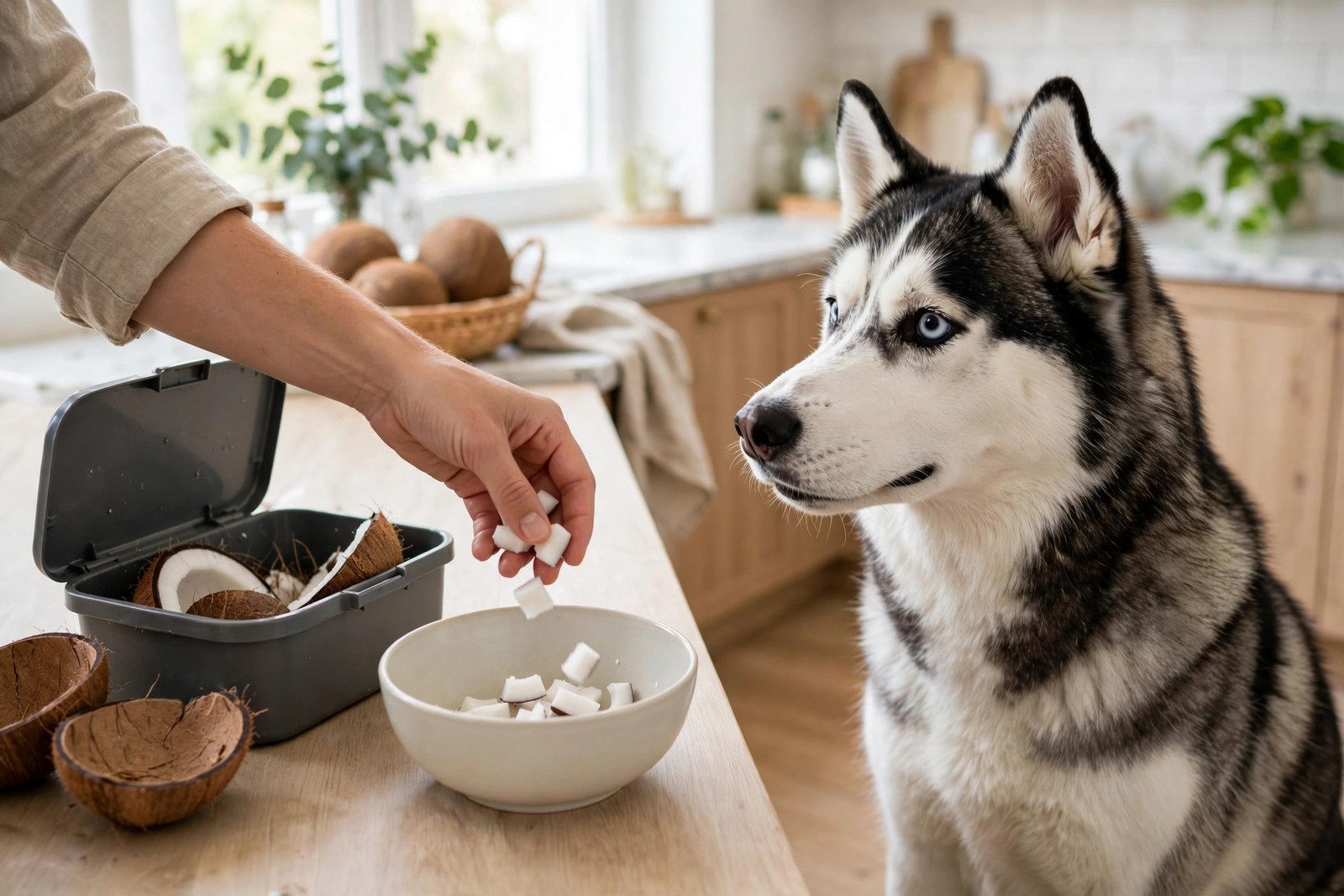
Yes, dogs can eat coconut flesh in small amounts as an occasional treat. Coconut confuses owners because its parts behave so differently: the white flesh is a reasonable treat, the shell is a hazard, and the many coconut products on shop shelves range from acceptable to completely unsuitable.
Flesh: Small Pieces, Rich Food
Serve fresh coconut flesh cut into small pieces, or a pinch of unsweetened dried flakes sprinkled over food. Coconut flesh is energy-dense and high in fat, including fats that pass through a dog quickly when the serving is large, so the common result of over-serving is soft stool or an episode of diarrhea rather than anything more dramatic. A tablespoon of pieces is a full serving for a large dog, a teaspoon for a small one, offered occasionally. Start smaller still with a dog that has never had it, and skip coconut altogether for dogs on low-fat feeding or with a history of pancreatitis unless their veterinarian approves, because rich extras are precisely what those plans exist to control. Some owners use a little coconut oil on food or skin; that is a separate, fattier product, and if you are considering it regularly, raise it with your veterinarian rather than treating it as equivalent to a piece of flesh.
The Shell Is Never a Chew
The hard brown shell and its coarse hair must be removed completely and binned where a dog cannot retrieve them. Shell fragments are sharp-edged, indigestible, and capable of choking a dog or obstructing the gut, and the fibrous husk can mat into a swallowed mass. Never hand a dog a whole or halved coconut to work on, however entertaining it looks, and clear dropped shell pieces during preparation before letting the dog back into the kitchen. If a dog does swallow shell and then vomits, strains, loses appetite, or seems uncomfortable, call your veterinarian the same day and mention the shell specifically.
Coconut Water, Milk, and Sweetened Products
Plain coconut water in a small splash is generally tolerated and some dogs enjoy it after exercise, but it is not a substitute for plain water, and its sugars and potassium make it a sometimes drink, not a bowl filler. Canned coconut milk is far richer, closer to a cream, and belongs in the teaspoon category at most, if offered at all. The clear no list is sweetened shredded coconut, coconut candies and chocolate-covered coconut, and sweetened coconut drinks, which combine sugar, and sometimes chocolate or artificial sweeteners, with the fat. Fresh young coconut flesh, the soft translucent kind, can be offered like ordinary flesh in small pieces and is often the easiest form for older dogs to manage.
Fitting Coconut Into a Rotation
Coconut's best role is as an occasional novelty in a rotation of simple treats, a few pieces on a summer day, flakes as a food topper for a picky eater for a short stretch, rather than a daily fixture. Dogs that dislike the texture of fresh pieces may accept flakes, and dogs unimpressed by both have lost nothing. Note the piece size and the shell warning in KinsLe through Care Teams, because coconut is exactly the kind of food a helpful visitor might offer whole and unprepared, and your dog's duty notes are where that person will learn it arrives shelled, chopped, and counted instead.