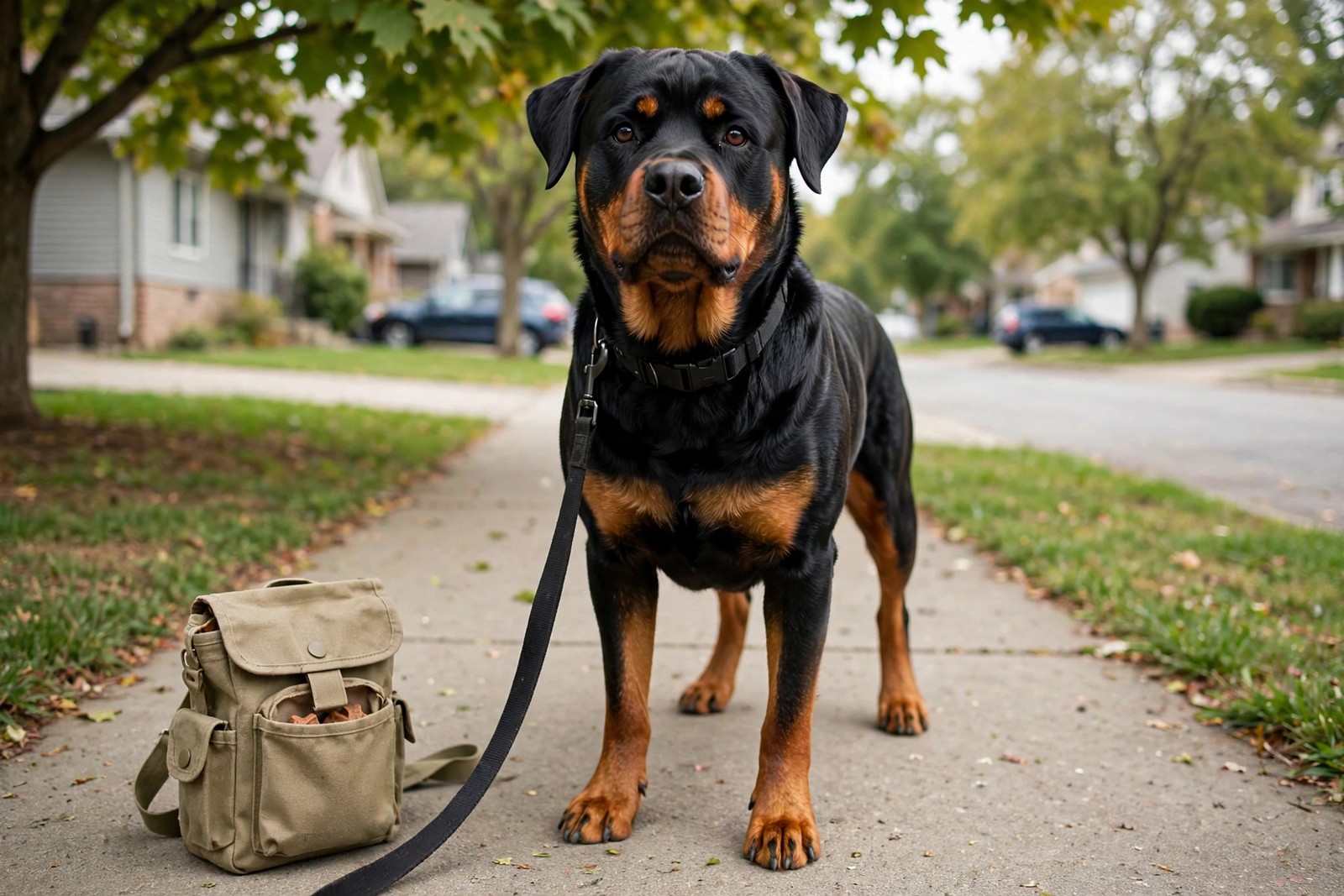
An adult Rottweiler typically weighs 35 to 60 kg (77 to 132 lb). Females usually fall at 35 to 48 kg (77 to 106 lb), and males usually fall at 43 to 60 kg (95 to 132 lb). This is a genuinely heavy breed built for pulling and guarding work, and a correct Rottweiler feels dense and powerful rather than soft. The top of the range belongs to tall, heavily boned males in hard condition, and owners do a dog no favours by feeding a smaller frame up toward a number that was never meant for it.
Muscle Versus Fat on a Broad Dog
Run your hands over the shoulders, chest and thighs and learn the feel of firm muscle, which stays springy and defined under the skin. Fat feels soft and uniform, and it settles first over the ribs, the neck and the base of the tail. Feel the ribs with flat palms and firm pressure, and expect to find them under a thin fat cover even on a big male. A ribcage you cannot find at all means surplus, whatever the dog weighs.
Look from above and behind for a waist that narrows behind the ribs before the powerful hips. Look from the side for a belly that tucks upward rather than hanging level with the chest. The short black-and-tan coat hides nothing once you know the landmarks, and a monthly hands-on check during a calm grooming session gives you readings you can trust across the year.
Condition, Work and Honest Portions
A Rottweiler in regular work holds weight as muscle and needs fuel for that work, and a Rottweiler whose work ends needs a smaller ration within weeks rather than months. Measure meals, count chews and training rewards inside the daily total, and beware the household habit of feeding for the dog's size reputation rather than the dog's actual day. Slow, steady adjustments protect digestion and temper alike, and a fortnight between portion changes lets the rib feel deliver a verdict.
Young Rottweilers mature late and should grow lean and steady rather than fast and heavy. Extra weight during growth loads developing joints, and your vet may discuss joint health, screening and exercise limits for an individual youngster based on examination and history. Sudden weight change in an adult, in either direction, deserves a prompt appointment, and a vet can investigate appetite, pain and other possible causes that home observation cannot separate.
Size Pride and the Vet's Tape
Rottweilers attract size pride, and strangers will praise the heaviest dog in the park. Resist that applause economy completely. Extra mass shortens comfortable working life, strains joints and makes heat harder work, and none of those costs appear in a photograph. Ask your vet for a written personal target and a condition score at each visit, and feed toward that professional figure rather than toward compliments.
Heat deserves a place in a Rottweiler weight plan, since a black coat absorbs sun and a heavy dog generates more heat on summer work than a lean one. Shift exercise to early and late hours in warm months, watch recovery time after effort, and treat slower recovery as condition information worth logging. Swimming suits many Rottweilers and builds muscle without joint pounding, and a dog who conditions in water often holds a steadier weight across the year than a dog whose exercise vanishes whenever weather turns hot.
A powerful dog often has several handlers, and handlers feed generously when nobody tracks the total. Through KinsLe Care Teams, meals, rewards and the monthly condition check each carry a named owner, and the timestamped record keeps a Rottweiler ration honest across the whole household.