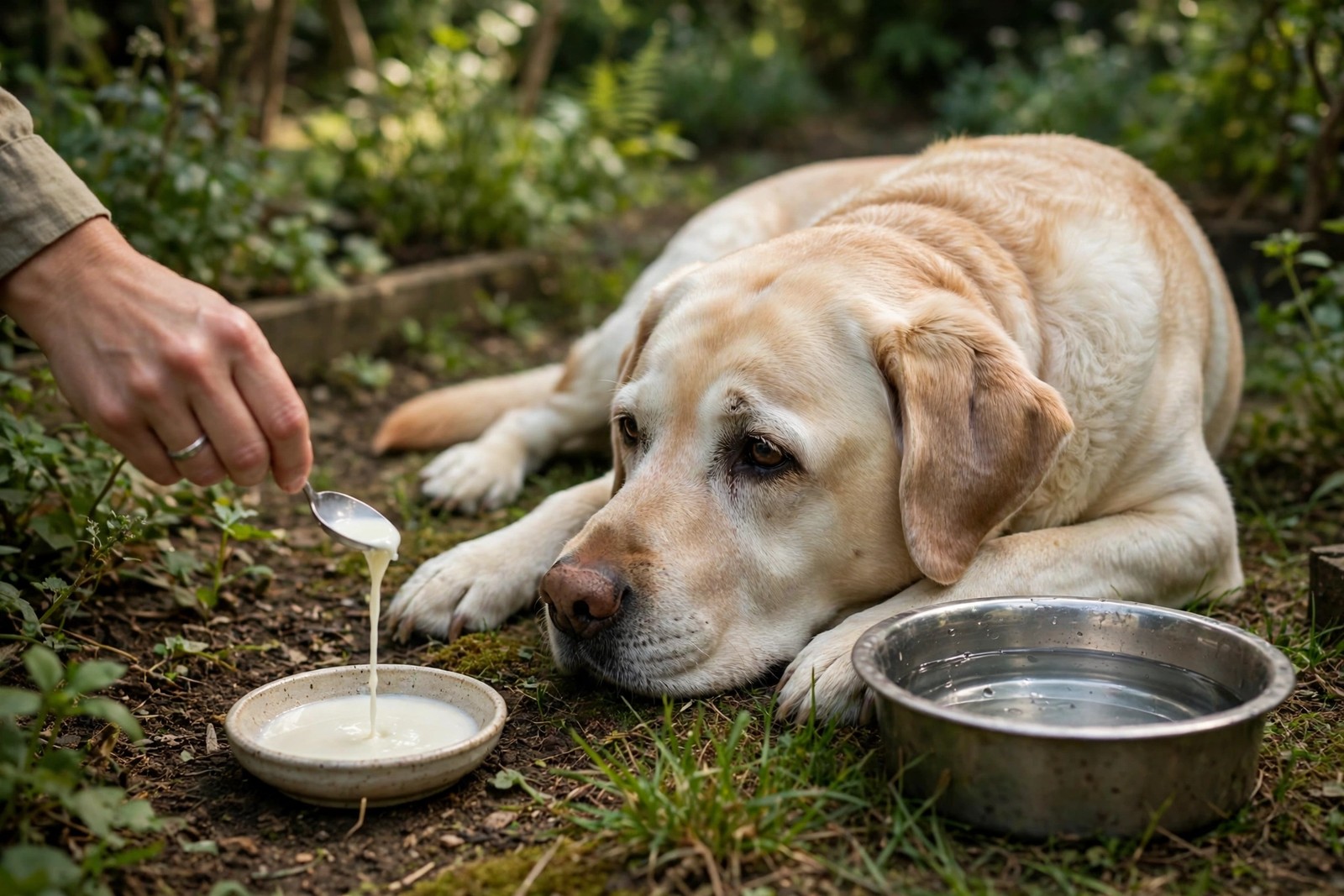
Only in small amounts, if at all: one tablespoon for a small dog and up to three tablespoons for a large dog, offered occasionally. Goat's milk has a friendly reputation because it contains somewhat less lactose than cow's milk and many dogs digest it more comfortably. That reputation needs two corrections. First, less lactose is not lactose-free, so a lactose-sensitive dog can still end up with gas and loose stool. Second, milk of any kind is a food, not a drink, and fresh water remains the only liquid a healthy adult dog actually needs.
Pasteurised Only, and Why Raw Milk Is a Different Risk
Always choose pasteurised goat's milk. Unpasteurised, or raw, milk can carry bacteria such as Listeria, Salmonella and harmful E. coli, and a dog that laps up contaminated milk can become ill and can also shed those bacteria around the household, where children and older relatives handle the dog and its bowl. Marketing language about raw milk being more natural does not remove that risk. Buy a carton with a clear use-by date, refrigerate it as soon as you get home, and follow the carton's guidance on using it within a few days of opening. Pour the serving into a clean bowl, and wash that bowl afterwards rather than topping it up, because milk residue sours quickly and a bowl left down on a warm floor turns unappealing fast.
Never a Puppy Substitute
The one firm line in this answer concerns puppies. Goat's milk is not a substitute for a mother's milk, however gentle it seems: its balance of protein, fat, minerals and energy does not match what a growing puppy needs, and hand-rearing on the wrong milk can leave a puppy undernourished while looking fed. An orphaned or rejected puppy needs prompt veterinary guidance and a properly formulated feeding plan, not a kitchen experiment. Adult dogs are a different case, because for them goat's milk is only an extra. It can moisten dry food for a senior dog whose appetite needs encouragement, but if an older dog suddenly needs tempting, that appetite change itself deserves a vet conversation rather than a permanent workaround.
Why It Stays an Occasional Extra
Goat's milk also fails the economics test if it becomes routine. A carton bought for the dog and opened a tablespoon at a time often passes its date half used, and the money has bought nothing the dog's complete food does not already provide. If a carton is in the fridge for the household, a measured splash for the dog is a harmless share of something already open. If it would be bought specially, ask what gap it is meant to fill, because for a healthy adult dog there usually is not one, and a food with no job to do should stay occasional by definition.
Flavours, Sweeteners and the Label Check
Plain is the only acceptable version. Flavoured goat's milk drinks, sweetened cartons and products blended with honey or fruit add sugar a dog does not need, and sweetened products of any kind deserve a label check for xylitol, a sweetener that is dangerous to dogs and that appears in some reduced-sugar foods. Read the ingredient list every time, because recipes change without fanfare. Introduce goat's milk on a quiet day, offer the stated tablespoon measure, and watch stool and comfort over the next day before offering it again. If the result is loose stool, the experiment has answered itself and there is no benefit in pushing through. Hand the limits over in writing: a KinsLe Care Pass carrying the tablespoon serving and the stool check leaves a sitter nothing to improvise when the carton comes out of your fridge.