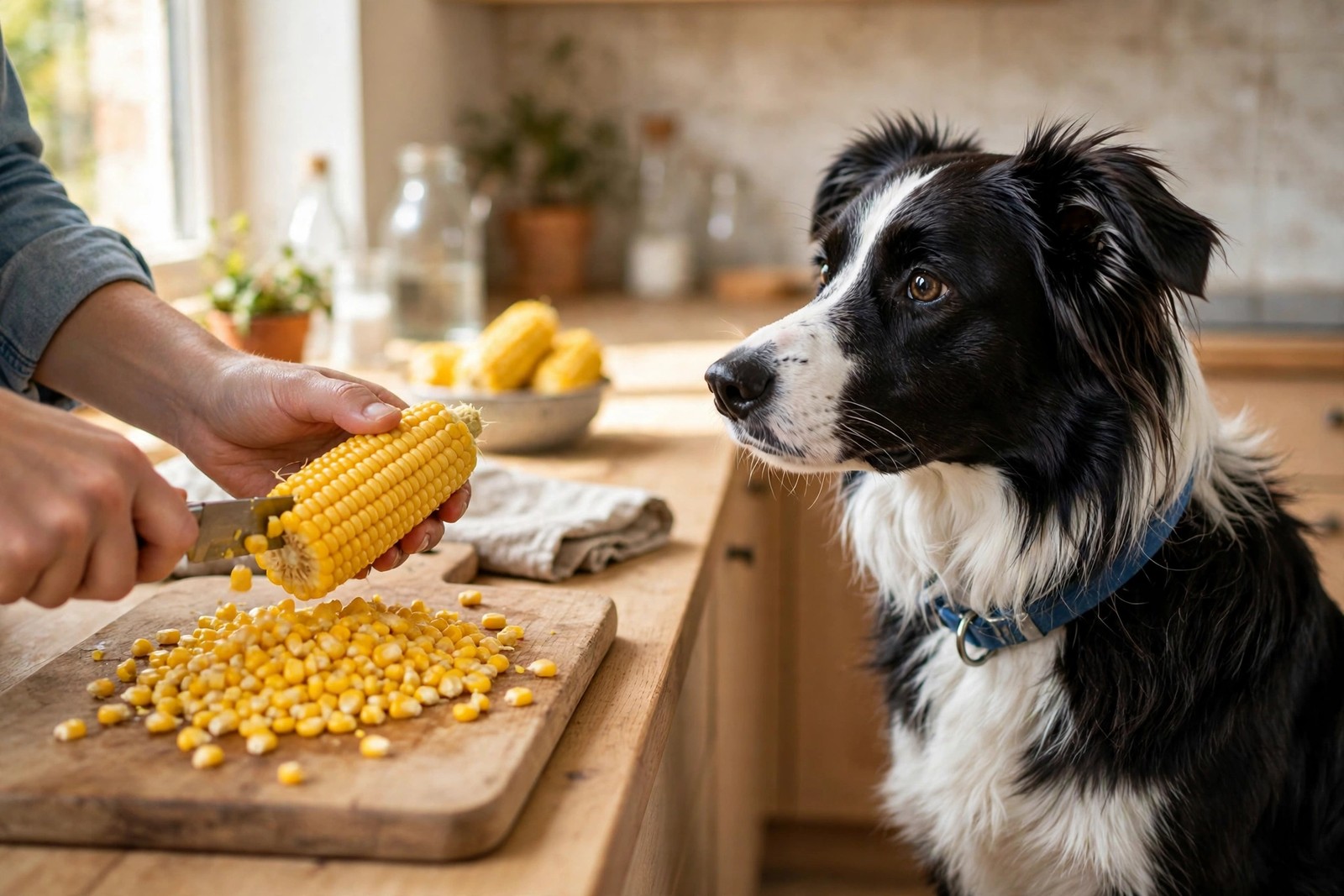
Yes, with one firm boundary. Sweetcorn kernels, cut off the cob, cooked plain, and served in small amounts are fine for most dogs. The cob itself is not fine at all. That single distinction is the whole answer, and it is why sweetcorn needs more care than most vegetables owners share.
Why the cob is so dangerous
Dogs do not nibble corn neatly the way people do. Many grip the cob, tear off a chunk, and swallow it with little chewing. Cob material does not break down well in the gut, and a piece the width of the cob can lodge in the narrow small intestine. Vets see this problem often after barbecues and summer meals, when cobs land in bins, on plates at dog height, or tossed into gardens.
Warning signs of a blockage can appear hours to a couple of days later: repeated vomiting, refusing food, a painful or tense belly, drooling, restlessness, straining, or passing very little stool. Those signs mean urgent veterinary care, not waiting to see. Treatment can involve surgery, so prevention matters far more than portion control here. Put used cobs straight into a secure bin with a lid your dog cannot flip, and count cobs in and out at outdoor meals the way you would count chicken bones.
Serving kernels the safe way
Cut kernels off a cooked cob with the cob held upright and the knife moving away from your hand, or use plain frozen or tinned kernels with no added salt or sugar. Rinse tinned kernels to reduce salt. Serve a teaspoon for a small dog, a tablespoon for a medium dog, and up to two tablespoons for a large dog, a couple of times a week at most. Scatter them over kibble, use a few as training rewards, or freeze a small handful into a summer treat.
Skip creamed corn, buttered corn, corn cooked with onion or garlic, and heavily salted preparations. Whole kernels sometimes pass through visibly undigested in the stool; that is common and not, by itself, a worry. Crushing or lightly mashing kernels helps smaller dogs and older dogs get more from them.
Dogs who should skip it
Sweetcorn is a starchy, sugary vegetable. Dogs on a vet-directed weight plan, and diabetic dogs, do not need it, and for them the honest answer is to choose a leaner treat. Puppies can have a few mashed kernels once they are eating solid food well, but keep amounts tiny while their digestion is still settling. Any dog who gulps food down is safer with kernels mixed through a meal than with anything served as a separate pile to inhale.
If your dog grabs a cob
Stay calm, take the cob away if you can do so safely, and do not try to make your dog vomit unless a vet tells you to. Note how much cob is missing if you can judge it, then call your vet for advice straight away, even if your dog seems fine. Early advice is cheap; a blockage discovered late is not. If vomiting, belly pain, or appetite loss follows in the next two days, treat it as an emergency and say a cob was eaten.
Kernels in a bowl are a treat; a cob on the grass is a hazard, and keeping those two apart is a household habit. Through KinsLe Care Teams, one person can own barbecue clean-up while another owns treat feeding, each duty timestamped when done, so the kernels-only rule survives a busy garden party.