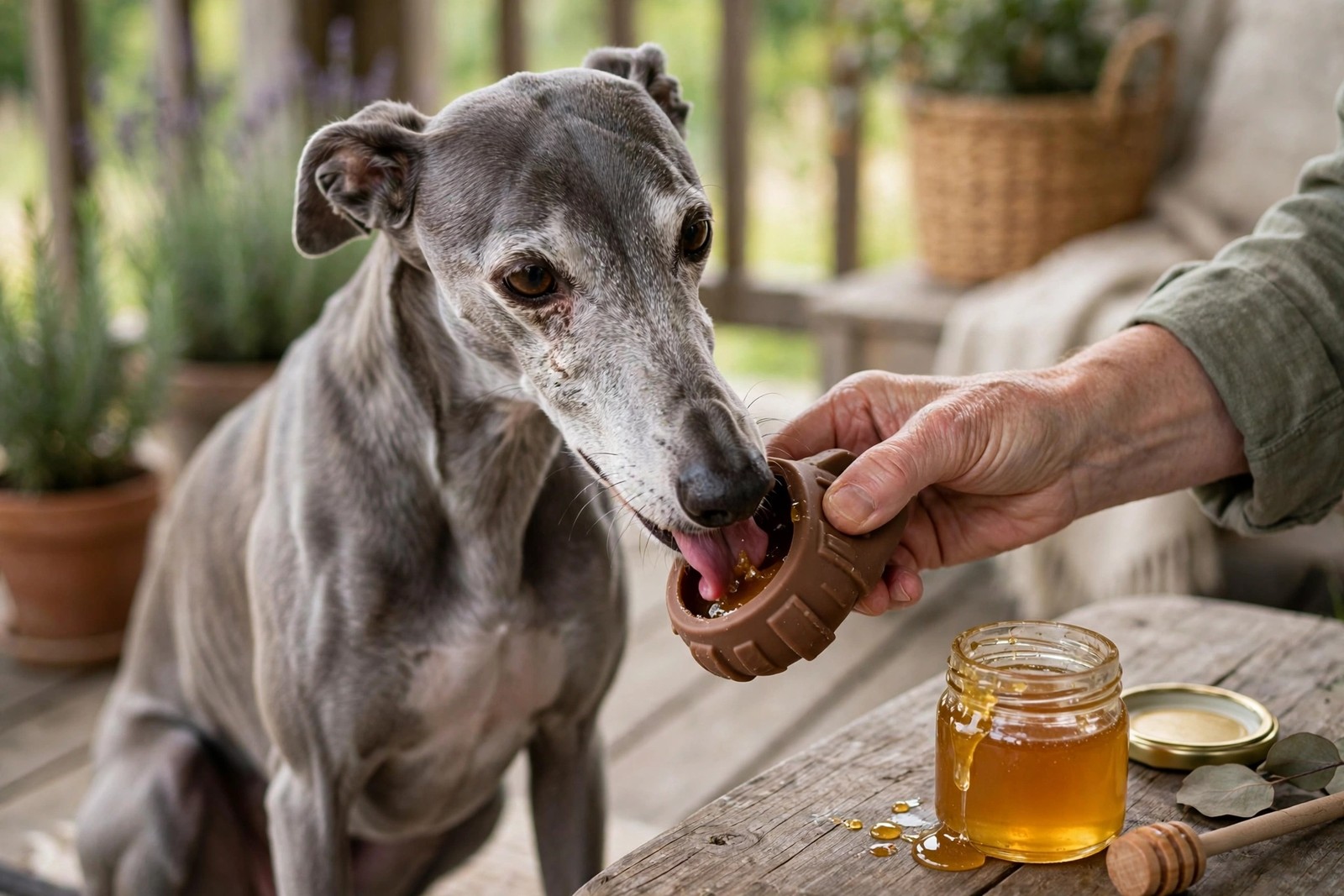
Yes — honey is safe for most healthy adult dogs in very small amounts, but the honest framing matters: for a dog, honey is sugar with good public relations. It brings calories and sweetness, nothing the diet is missing, so its proper role is a rare taste or a delivery trick, never a daily spoonful stirred into food.
How little counts as a serving
Think in drips, not spoonfuls. A small drizzle over a meal, a smear inside a lick mat, or the tip of a teaspoon for a large dog is a serving. Sticky sweetness clings to teeth, so a dog who gets honey regularly is also getting regular sugar sitting on the enamel — another reason occasional beats routine. Some owners use a honey smear inside a stuffable toy or as a bath-time distraction to make it more rewarding; used that way, the amount that reaches the dog stays tiny. Read jars before sharing, too: flavoured honeys and sugar-free syrups can contain ingredients dogs should not have, including xylitol in some sugar-free products, which is extremely dangerous. Ignore the folk claim that local honey will settle a dog's seasonal sniffles; there is no sound basis for feeding honey as an allergy remedy, and a dog with itching, sneezing, or sore ears deserves a proper veterinary look at the cause rather than a sweet experiment. If honey does touch the teeth regularly through lick toys, wipe or brush the teeth as part of the same routine.
Dogs who should skip it
Young puppies should not be given honey, particularly raw honey, because their immune systems are still developing and raw honey can carry bacterial spores their bodies are not ready for. Dogs with diabetes should have no honey unless your veterinarian specifically agrees, since even a small amount is a concentrated sugar load. Overweight dogs, dogs with dental disease, and dogs on a strict elimination diet to investigate itching or gut trouble should also pass — in each case honey adds exactly what their plan is trying to remove. When in doubt, ask the vet who knows your dog rather than the internet's average dog.
The cough-soothing myth
Honey is often suggested as a home soother for coughing dogs. A lick will not harm a healthy adult, but a cough is a symptom, not a diagnosis — kennel cough, heart problems, allergies, and something stuck can all present alike. A dog who keeps coughing, coughs up foam, struggles to breathe, or goes off food needs a veterinarian, not a sweeter spoon. Puppies and elderly dogs with new coughs should be seen promptly.
Note honey in KinsLe's Care Teams as an occasional-only feeding note with the amount written in, so the record shows a rare drizzle rather than letting a kind relative quietly promote it to a daily ritual.