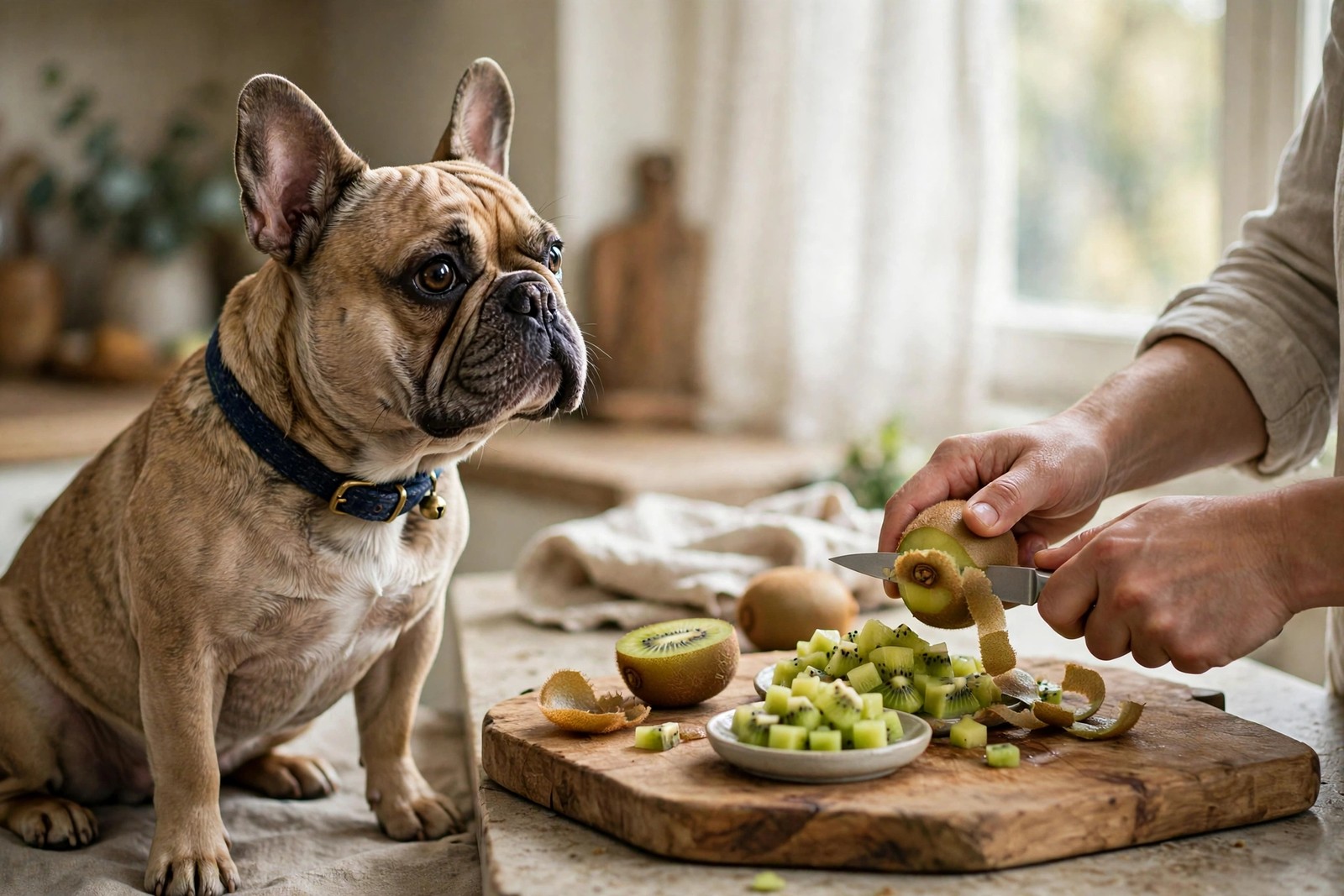
Yes — dogs can eat ripe kiwi flesh in small amounts: one or two small cubes for a small dog and a few slices for a larger dog. Kiwi brings vitamin C, fibre and a soft, juicy texture many dogs enjoy, but it earns its place as an occasional fruit treat rather than a dietary building block, because dogs on a complete food do not need its vitamins and its natural sugars set a natural limit. Preparation decides whether kiwi is a pleasure or a stomach ache, and the preparation is mostly about what you remove.
Peeling, Coring and Choosing a Ripe Fruit
Always peel kiwi for a dog. The brown fuzzy skin is tough, bitter and hard to digest, and a strip of skin can be awkward to swallow, so it comes off completely rather than being trimmed at the edges. Slice the peeled fruit and cut away the firm white core for small dogs, because that core stays hard even in a ripe fruit and makes a dense lump for a small throat. Choose fruit that gives slightly under gentle pressure: a ripe kiwi is sweeter and softer, while an unripe one is sharply acidic, firm enough to be gulped in chunks, and far more likely to cause drooling and stomach discomfort. The tiny black seeds need no attention at these portion sizes; they pass through as part of the flesh and are not a choking or toxicity concern for dogs.
Portions and the Loose-Stool Limit
Kiwi combines sugar, acid and an enzyme that helps break down protein, and in quantity that combination loosens stool reliably. Keep to the stated portion: one or two small cubes for a small dog, a few slices for a larger dog, offered occasionally rather than daily. Introduce kiwi on its own the first time, not mixed into a medley of new fruits, so that if the next day's stool is loose you know exactly which food to blame. Dried kiwi is a different food entirely, with the water gone and the sugar concentrated, often with added sugar or oil in the packet, and it should not be swapped in for fresh. Kiwi-flavoured drinks, sweets and desserts are human treats with no place in a dog's bowl either.
Storage and Serving Without Waste
Whole kiwis ripening in a fruit bowl are a counter-surfing temptation, so store them where a dog cannot help itself, and never leave a halved fruit face-down on a low table. Once cut, kiwi flesh softens quickly; refrigerate what you do not serve in a sealed box and use it promptly, discarding pieces that have gone mushy or fermented-smelling. A good serving rhythm is to share the fruit while you eat your own: peel, slice, set the dog's cubes aside in a small dish, and put the rest away before anyone sits down, so the portion is decided at the counter rather than negotiated at the sofa. Dogs with weight or blood-sugar concerns should have kiwi rarely and in the smallest stated amount, and any dog that repeatedly gets loose stool from small portions is telling you fruit sugar does not suit it. Golden kiwi follows exactly the same rules as the green kind: the same peeling, the same coring and the same portions, because the differences between them are sweetness and colour, not safety. Asking whoever feeds fruit in KinsLe Care Teams to log kiwi as a peeled treat, never a whole fruit dropped in the bowl, keeps the prep rule attached to the food itself.