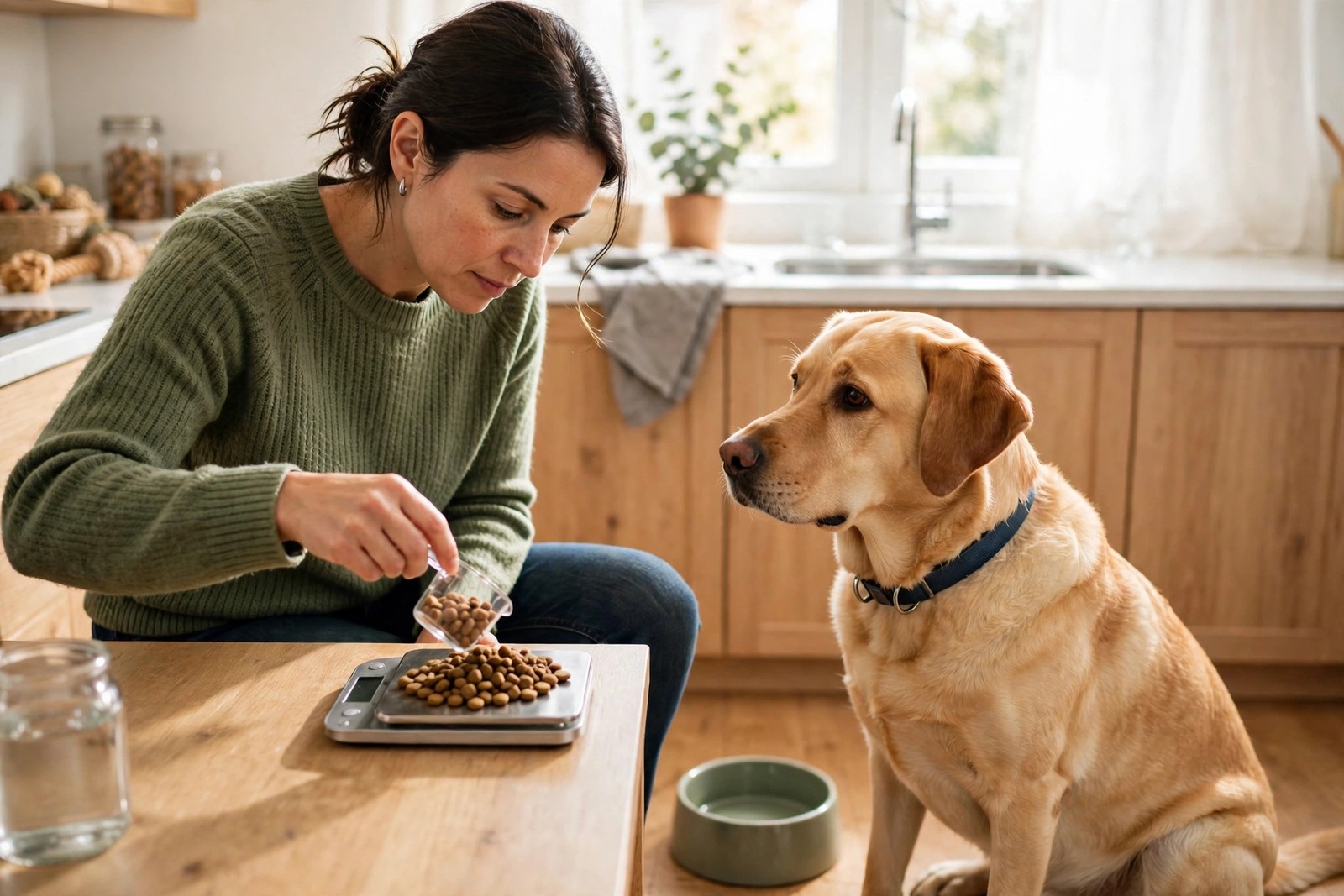
Weight loss in dogs is a measuring problem before it is a willpower problem. Most overweight dogs are not eating dramatic amounts — they are eating slightly too much, every day, from a scoop that was never weighed, plus treats nobody counted. Fix the measuring, set the amounts with your vet, and a slow, safe loss of roughly 1 to 2 percent of body weight per week is achievable for most healthy dogs.
Set the Target With Your Vet First
Book a weigh-in and a body-condition assessment before you change anything. Your vet scores condition on a 9-point scale — you want to feel ribs easily under a thin fat cover and see a waist from above and the side — and sets a target weight and a daily calorie allowance based on it. That visit also rules out medical contributors such as an underactive thyroid and confirms her joints and heart can handle gradually increased exercise. Feeding for the target weight, using the food's calories per gram rather than the packet's guide for her current weight, is the core of the whole plan.
Weigh Food, Cut in Small Steps
Put the kitchen scale where the food lives and weigh every meal in grams. A measuring cup can over-pour kibble by a wide margin depending on who scoops, which alone can stall a diet. From her current weighed amount, step down by about 10 percent at a time, hold each step for two weeks, and let the weigh-ins judge it. Never crash-diet a dog, and do not simply feed less and less of a rich food until meals are tiny — if portions become very small, your vet may suggest a dedicated weight-management diet, which delivers full nutrition and a satisfying bowl on fewer calories.
Treats, Toppers, and the Household Problem
Treats and extras commonly supply the hidden surplus. Dental chews, training treats, cheese tax, and the corner of your toast can quietly add a meal's worth of calories. Either cut them out for the diet period or count every one within her daily allowance — many owners set aside part of her weighed kibble as the day's training treats, which costs nothing extra. Low-calorie stand-ins such as green beans, cucumber, or carrot pieces keep the ritual of rewarding without the calories. Every person in the house follows the same rule; one soft-hearted feeder undoes the plan.
Track, Adjust, and Add Movement
Weigh her every two weeks, on the same scales at the same time of day, and write it down. If she has lost nothing after three to four weeks at a step, reduce by another small step or talk to your vet about checking the allowance — do not guess downward repeatedly on your own. Build activity up gradually alongside the food changes: an extra ten minutes of walking, gentle hill work, and play burn calories and protect muscle, but sudden intense exercise in an overweight dog risks joints and overheating.
The set weighed ration is exactly the sort of instruction that drifts between feeders, so put it in KinsLe Care Teams: her grams per meal, her approved treats, and her fortnightly weigh-in become assigned duties for your dog that anyone feeding her can follow to the gram.