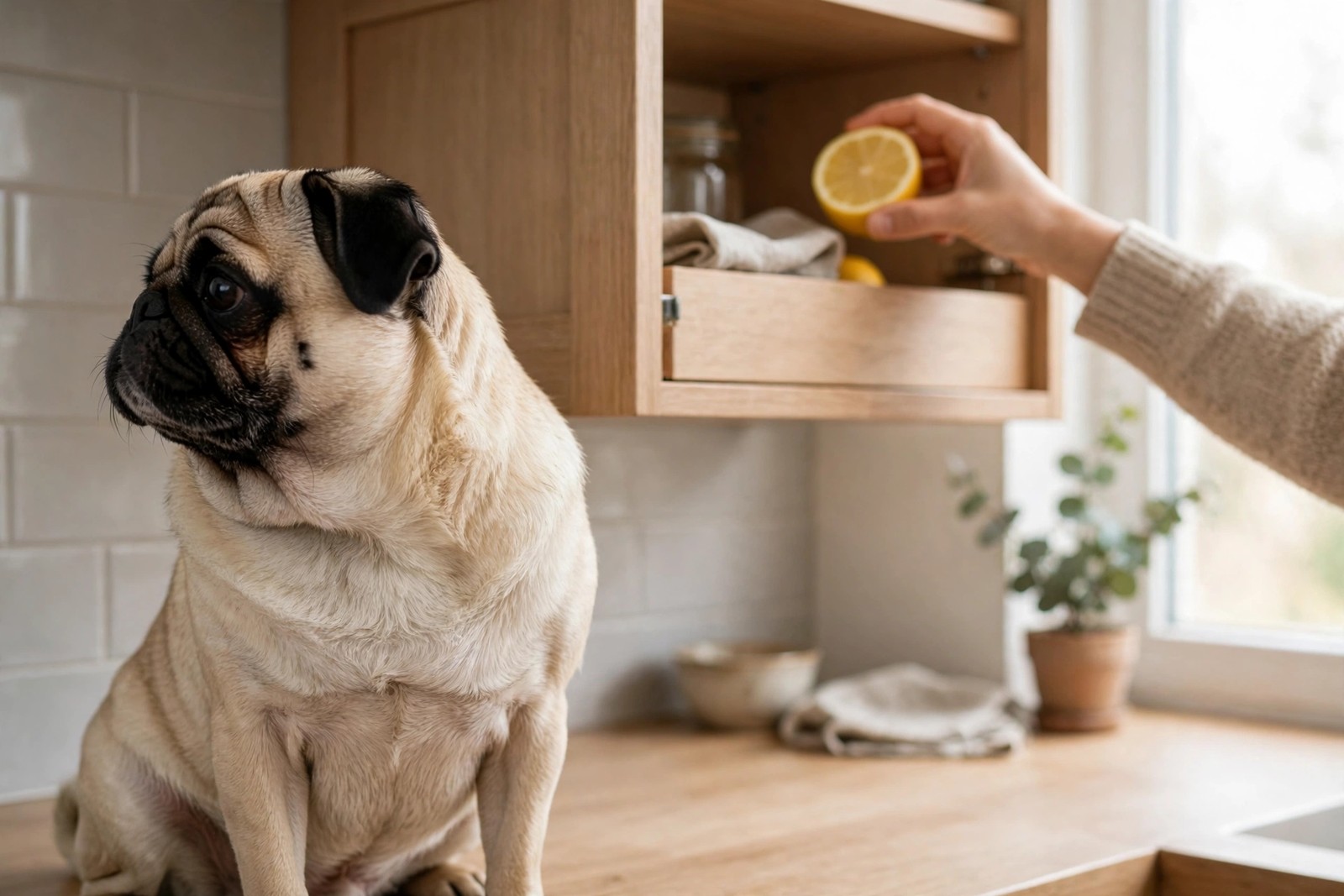
No — dogs should not eat lemons, and unlike oranges, lemons have no redeeming dog-friendly version. The flesh is intensely acidic and bitter, a combination that commonly produces drooling, lip-licking, vomiting or diarrhoea, and most dogs that investigate a lemon wedge recoil after the first lick and make the decision themselves. The parts an owner discards are worse than the part an owner eats: the peel and the white pith carry concentrated citrus oils and compounds that irritate a dog's gut far more than the juice does, and the seeds are a pointless addition to any mouthful. This is a fruit to keep, not to share.
Keeping the Scale Honest
A lemon is not a poison in the dramatic sense, and honest scale matters. A dog that licks a wedge, mouths a slice dropped during cooking, or steals a small piece of flesh will usually suffer nothing worse than a sour stomach and a disgusted expression. Peel changes the calculation: a dog that chews and swallows a whole peel, drinks concentrated lemon juice, or gets into lemon essential oil has taken a much larger dose of the irritating oils, and vomiting, diarrhoea, drooling or unusual quietness afterwards deserves a same-day call to your veterinarian. Lemon-flavoured desserts sit on the peel's side of the line in spirit, because lemon curd, drizzle cakes and cordials add concentrated flavour, sugar and fat to the acid, and none of them belongs in a dog's bowl.
The Water-Bowl and Flea Myths
Lemon keeps appearing in dog care as folklore, and two versions deserve direct answers. Adding lemon juice to a dog's water as a detox, a breath freshener or a flea deterrent does nothing useful, and it can do quiet harm, because a dog that dislikes the taste may drink less than it needs. Fresh, plain water, changed daily, is the entire recipe a healthy dog requires. Rubbing lemon on a coat to deter fleas is equally misguided: the oils irritate skin, a dog will lick the coat and ingest them anyway, and undiluted citrus oils and lemon-scented cleaning products around the home are concentrated enough to be a genuine hazard worth storing like any other chemical. A halved lemon used in cooking should go in a lidded bin, not an open fruit bowl at nose height or onto a compost heap a dog can raid.
If Your Dog Gets Hold of Lemon
Remove what remains, offer plain water, and watch for drooling, repeated vomiting, diarrhoea or a dog that goes quiet and refuses food. Most flesh-only incidents settle within the day with nothing more than observation. Call your veterinarian the same day if peel or a large amount of juice was swallowed, if vomiting repeats, if the dog is very small, or if anything about its behaviour worries you, and mention any essential-oil exposure specifically, because concentrated oils are judged differently from fruit. Prevention stays simple: store lemons in the fridge or a closed cupboard, bin peel in a secured caddy, and wipe citrus spills during cooking before a tongue finds them. Lemon trees and dropped fruit extend the same point outdoors, because a fallen lemon splits open, concentrates as it dries in the sun, and gets chewed by a dog that would flatly refuse a fresh wedge at the table. Inside KinsLe Care Teams, the lemon rule can sit beside the daily feeding duties, where anyone preparing a bowl sees that citrus stays out of both food and water.