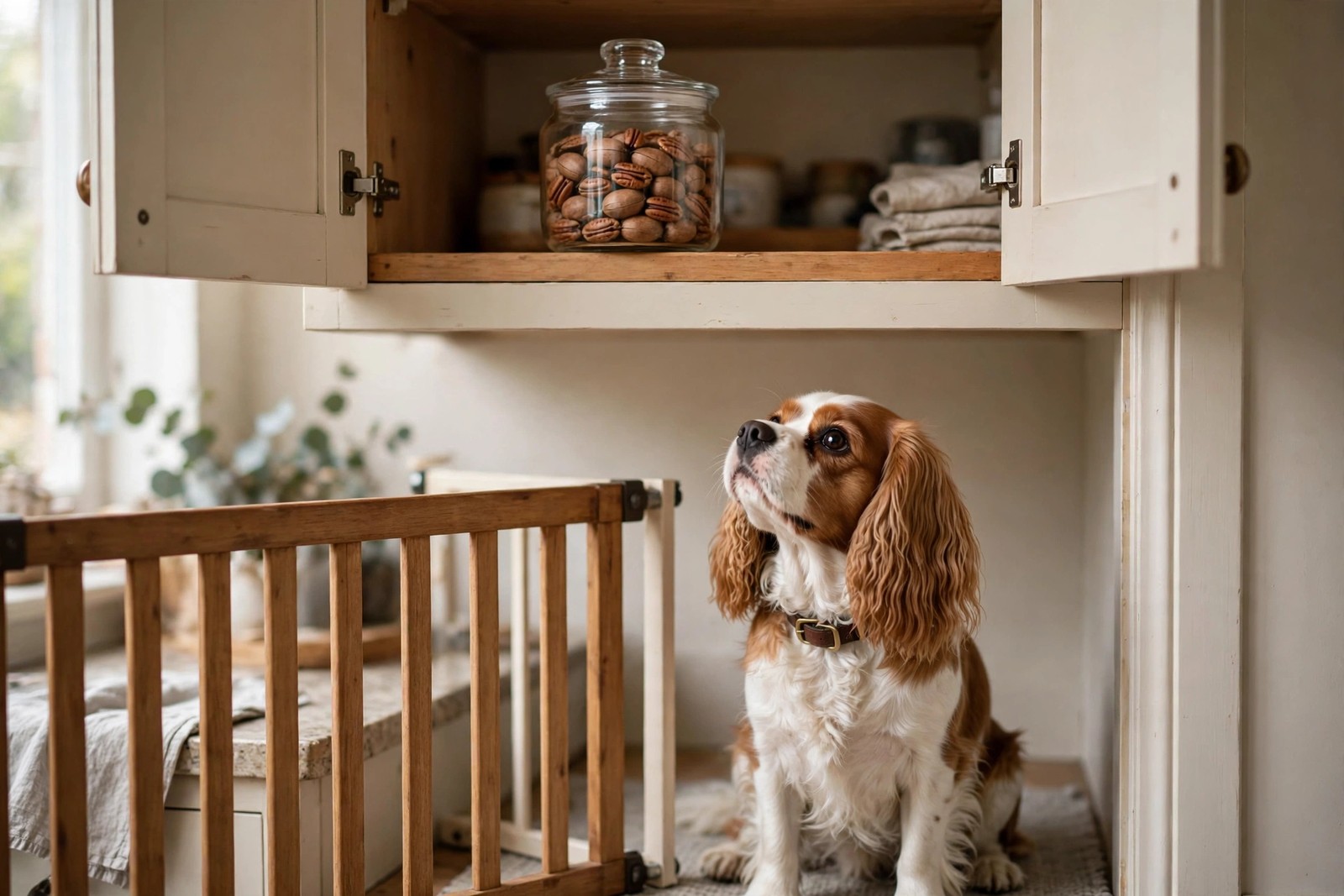
No, never feed pecans deliberately. Pecans are high in fat, their shape can lodge in a small dog's throat, and stored nuts can carry moulds that produce aflatoxin and tremor-causing compounds, while the nut itself contains juglone. There is no portion that makes pecans a sensible treat, because safer rewards exist that carry none of these risks. This rule is about pecans themselves. It is separate from the rule for macadamia nuts, which are a distinct and more acutely toxic case, and owners should not merge the two nuts into one vague warning.
The Risks, One by One
Fat comes first. A handful of pecans delivers a rich load that can trigger vomiting and diarrhoea, and dogs prone to pancreatitis have no margin for that kind of extra. Shape comes next. A whole pecan or a large half fits badly in a small throat, and a dog that inhales snacks can lodge one before anyone reacts. Mould is the quiet risk. Nuts stored for months in a warm cupboard, or fallen nuts gathered from a garden tree, can carry moulds whose toxins cause muscle tremors and serious illness, and the mould is not always visible. Juglone, a compound present in pecan trees and nuts, adds another reason to keep fallen garden nuts raked up and binned during autumn. Salted, spiced, candied and pie-coated pecans stack further problems on top, because sugar, salt and chocolate coatings each harm dogs in their own way.
If Your Dog Eats Pecans Anyway
A single dropped pecan eaten by a large healthy dog will usually pass with at most a stomach upset. Stay calm, remove the rest of the nuts from reach and watch the dog over the next day. Call your veterinarian promptly if you see repeated vomiting, diarrhoea that does not settle, wobbling, tremors, weakness or a dog that goes off food and water. Those signs matter more after stored or garden nuts than after one fresh nut from a baking bowl. Do not wait for tremors before calling if a small dog ate several nuts, because size changes the dose the dog received. Tell the veterinarian how many nuts, roughly when, and whether the nuts were fresh, stored or fallen, because that detail shapes the advice you receive.
Pecan Trees and Seasonal Hazards
Homes with a pecan tree face a seasonal version of this problem each autumn, when fallen nuts carpet the ground faster than anyone rakes them. Fallen nuts sit in damp leaf litter, which is exactly the setting where mould thrives, and a dog that forages under the tree can eat several nuts before anyone notices. Walk the garden before letting the dog out during the heavy drop weeks, rake the fall into a covered bin and keep the dog on a lead near the tree until the ground is clear. Visiting dogs deserve the same protection, because a guest dog has no learned boundary around the tree. The shell adds its own risk in this setting, since a dog can crack a shell, swallow sharp pieces and cut the mouth or throat before the nut itself causes any trouble.
Keeping Pecans Out of Reach
Store baking nuts in a sealed container inside a closed cupboard rather than in an open bowl on the counter. During baking, keep the dog out of the kitchen or behind a gate, because dropped nuts roll under units and reappear later. After pecan pie or nut roasts, clear plates straight into a bin the dog cannot open, and check the floor where guests ate. Teach every household member that the never list for this dog includes pecans in every form, raw, roasted, salted and baked into desserts. Write any pecan incident, with the time, the rough amount and the symptoms you watched for, into KinsLe Pet Passport so the record travels with the dog to the next appointment.