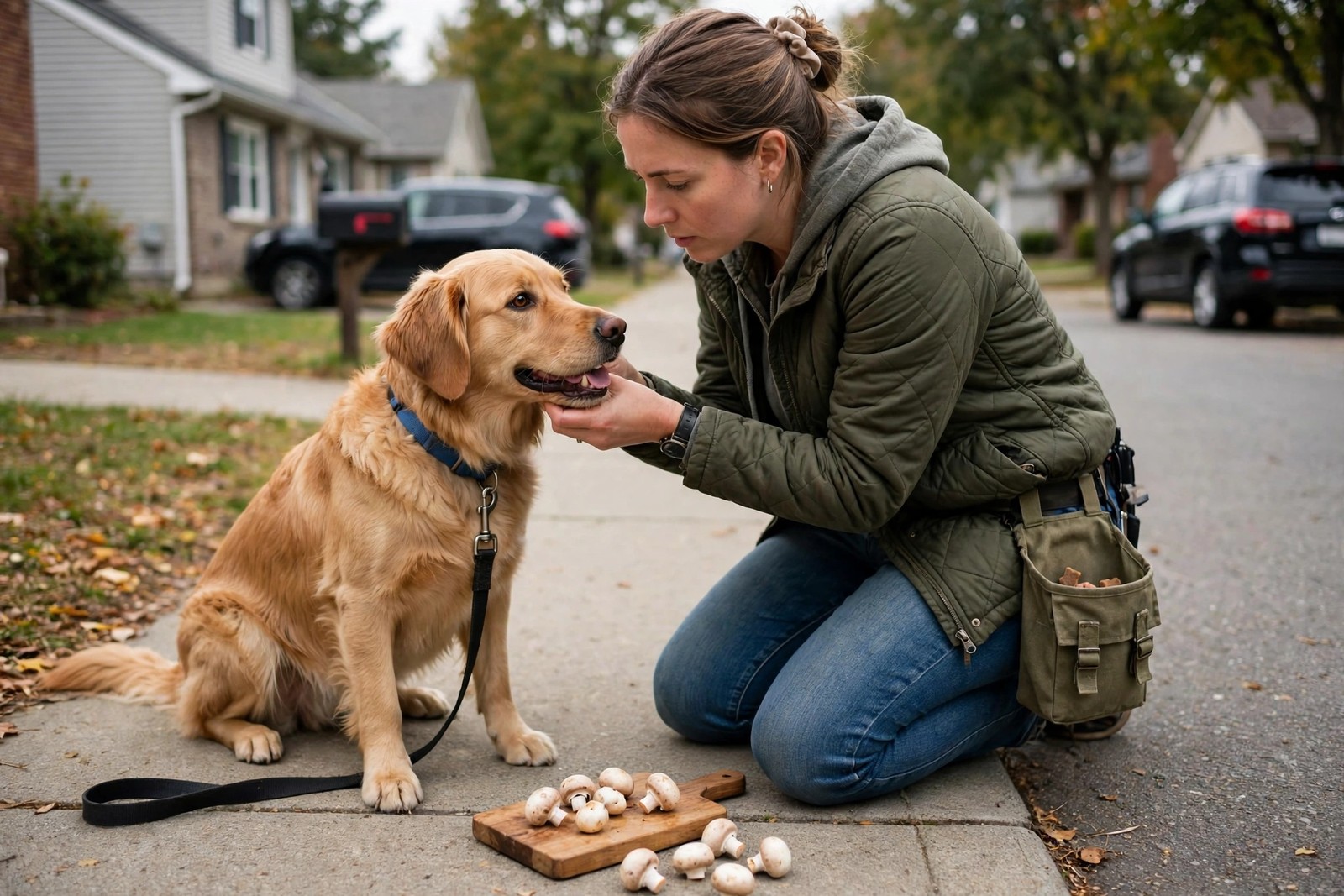
Yes, store-bought mushrooms can be shared with your dog in a small amount, and the button mushrooms on your chopping board are the type this answer covers. Plain culinary mushrooms sold for people to eat, cooked simply and served in pieces, are a reasonable occasional extra. Everything outside that narrow description needs its own refusal, and this article draws those lines carefully because mushrooms as a group include genuinely dangerous items a dog can pick up.
Plain Cooking, Small Pieces
Wash the mushrooms, slice them, and cook them plainly in a dry pan or with a splash of water until they soften and release their liquid. Serve them with no butter, oil, salt, garlic, onion, or seasoning. Offer a few slices to a small dog or one to two small mushrooms, sliced, to a medium or larger dog, mixed into regular food as an occasional extra. Raw culinary mushrooms are harder to digest than cooked ones, so the cooked version is the one to share. A mushroom that fell on the floor during plain preparation can be rinsed and cooked with the rest. A mushroom that fell into a sauce should stay out of the bowl.
Sauces and Soups Change the Food
Mushrooms rarely travel alone in finished dishes. Cream sauces carry garlic, soups carry onion, and stir-fries carry soy sauce, chilli, and seasoned oils. Each of those additions disqualifies the mushroom it coats, because garlic and onion are foods dogs should never be given deliberately. Serve your dog's slices from the pan before the sauce stage begins, or cook a small plain portion separately. A mushroom fished out of a finished soup has already absorbed the soup, and rinsing a cooked slice does not return it to plain.
Wild Mushrooms Are Never Food
No wild mushroom should ever be offered to a dog, and no amount is a safe taste test. Some wild species are harmless and others can cause severe poisoning, and even experienced foragers treat identification with caution. Owners should apply a simpler rule: if a mushroom grew wild in a garden, a park, or a woodland edge, your dog does not eat it. Watch for mushrooms appearing in damp lawn corners after rain, remove them where you can, and keep your dog from grazing in areas where they cluster. If your dog eats a wild mushroom, note the time, photograph what remains if you can do so safely, watch for vomiting, diarrhoea, drooling, wobbling, or unusual tiredness, and call your vet promptly for guidance rather than waiting to see which way the day goes.
Reading a Dog After a New Food
Culinary mushrooms in a correct portion usually pass without comment. Loose stools or wind after a first serving mean the amount was generous for that dog, and a smaller portion or a retirement from the menu is the sensible response. Any mushroom reaction that involves repeated vomiting, weakness, or behaviour that worries you deserves veterinary advice the same day, and you should say plainly what type of mushroom was eaten and how it was prepared.
Two Lists, Side by Side
Mushroom safety at home rests on keeping two lists apart: culinary mushrooms that may be shared when plain and cooked, and wild mushrooms that may never be shared at all. Confusion starts when a household keeps only the first list in mind. Out on a walk, KinsLe Care Teams can carry that warning for whoever holds the lead: wild fungi are never eaten, and the only shareable mushrooms are culinary ones cooked with nothing added, never from a sauce or a soup.