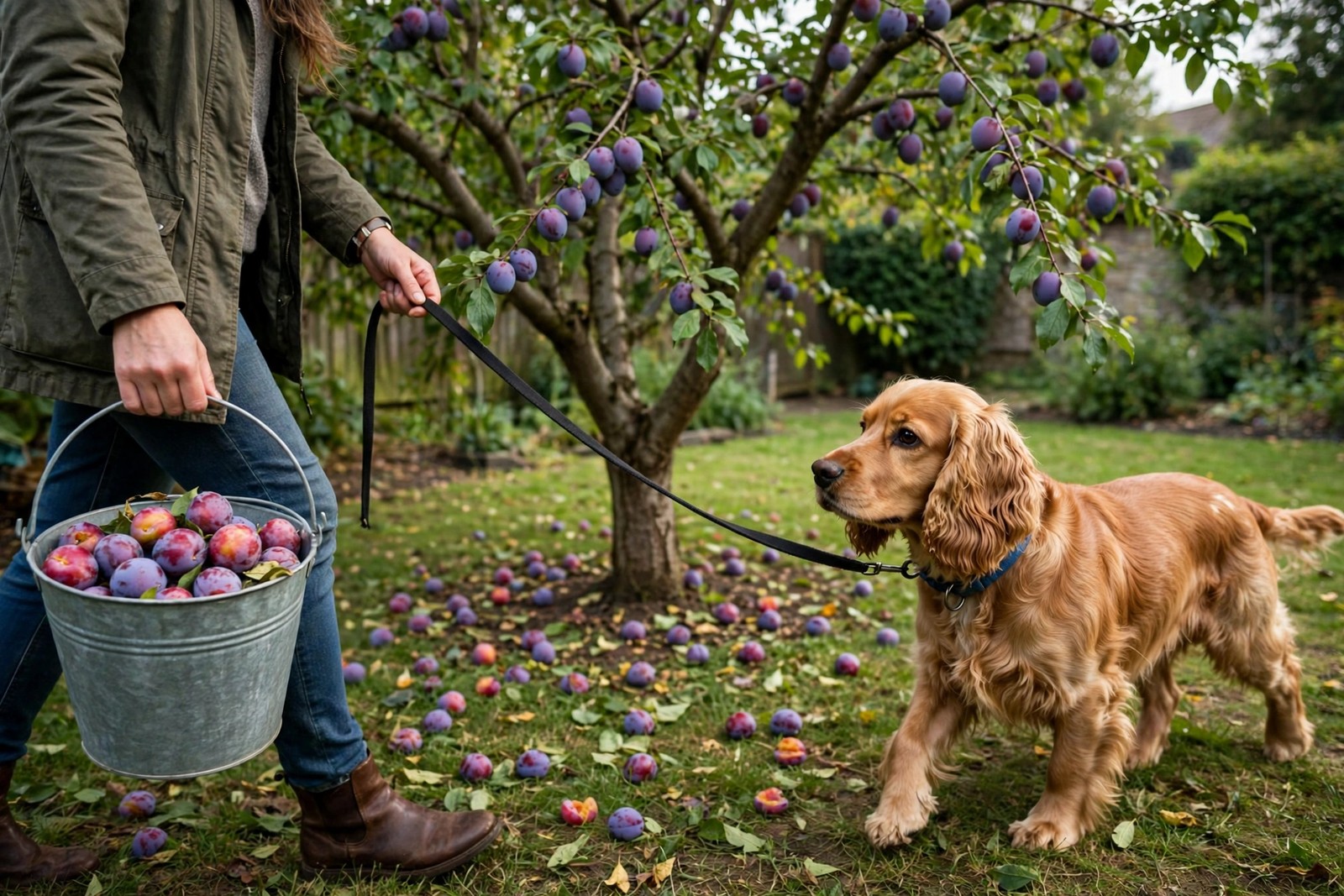
Plums are best kept away from dogs altogether, and this is one fruit where the careful answer is simply no. A small bite of ripe plum flesh is not poisonous in itself, but everything around that flesh works against the dog. The pit, stems and leaves contain cyanide compounds, the pit is hard and oval enough to choke on or to block the intestine, and the rich, sugary flesh loosens the stool of many dogs. Safer fruits deliver the same small treat moment without stacking those risks together.
Where Dogs Actually Meet Plums
Most plum incidents do not happen at the food bowl. They happen under garden plum trees in late summer, when windfall fruit softens on the grass, and at picnics and kitchen counters where whole plums sit in an open fruit bowl. A dog who finds a fallen plum eats it the efficient way: flesh, pit and all, often several in a row before anyone notices. Clear windfalls daily during the season, fence off a heavily fruiting tree if your dog grazes underneath it, and keep fruit bowls pushed back from counter edges that a large dog can surf.
Dried plums, sold as prunes, remove none of the concern. They are concentrated sugar, sticky enough to cling to teeth, and while they are pitted, their richness makes digestive upset likely. Plum jam, plum sauce and stone-fruit desserts add sugar and sometimes sweeteners a dog should never have, so none of them belong in a dog's bowl either.
If Your Dog Eats a Plum Pit
Call your veterinarian the same day and say how many pits may have been eaten, your dog's size, and whether any leaves or stems were chewed. A single pit often passes through a large dog, but in a small dog the same pit can lodge in a narrower intestine, and cracked or chewed pits raise the cyanide concern. Do not wait for dramatic signs before making that call, and do not try to make your dog vomit unless a veterinarian tells you to.
Watch closely for the next two days for vomiting, drooling, pawing at the mouth, loss of appetite, straining to pass stool, passing no stool, or a belly that looks bloated or feels painful. Any of those signs means urgent veterinary care, not home monitoring. Chewing plum leaves or bark with rapid breathing, weakness or wobbling is also an emergency presentation.
Better Swaps for the Same Moment
If your dog loves soft sweet fruit, offer a few blueberries, small apple slices with seeds and core removed, or diced pear flesh instead. Each gives sweetness and juice without a hard central pit. Keep portions treat-size, introduce one at a time, and stop any fruit that repeatedly loosens your dog's stool.
A no-feed rule only works if everyone in the house knows it before fruit season starts. KinsLe Care Teams lets you pin 'no plums, no windfalls, clear the garden daily' to your dog's care duties, so a well-meaning guest never learns the rule after handing over the fruit.