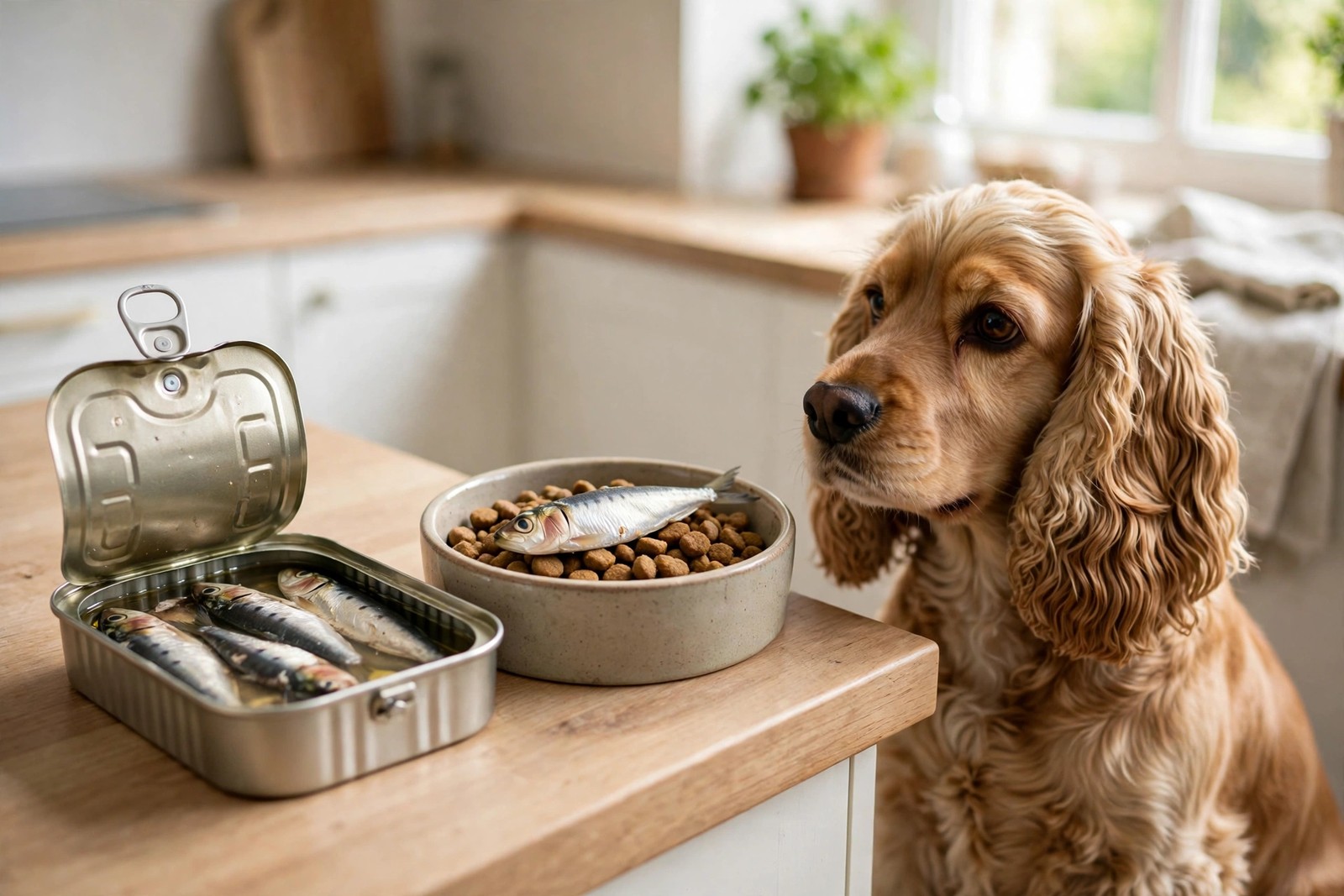
Yes, sardines in water are an excellent occasional topper for dogs. Serve 1 sardine for a small dog or 2 sardines for a large dog, once or twice a week, drained before serving. Sardines earn this praise for specific reasons rather than general fishiness. They are small fish with a short lifespan, so they accumulate far less mercury than large long-lived fish such as tuna. They are rich in omega-3 fats that support skin, coat and joints, and they deliver that nutrition in a portion a dog actually finishes.
Why the Soft Bones Are Safe Here
Owners rightly fear fish bones, yet sardine bones behave differently from the bones in a fillet of white fish. The canning process softens sardine bones until they crumble between your fingers, and a dog eats them without the splintering risk that makes cooked chicken bones dangerous. Those soft bones add useful calcium to the meal. Check each fish with a fork as you serve it anyway, and remove any fragment that feels firm or sharp, because checking costs seconds. Mash the sardine into the normal food for a small dog or a cautious eater, and serve whole fish to a large dog that chews calmly. The skin and the soft flesh are fine to serve, and no cooking is needed because the fish in the tin is already cooked.
Choosing the Right Tin
The words in water carry the whole answer. Sardines packed in water, ideally with no added salt, suit dogs. Sardines in oil add fat the dog does not need and can loosen the stool, and the oil in flavoured tins may carry seasoning. Sardines in tomato sauce, mustard sauce or chilli should not be shared, because those sauces bring salt, acidity and spices. Brined sardines sit in a harder position, and their salt load makes them a poor regular choice, so rinse a brined fish well if it is ever the only option and treat the occasion as rare. Read the tin before you buy rather than at the bowl, and keep a suitable tin in the cupboard so an unsuitable sauce version never becomes the default.
Sardines for Coat, Joints and the Fussy Eater
Owners usually notice the coat first. A few weeks of a weekly sardine topper often leaves the coat glossier, because the omega-3 fats support skin that sheds less dry flaking. The same fats support comfortable joints, which is one reason sardines suit active and older dogs alike, although sardines never replace a plan your veterinarian sets for a stiff dog. The powerful smell also helps a fussy eater finish a plain meal, and mashing the fish through the food spreads that smell across the whole bowl. Use that trick sparingly, on the planned sardine day, so the dog does not learn to refuse untopped meals on the other six days of the week.
Portions, Storage and the Smell Factor
Stick to 1 sardine for a small dog or 2 sardines for a large dog, once or twice a week, because sardines are rich and a daily habit would unbalance the diet and loosen stools. Introduce half a fish first for a dog that has never eaten sardines, and watch the stool the next day. Once a tin is open, transfer the remaining fish to a sealed container, refrigerate it and use it within 2 days. Sardines smell strong, so serve them in a bowl you can wash straight away and expect the aroma to linger on the dog's breath. A dog that refuses the first sardine has made a fair choice, and no health argument justifies forcing the issue. Put the sardine day on the weekly plan in KinsLe Care Teams, with the fish count written in, so the topper stays a planned extra rather than a surprise added by two feeders.