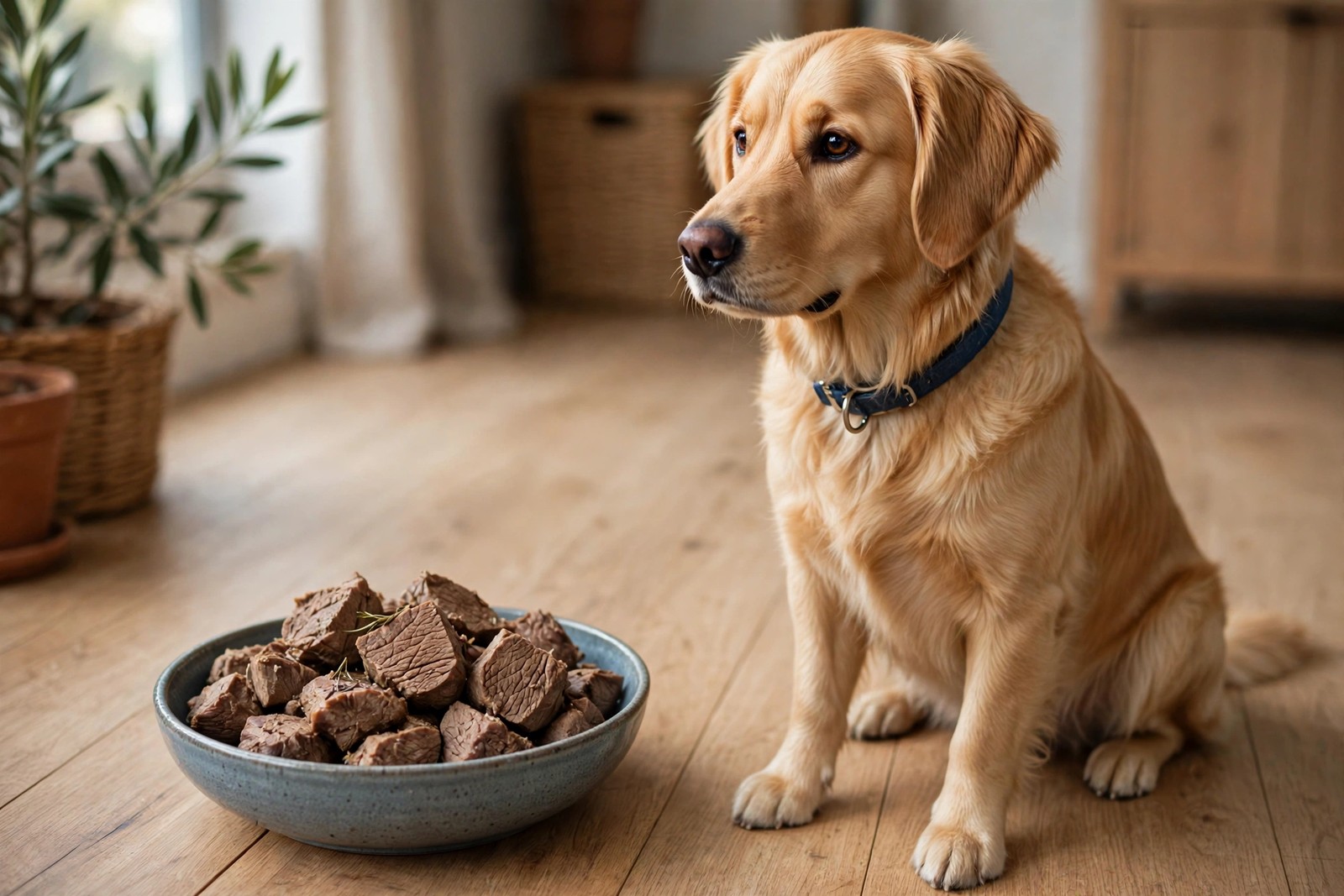
Yes, a dog can eat venison, and the safe version is easy to describe. Serve plain lean meat, cooked thoroughly, cut boneless and free of seasoning, with visible fat trimmed away before cooking. Venison suits a dog who has reacted to more common meats in some cases, and the meat also works as a high-value treat in small cubes. The risks around venison sit in the bones, the fat, the sauces and any move toward serving game raw.
Bones, Fat and Sauces Stay on the Human Plate
No bone from a deer belongs in a dog's bowl. Cooked bones turn brittle as they heat, and a cooked game bone can splinter into sharp pieces that injure the mouth, throat or gut. Raw bones from a carcass carry their own risks, and a whole carcass brings unknown handling and contamination with it. Hand over meat only, cut from the joint before serving, and bin every bone out of reach rather than leaving bones on a low plate or in an open bin. Trim rich fat from the meat, since a fatty serving can loosen the stool or upset a dog who usually eats lean food. Sauces, marinades, gravy and rubs from the human version stay on the human plate too, because those mixtures commonly carry salt, garlic, onion, wine and spices that a dog does not need. Roast or pan-cook the dog's portion separately and plainly, and serve the meat warm or cold once the cooking finishes.
Why Cooked, Never Raw Game
Raw wild meat can carry bacteria and parasites, and freezing or careful handling at home cannot guarantee that a raw serving is clean. Thorough cooking removes that layer of risk, and cooked venison still delivers the flavour and protein that made the meat appealing. This guide does not endorse raw feeding with game, and an owner who feeds any raw diet needs a veterinarian involved in the plan, since the risks and the nutritional balance both need professional oversight. Wild game also varies in a way farmed meat does not. The animal's diet, the season, the handling after the hunt and the time before refrigeration all change the meat that reaches the kitchen. Buy venison from an inspected and traceable source where you can, handle the dog's portion with the same hygiene you use for your own food, and refrigerate leftovers promptly. Cook the meat all the way through, with no pink centre left in thick pieces, and reheat leftovers only once.
Introducing a New Protein Slowly
Offer a few small cubes beside a familiar meal on the first day, and watch the stool and the dog's comfort over the following day. A clean response earns a slightly larger serving on another day, while loose stool or itching ends the trial and returns the dog to familiar food. Dogs who react to common meats sometimes receive venison inside a structured food trial, and a trial of that kind belongs under a veterinarian's direction, since casual swapping between proteins muddies any result. Count venison cubes inside the day's treat allowance when training, because rich meat rewards add up across a session. Store cooked leftovers sealed in the fridge and use them within a few days, or freeze plain cooked cubes in small portions for later training. Note the new protein and the response in your feeding record, so the next person who shops or cooks knows what the dog has already tried. In KinsLe, Care Teams can carry venison on the feeding duty with the cooked, boneless and trimmed notes attached, and each completed meal leaves a record the whole household can check.