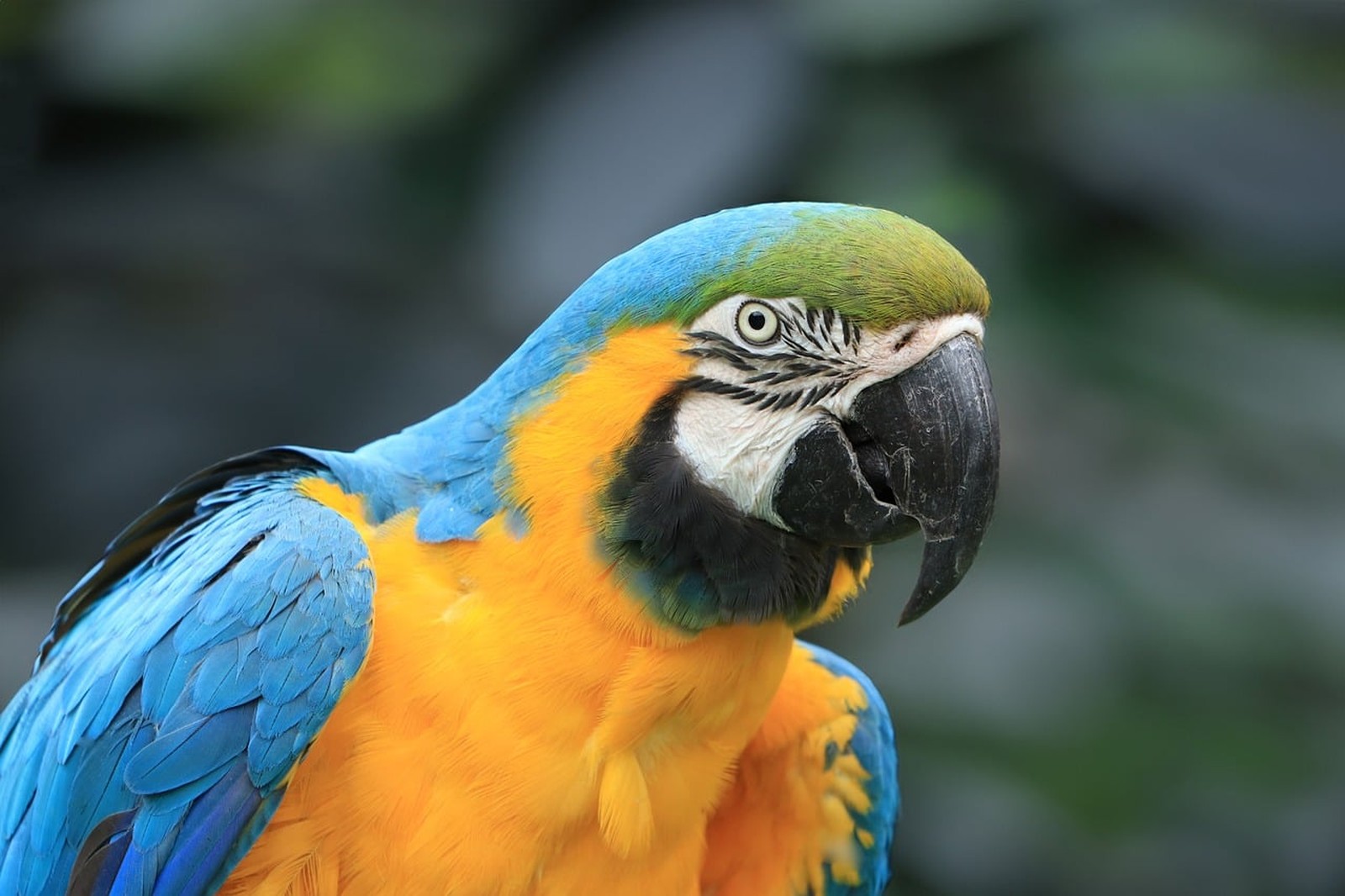
Most macaws can learn to mimic human words, and many do say hello, name family members, and copy laughs, coughs, and doorbells with enthusiasm. Clear is a matter of degree, though. A macaw's natural voice is big, rough, and built for carrying across a forest canopy, so its words usually sound gravelly and less precisely formed than the speech of an African grey parrot, which is widely regarded as the most accurate mimic among commonly kept parrots. If crisp, conversational speech is your main hope, a macaw will probably underdeliver. If you want a clownish companion who shouts a recognisable greeting across the house, a macaw can delight you.
How Talking Develops in a Macaw
Speech in macaws is mimicry, not language in the human sense, although many birds learn to use a word in the right moment because they have linked it with what happens next. Development is gradual. Young macaws babble first, producing soft, rambling sounds that owners often notice at quiet times of day, and recognisable words usually emerge from that babbling over months rather than weeks. A bird may repeat a sound accurately to itself for a long time before it ever performs it for an audience, so you may hear better speech through a doorway than face to face.
Individual variation is large. Species, age, sex, temperament, and how much relaxed social time the bird gets all play a part, and two macaws in the same home can end up very different: one with a handful of clear words and constant chatter, the other with almost no words and a rich repertoire of whistles and chuckles. Neither bird is failing. Vocal learning is an offer, not a contract, and a quiet macaw is not an unhappy or unintelligent one.
Teaching That Actually Works
Teach one short word at a time, in the situation where it belongs. Say hello when you walk in, say bye when you leave, and name a favourite food as you offer it, using the same cheerful tone each time. Keep practice woven into greetings and feeding rather than running long drilling sessions, because a bored macaw stops listening and a pressured one may start shouting instead. Ten brief, happy repetitions across a day teach more than one long session.
Reward attempts, not perfection. A rough, half-formed version of the word deserves the same delighted response as a clear one, because the bird is learning that trying earns attention. Speak in a bright, slightly higher voice if the bird responds to it, avoid teaching words you will regret hearing at full volume for decades, and never withhold food or social time to force performance. Household sounds are learned just as readily as words, so a macaw living beside a barking dog or a ringing phone will add those to its repertoire uninvited.
Clarity, Volume, and Honest Expectations
Record your macaw now and again if you want to judge progress, because owners who hear a bird daily stop noticing gradual improvement. Expect clarity to be best on short, simple words with strong consonants, and poorer on long phrases, which often collapse into an excited mumble. Remember the volume question too: a talking macaw uses its full voice, and a word learned sweetly can be delivered as a joyful shout at dawn, which neighbours through a thin wall may not enjoy.
A macaw lives for decades, so speech is a small part of a long companionship built on trust, routine, and daily social time. Sharing the greetings, the word practice, and the out-of-cage time across the family keeps that routine steady when one person is busy, and KinsLe Care Teams lets you split those daily macaw duties and see each one marked done.