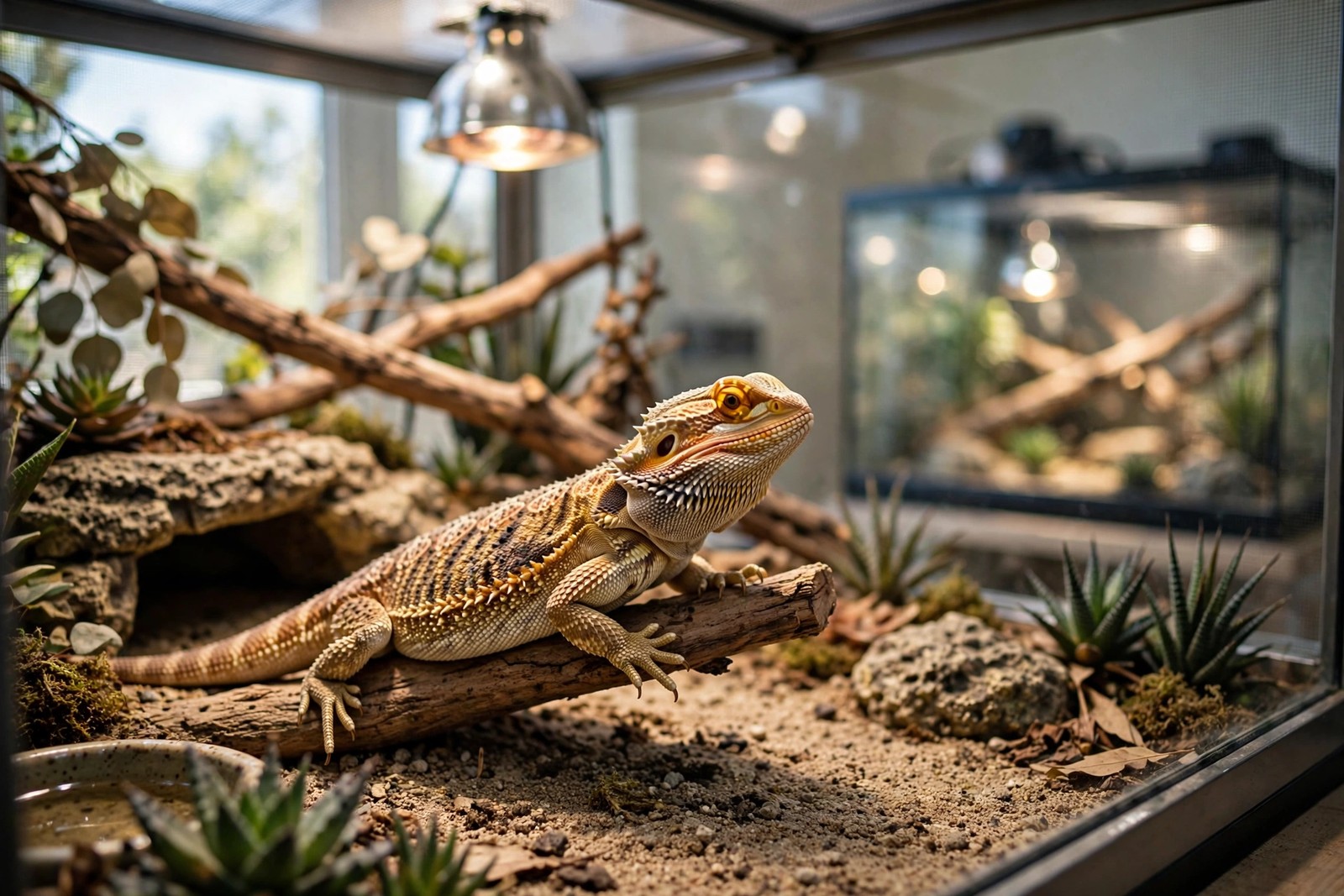
No, and bearded dragons are blunter about it than most reptiles. They are solitary, territorial lizards that read another dragon in their space as a rival, not a companion. A shared tank may look peaceful in a pet shop, where the animals are babies. The problems arrive with size and maturity, and they arrive in the dragon least able to tell you about them.
How Dominance Actually Looks
The dominant dragon takes the highest basking spot, eats first and fastest, and may simply lie across the other dragon. Owners often read that stacking as cuddling; it is the opposite — the dragon underneath is blocked from the heat and UVB it needs to digest food and use calcium. Watch for the subordinate dragon spending its days in the cool corner, eating only leftovers, gaping, darkening its beard, or waving an arm slowly, which is a submission signal, not a greeting. Head-bobbing from the dominant animal is a territorial display. Over weeks, the weaker dragon grows more slowly, loses weight, and becomes vulnerable to exactly the bone and digestion problems good lighting is meant to prevent.
When Displays Become Injuries
Competition turns physical without much warning. Bites land on the toes, feet, and tail tip — the body parts dragons can least spare — and lost toes and nipped tail tips are the classic injuries of shared tanks, alongside bites around the jaw during feeding lunges. Two males are the most volatile pairing, but mixing sexes brings breeding stress and unwanted eggs, and even two females that tolerated each other as juveniles frequently fall out as adults. Because both dragons share one environment, parasites and infections pass between them freely, and you cannot tell whose droppings have changed.
The Setup That Keeps Both Dragons Well
Give each dragon its own full enclosure — for an adult, about 120 gallons — with its own basking spot, UVB tube, hides, and feeding routine, and place a visual barrier between tanks if the dragons can see each other, since even a visible rival maintains stress. Feed them separately inside their own enclosures, dust each dragon's insects for that dragon, and keep separate notes on appetite, weight, and droppings so a problem belongs to one animal. If yours are sharing now, separating them is the fix, not a bigger shared tank or a second basking lamp; afterwards, watch the subordinate dragon's appetite and growth, and see a veterinarian who treats reptiles about any bite wound or a dragon that does not start eating better once housed alone. Running two complete setups doubles the daily jobs, which is where KinsLe's Care Teams feature helps — you can assign each tank's salads, insect feedings, and cleaning to household members and see every completed task timestamped, so the quieter dragon's care is never the one that gets skipped.