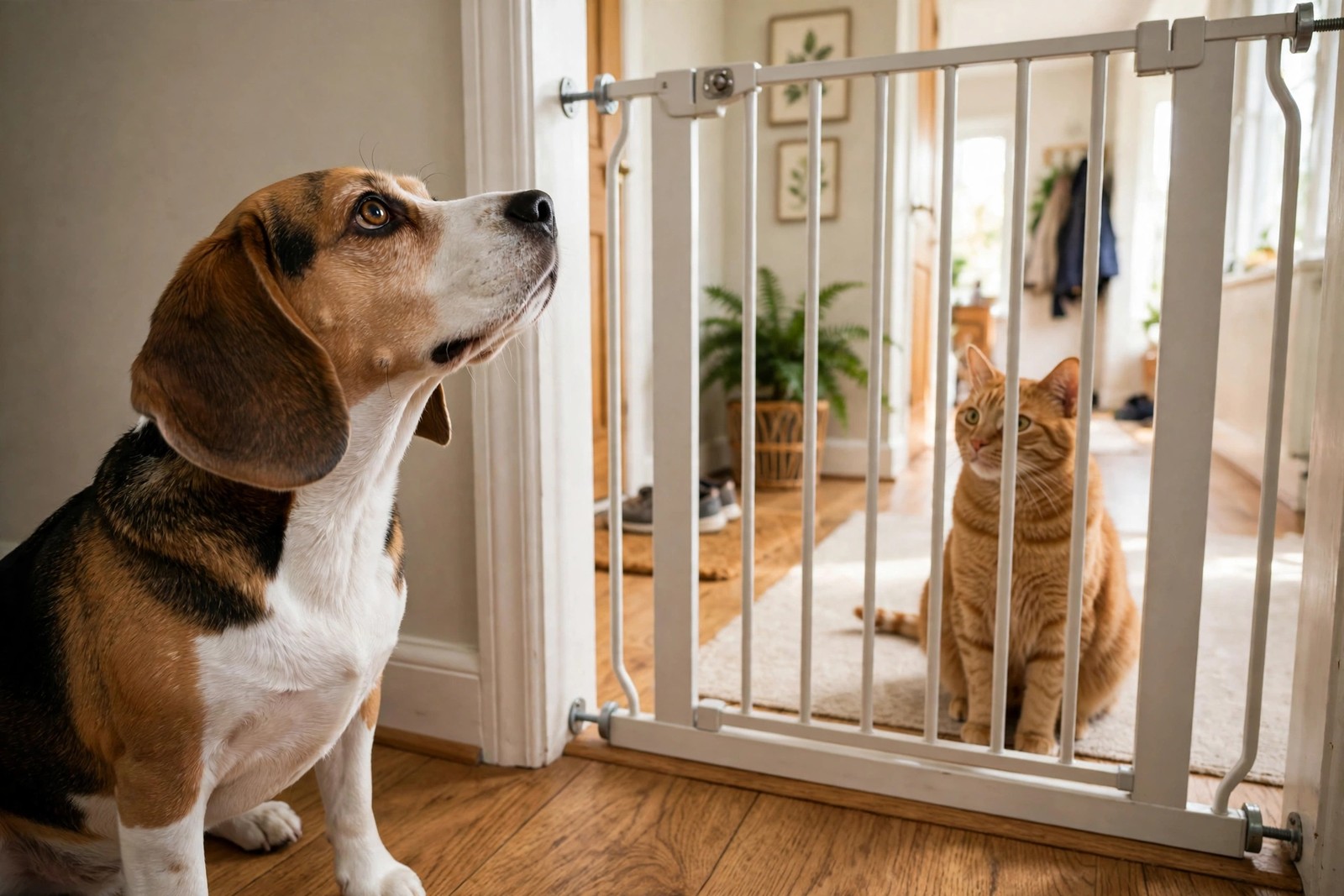
Beagles were bred to hunt in packs, working alongside other dogs for hours without friction, and that sociable streak often extends to a household cat. Many Beagles accept a cat as another member of the group, sharing sofas and sunny patches with little drama once introductions are done properly. The breed's challenges are different from a herding dog's: not control or stalking, but a nose that can take over completely and an appetite that treats the cat's dinner and litter tray as open invitations.
What a Beagle Brings to the Meeting
A Beagle reads the world through scent first and everything else second. During introductions that is mostly helpful, because your Beagle will learn the cat's smell from bedding and doorways long before they meet face to face, and a familiar smell is a calming one. It also means a fascinating trail can pull his attention away mid-meeting, which looks like ignoring the cat and is, in fact, a useful sign of low tension. Sound matters too: a Beagle's bay carries through walls and can startle a nervous cat badly, so reward quiet behaviour generously during early meetings and keep sessions in a room where the cat can retreat somewhere the sound feels less close.
Beagles are also famously food-driven. Treats make training a cat introduction easier, because a Beagle will work happily for small rewards, but the same drive leads to bowl stealing and litter-tray raiding if management slips.
Introductions That Work With a Scent Hound
Start with scent swapping for a few days, rubbing each pet with a cloth and leaving it near the other's bed and feeding area. Then hold meetings through a baby gate with the Beagle on a leash, letting him sniff the air, look, and turn away for a treat. Keep the cat's exit open at all times and let her set the distance.
When you move into the same room, keep sessions short. Watch for the difference between relaxed interest, shown by a loose wagging tail and soft body, and a fixed, silent focus with the tail held high and stiff, which means you should increase distance and go back a stage.
The Two Management Jobs That Matter
First, food. Feed the cat somewhere the Beagle genuinely cannot reach, on a raised surface or behind a cat-sized door strap, and lift uneaten food rather than leaving it down. A Beagle who learns that the cat's bowl pays will keep checking it, and guarding arguments over food are a common avoidable flashpoint in an otherwise friendly pairing. Second, the litter tray. Many dogs eat cat faeces, which disgusts owners and can upset the dog's stomach, so place trays behind a gate the cat can slip through and the dog cannot, and clean them promptly.
Recall deserves honest expectations: indoors, a Beagle can learn a solid leave-it around the cat, but outdoors a scent trail or a fleeing cat can overwhelm training, so use a lead or a secure garden rather than relying on recall alone in open spaces.
Settling Into Shared Life
Once meetings are calm, build the routine the two will live with: separate feeding spots, a dog-free room where the cat can always retreat, and supervised time together until you have weeks of relaxed behaviour, including evenings when the household is busy and nobody is watching closely. Beagle puppies raised with a confident cat often learn cat manners early from a well-timed swat, but protect an elderly or timid cat from a puppy's pestering all the same. If your Beagle stares silently, cannot be called away, or has chased with real intensity, slow everything down and ask a qualified behaviour professional for help rather than repeating the meetings and hoping.
Many Beagle and cat households settle into an easy, companionable truce, and plenty become genuinely fond of each other. KinsLe's Care Teams helps everyone keep the supporting routine straight, assigning separate feeding, tray checks and supervised time together to named family members, with each completed duty marked complete with a timestamp.