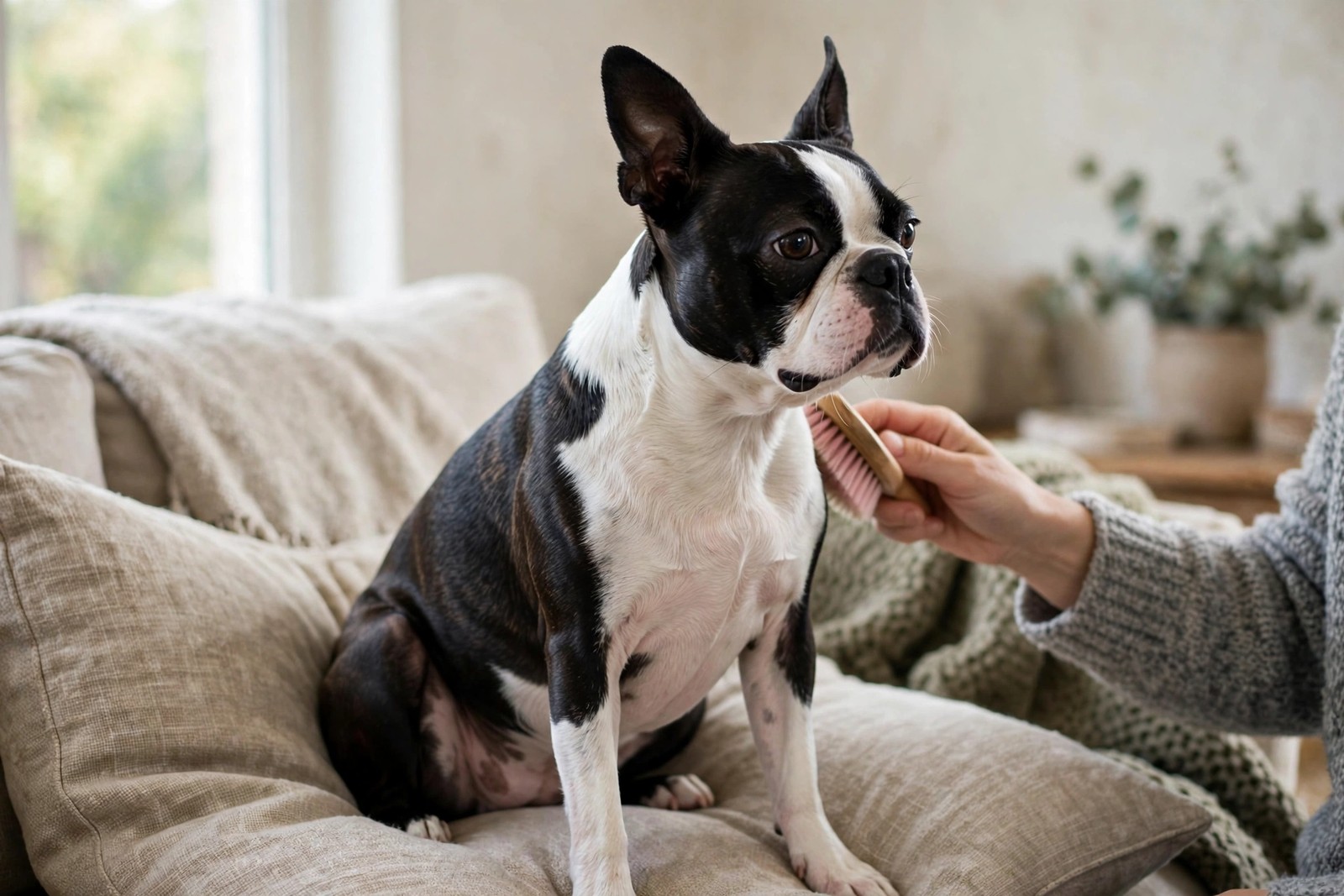
No. On the shedding scale Boston Terriers sit at the light end, and the reason is coat construction. Knowing what kind of coat a breed carries tells you far more than any shedding ranking, because it predicts both the amount of hair and the sort of mess it makes.
A Single Coat Means a Small Hair Budget
A Boston Terrier wears one layer: a short, smooth, fine coat lying flat against the body, with no dense undercoat beneath it. Double-coated breeds shed heavily because that hidden undercoat is replaced in bulk, often in a spring and autumn blowout that fills brushes for weeks. A Boston has no such reservoir. Its hairs shed individually and steadily in small numbers through the year, with a modest seasonal rise as day length changes in spring and autumn — noticeable on the brush for a week or two, not a household event. The hairs themselves are short and fine, so they read as stray light or dark threads on clothing rather than drifts in corners; the black-and-white coat simply makes both colours of hair visible on everything you own.
The Five-Minute Routine That Covers It
Brush once a week with a soft bristle brush or a rubber grooming mitt. On a coat this short the job takes minutes, and it works by collecting hairs that were about to shed anyway, so they land in the bin instead of on the sofa. Brush outdoors or before you vacuum if you want the benefit doubled. Bathe only when the dog is actually dirty — every month or two is plenty for most Bostons — and use a dog shampoo, rinsing thoroughly, because this breed's skin is prone to drying and flaking under frequent washing, which paradoxically makes shedding look worse. Wipe the facial fold dry after baths and wet-weather walks as part of the same session; it is a skin-care habit, unrelated to shedding, that Bostons genuinely need.
When Light Shedding Stops Being Normal
Judge change against this breed's low baseline. A Boston suddenly leaving heavy hair, developing symmetrical bald patches, flaking heavily, or scratching while the coat thins is not having a bad shedding season — skin irritation, allergies, and other health problems announce themselves this way in a short-coated dog, and they warrant a veterinary visit. Likewise, a healthy Boston's coat should feel smooth and look glossy; dullness plus extra shedding often tracks back to diet quality or a missed health issue rather than grooming. Build the weekly brush into the care rota so it survives busy weeks — KinsLe's Care Teams feature lets you assign your Boston's brush-out to whoever is free and records each finished session with a timestamp, which keeps a five-minute job from quietly becoming a monthly one.