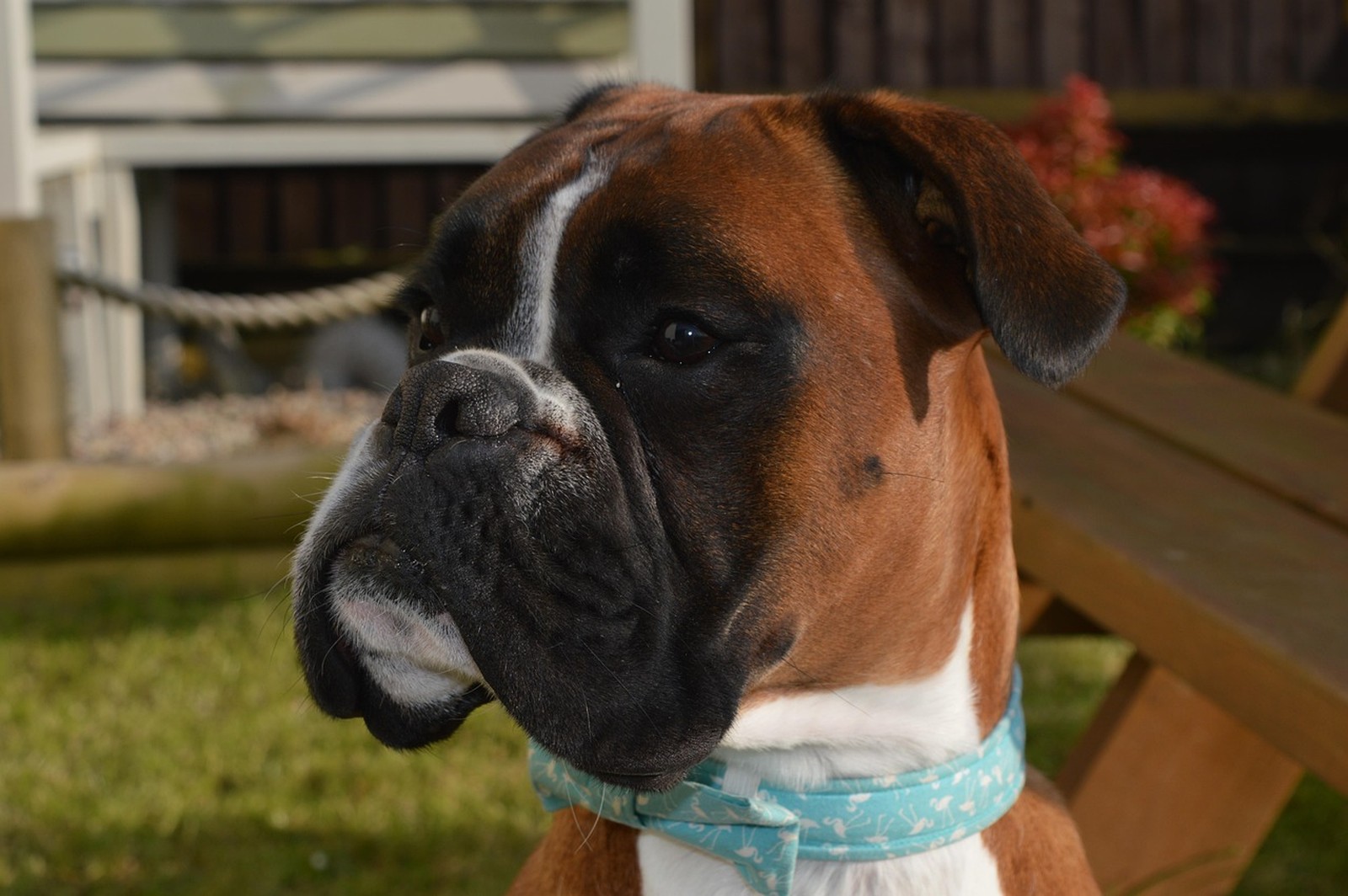
A Boxer barks a moderate amount, and the character of the barking matters more than the count. This is a guarding breed in origin, developed to watch, warn, and hold its ground, so a typical Boxer barks at meaningful events: a knock, a stranger at the gate, an unfamiliar vehicle, a person appearing where people do not usually appear. It is usually a deep, convincing bark, delivered in a deliberate burst, and it typically stops once the Boxer has investigated or a trusted person takes over. That is a very different profile from a breed that barks continuously at passing life.
A Vocal Breed in Other Ways
Owners who expect a quiet dog because the barking is moderate get a surprise: Boxers talk constantly without barking. Expect whines of anticipation before walks and meals, grumbles and sighs when settling, snoring of real substance, and rumbling play growls during tug and wrestling games that sound dramatic and mean nothing of the kind. Learning the difference matters. A play growl comes with a loose, wiggly body and a bouncing stance. A warning bark comes with a still, forward posture and fixed attention on the trigger. Reading the body, not just the sound, tells you whether to laugh, to play on, or to step in and calm things down.
When Boxer Barking Becomes a Problem
Frustration is the usual driver. A Boxer is a powerful, energetic, famously slow-to-mature dog, and a young Boxer who is under-exercised and left alone in a garden will bark at the fence, at neighbours, and at dogs passing, because patrolling and reacting becomes the day's work. Barrier frustration adds to it: a dog that can see the street but never reach it practises charging and barking at every passer-by, and the habit strengthens with rehearsal. Barking that starts suddenly in an older Boxer, or barking paired with pacing, drooling, or destructiveness when left, points away from breed character and toward pain, anxiety, or an unmet need that deserves a vet or qualified behaviourist conversation.
Territorial barking also needs honest management in homes with frequent visitors, deliveries, or a footpath along the fence. A Boxer will do the guarding job thoroughly unless you teach it where the job ends.
Shaping the Guarding Instinct
Teach an end to the alarm. Let the dog bark briefly at the door, thank it in effect by taking over, call it away to a bed or mat, and reward the settle that follows. Practise this with planned knocks from family members so the sequence is learned in calm conditions, not invented during a real delivery. Keep greetings low-key, because a household that erupts when people arrive teaches the dog that arrivals are high-arousal events worth shouting about.
Meet the energy honestly. A Boxer needs substantial daily exercise, play, and training that uses its brain, spread across the day rather than one exhausting weekend session. Break up alone time in the garden, bring the dog in rather than leaving it to practise fence barking unsupervised, and rotate the view if you can, using fencing or planting to reduce the street theatre. Socialise a puppy widely and calmly so that ordinary people, vehicles, and noises file themselves under normal and stop qualifying as news worth announcing.
Consistent handling by everyone in the house, with the same door routine and the same settle cue, is what turns a willing guard into a settled housemate, and KinsLe Care Teams helps you divide the Boxer's exercise, training, and door practice so each part happens every day.