
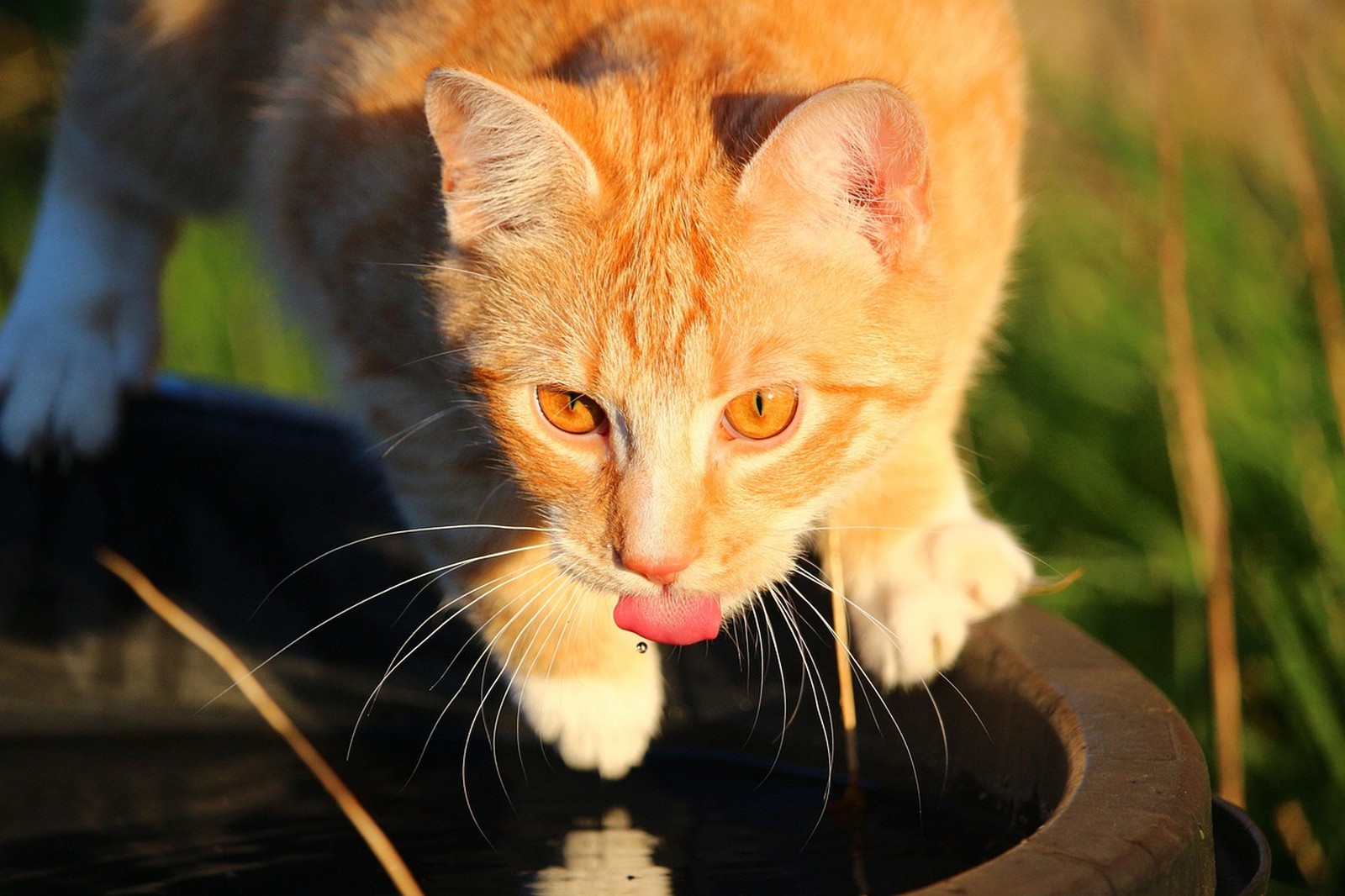
A bowl is enough — for most cats, most of the time. No cat physiologically needs a fountain, and generations of healthy cats have drunk from bowls. What matters is not the device but the water in front of the cat: fresh, clean, in a vessel that does not bother their whiskers, in a place they feel safe drinking. A fountain earns its place only when it improves on those basics for a particular cat — and it brings real upkeep in exchange.
Why some cats drink more from moving water
Many cats are drawn to water that moves, ripples, and catches light. Owners notice cats who ignore a bowl but drink from a dripping tap, and a fountain imitates that: the pump aerates the water, the surface stays free of dust and hair, and the taste stays fresher between refills. A cat who eats mostly dry food, a senior cat, or a cat whose vet has asked you to encourage drinking for urinary or kidney reasons may genuinely drink more from a fountain, and that extra intake is the one solid reason to buy one. Other cats are indifferent, and a few dislike the pump's hum or vibration entirely — borrow, observe your cat at a tap, or start modestly before committing.
Making a bowl work properly
Use a wide, shallow ceramic, glass, or steel bowl so whiskers do not press the sides while drinking — some cats back away from narrow, deep bowls for exactly that reason. Fill it generously, wash it daily with hot soapy water rather than just topping up (a slimy biofilm forms fast and cats can taste it), and refill with fresh water at least once a day. Place water away from the litter tray and, for many cats, a little distance from food as well, with a second bowl in another quiet spot if the home allows. A bowl's great virtue is honesty: you can see exactly how much was drunk, which matters when you are monitoring a cat's intake.
The fountain's hidden workload
A fountain that is not cleaned becomes worse than any bowl. Pumps and corners grow slime within days, filters clog with hair and lose effect, and the reservoir can look full while the water is stale. Expect to top up every couple of days, strip and wash all parts weekly, and replace filters on the maker's schedule, plus keep the pump intake clear so it does not run dry and burn out. If your household will not sustain that rhythm, choose the bowl and do it well — a neglected fountain is the worst option of the three.
Whatever you choose, sudden changes in drinking — a cat draining bowls, hovering at taps, or stopping drinking — are vet-worthy promptly, since thirst shifts can signal illness that no vessel will fix.
Fresh water only stays fresh when someone owns the job each day, and KinsLe's Care Teams make that ownership explicit: daily refills, bowl washes, or the fountain's weekly strip-clean can be assigned to a named person and timestamped when done, so a travelling owner can see at a glance that their cat's water was actually refreshed.