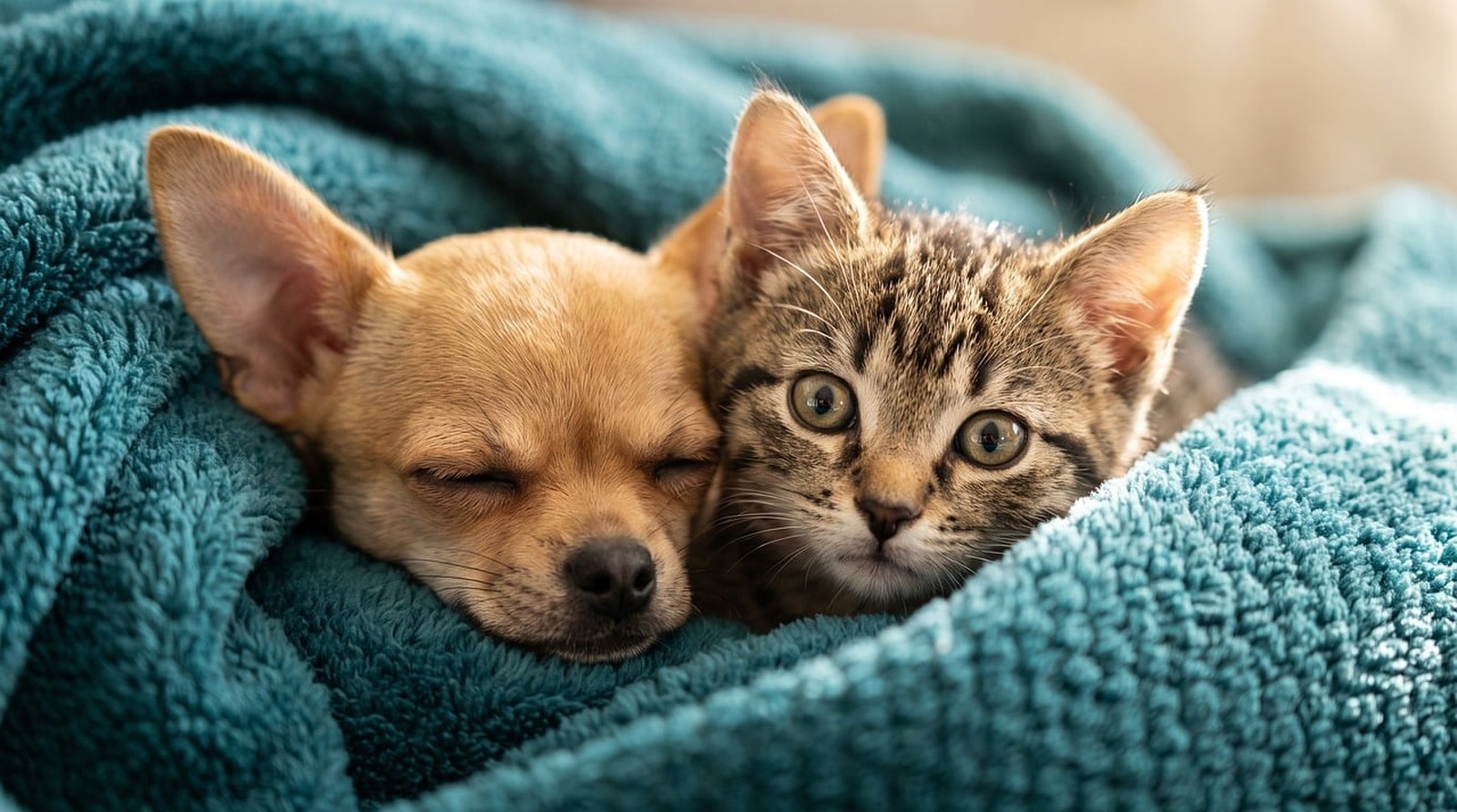
Many Chihuahuas settle happily alongside a cat, helped by their similar size, but a bossy streak cuts both ways: this small dog should neither bully a cat nor be bullied by one, so early meetings stay calm and supervised. Whatever the breed, the introduction itself does half the work: scent-swapping first, meetings through a barrier, the cat free to leave at all times, and no unsupervised time together until weeks of calm say otherwise. A dog who is exercised and mentally settled before meetings is far easier for a cat to accept.
The Basics First
With a Chihuahua and a cat, read early signals before either animal feels cornered: a fixed stare, flattened ears or a cat frozen mid-room all say the meeting needs more space. Note what happened just before any spat — a doorway meeting, a chased tail, food nearby — because the trigger tells you which barrier or escape route to add next. Praise and treat the Chihuahua for glancing away from the cat and settling on cue, keeping early practice brief and ending while both animals still seem relaxed. Scolding either animal tends to link the other with something unpleasant; quiet separation and a calmer retry teach the pair that shared rooms stay safe.
Chihuahuas settle faster when feeding, play and rest happen at predictable times, and a tired dog is less likely to fixate on a cat crossing the room. A young Chihuahua may pester a cat out of sheer playfulness, while an older dog can be set in its habits, so match the pace of introductions to the individual in front of you, not to a breed stereotype alone.
Practical Steps That Help
Work through these in order and give each one time to become routine before you judge it:
- Spot the trigger and the time of day the behavior peaks
- Reward the calm alternative behavior immediately and every time at first
- Keep training or practice sessions short — a few minutes, several times a day
- Give the need an outlet: exercise, chewing, scratching, foraging, or play, as fits the species
- Write down what happened for a week; patterns are easier to see on paper
Anchor the routine to moments already in the day, such as supervised together-time after breakfast play, so the new habit survives busy weeks instead of depending on a special session.
Making It Part of Everyday Life
Jot down how each meeting went: who approached, who retreated, and how quickly both animals relaxed again. Small gains are easy to overlook day by day, yet a fortnight of brief notes shows whether meetings are getting quicker to settle — detail a trainer or veterinarian can use if progress stalls. Households that do well with a Chihuahua-and-cat pairing usually keep things uncomplicated: consistent rules, early notice of stress, and professional input before tension becomes a habit. Revisit that note when circumstances shift — a house move, a new kitten, or a dog entering its senior years can all change how the pair share space. For the shared rota behind those calm introductions, KinsLe's Care Teams gives each helper their assigned duties for both pets and marks every completed task with a timestamp.