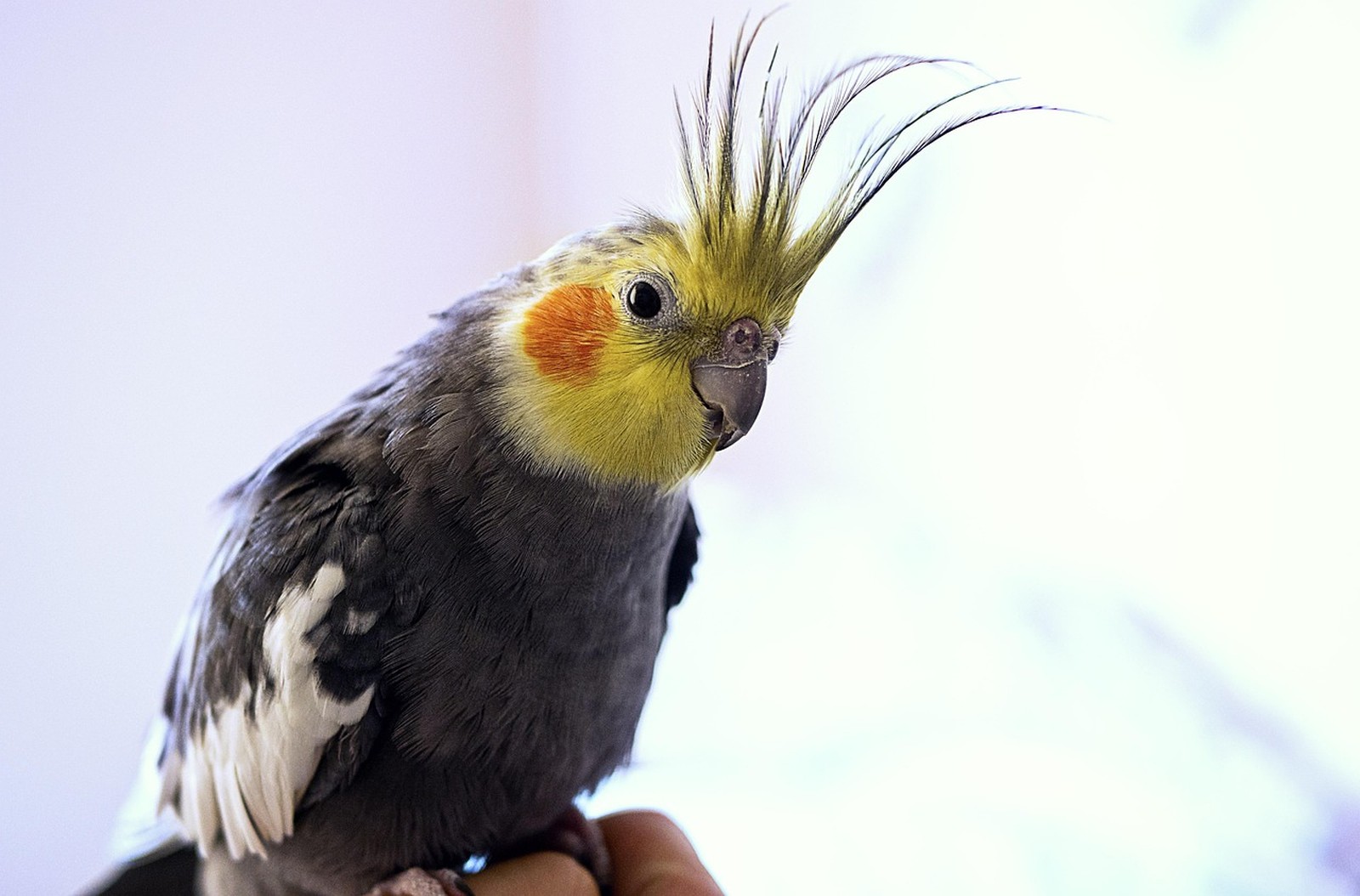
Cockatiels whistle. That is the clear answer to an either/or question, and it is good news, because a cockatiel's whistling is musical, tuneful, and often startlingly accurate. Talking, by contrast, is the exception rather than the talent: some birds learn a few words, but they deliver them in a soft, muffled voice that strangers often cannot make out. Choose a cockatiel for melody, not conversation.
What a Cockatiel Actually Learns
A male cockatiel is the performer of the species. From around six months old, young males begin experimenting with sound, and many go on to reproduce complete tunes: the opening of a favourite song, a phone ringtone, the kettle's whistle, or a wolf whistle aimed at anyone entering the room. They hold notes, follow pitch, and chain phrases together, often while strutting, beak-tapping, and showing off with wings held in a heart shape.
Females are usually much quieter. Most communicate in chirps, soft chatter, and contact calls — the repeated call a bird makes to locate its flock, meaning you. A female can learn a short tune, but few do, and expecting one sets both of you up for disappointment. If a singing bird is the point, a hand-raised young male is by far the likelier choice, though no individual bird is guaranteed to perform.
Speech sits at the far end of the scale. Cockatiels lack the vocal range that makes budgies and larger parrots comparatively clear talkers. A word learned through patient repetition usually sounds breathy and slurred, recognisable mainly to an owner who already knows what the bird is trying to say.
Teaching a Tune That Sticks
Cockatiels learn by cheerful repetition, not drilling. Keep to a pattern like this:
- Pick one short, simple tune — four to six notes — and whistle only that until it is learned. A repertoire is built one tune at a time.
- Practice for five to ten minutes, two or three times a day. Mornings, when the bird is naturally vocal, usually work best.
- Whistle from nearby, at the bird's level, and respond with praise and attention the moment any attempt comes back, however rough.
- Stop while the bird is still interested. Sessions that run long teach the bird to tune you out.
- Expect progress over weeks. First attempts are usually fragments — the opening notes, repeated — before the full tune appears.
The same method applies to a word, with lower expectations: repeat one short word, in the same tone, at the same moment each day, such as a greeting at uncovering time, and accept whatever version the bird offers.
Reading the Sounds You Already Have
Not all cockatiel noise is performance. A loud, repeated flock call when you leave the room is a request for an answering call, not naughtiness — replying once from the other room usually settles it. Hissing, with the crest flattened and beak open, means back off. Quiet beak-grinding at rest, by contrast, is the sound of a contented bird settling to sleep, and owners learn to love it.
A bird who stops vocalising altogether, sits fluffed, or goes quiet after being chatty has changed from its own baseline, and that change — especially alongside reduced appetite or altered droppings — is a reason to consult an avian vet promptly rather than wait.
Making Practice a Household Habit
Consistency is what turns occasional whistling lessons into a learned tune, because a bird taught a phrase three different ways by three different people learns none of them well. Agree the tune, the practice times, and who leads each session, and KinsLe Care Teams makes that easy to hold by assigning each short practice slot for your cockatiel to a named person, with completed sessions timestamped for everyone to see.