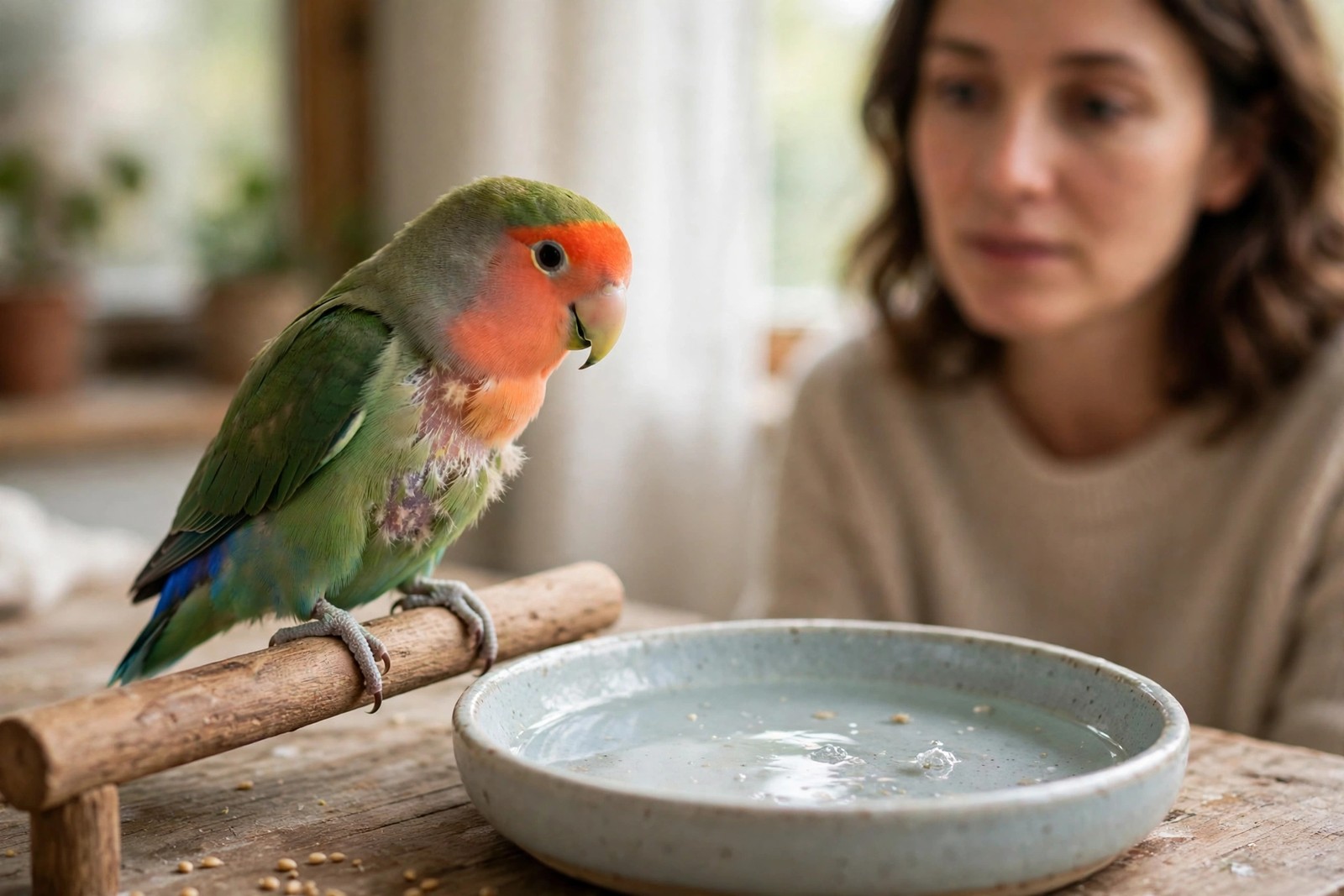
A lovebird pulling feathers from her chest is communicating that something in her body or her world is wrong. Feather plucking sits on a spectrum: over-preening that frays feathers, barbering that chews them short, plucking that pulls them out, and, most seriously, self-mutilation that breaks the skin. Chest plucking is especially common because the chest is the easiest area for a small parrot to reach, and because irritation, frustration, and habit all tend to focus there.
Medical Causes Come First
An avian veterinarian should examine a plucking lovebird before anyone labels it behavioural. Medical possibilities a vet may work through include skin or feather-follicle infection, parasites, liver or thyroid problems, nutritional shortfalls from a seed-heavy diet, and irritation from dry air or airborne scents. Bring a fresh dropping sample if the clinic asks, a list of everything she eats, and photos showing how the bare patch has changed. A bird that is also quieter than usual, eating less, sneezing, or sitting fluffed needs to be seen promptly rather than watched at home.
Do not start sprays, supplements, or a neck collar on guesswork. Bitter sprays rarely address a cause and can distress a small bird, and a collar fitted without veterinary guidance can interfere with eating and balance. If a collar is part of a vet's plan, that is a different matter, fitted and monitored as treatment.
The Behavioural and Environmental Side
Lovebirds are pair-oriented, intensely social birds. A single hen left alone for long working days, with a bare cage, no shredding or foraging work, and little out-of-cage time, can turn grooming into a self-soothing routine that then becomes habitual even after the trigger improves. Other common pressures include:
- A seed-only diet short on vegetables and variety, which can leave both nutrition and beak time lacking.
- Very dry heated indoor air, and too few chances to bathe or be gently misted with plain water.
- Short or broken sleep, a cage beside constant television and foot traffic, or a recent change such as a new home, pet, or routine.
- Hormonal frustration in a mature hen, worsened by stroke-like petting down the back, nest boxes, or dark hideaways.
A Practical Plan While the Workup Proceeds
Feed a varied diet built around a quality formulated base your vet is happy with, plus chopped vegetables and leafy greens, introduced gradually so she actually eats them. Scatter or hide part of the food in plain paper parcels and cardboard foraging toys so finding food takes real effort; rotate shredding toys weekly. Offer a shallow bath or light misting several times a week, keep household humidity comfortable, and remove scented sprays and smoke from her airspace. Keep 10 to 12 hours of quiet darkness for sleep, and give social time that involves training and play rather than only cuddling.
Track the behaviour honestly for a month: date, time of day, what happened just before, and a weekly chest photo from the same angle. If plucking continues despite a clean medical bill and a richer routine, ask your avian vet about referral to a behaviour specialist, because long-standing plucking is genuinely hard to reverse and early help matters. Keeping the photos, diet notes, and test results together in KinsLe Pet Passport means the next clinician starts from evidence, not from memory.