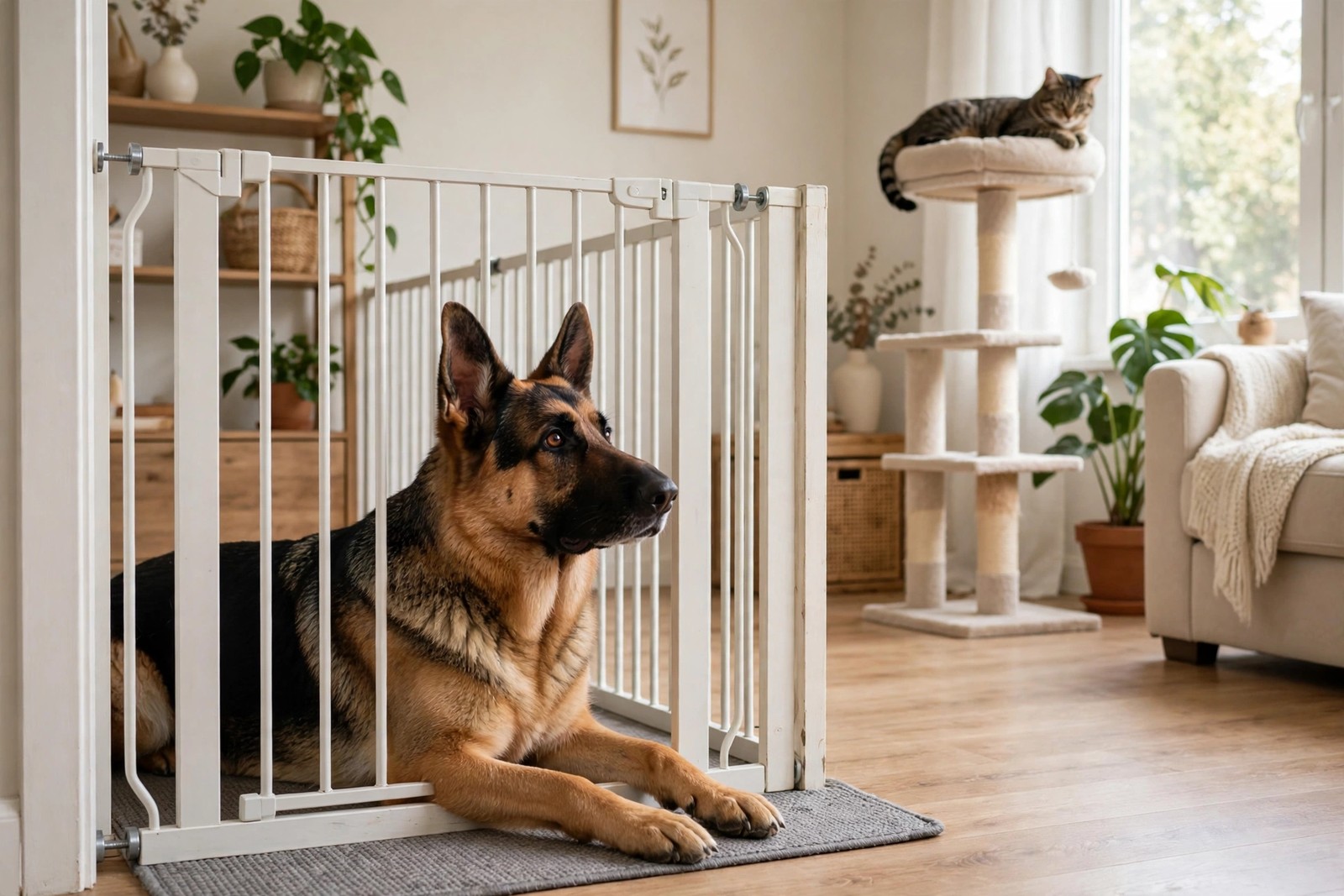
Many German Shepherds share a home happily with cats, and a Shepherd raised alongside a confident cat often treats that cat as part of the household pack. The breed was shaped for herding and guarding work, though, which brings two traits a cat owner must plan around: a strong urge to chase anything that moves quickly, and a watchful loyalty that can turn into guarding the house, the sofa or you. A fully grown Shepherd also outweighs a cat many times over, so even rough, friendly play carries risk. Plan on several weeks of managed introductions, and judge the individual dog in front of you rather than the breed label.
The Shepherd Traits That Matter Indoors
Chase instinct is the headline issue. A cat that bolts triggers pursuit in many herding dogs, and the pursuit itself is rewarding, so every unmanaged chase makes the next one more likely. Watch body language closely during early meetings: a Shepherd who can glance at the cat, look back at you and take a treat is thinking; a Shepherd who goes still, locks on with a hard stare, leans forward and ignores food is over threshold, and that meeting needs to end calmly before distance is increased again. Guarding shows differently — the dog positions itself between you and the cat, or stiffens when the cat approaches a valued spot — and it calls for the same response: more space, more structure, and professional help if it repeats.
A Staged Introduction That Respects Both Animals
Set the house up before the first meeting. The cat needs at least one room the dog never enters, reached by a route that does not pass the dog, plus high perches and hiding spots in shared rooms so the cat always has a vertical escape. Then work through the stages in order:
- Scent first: swap bedding between the two animals for several days, and feed each on opposite sides of the closed door to the cat's safe room, so the new smell predicts good things.
- Sight through a barrier: let them see each other through a sturdy gate or a cracked, secured door, with the Shepherd on a leash, for short sessions that end while both are still relaxed.
- Leashed time together: in a room where the cat can leave freely, let the Shepherd drag a light house line, reward settled behaviour on a mat, and keep sessions brief.
- Supervised freedom: only after several weeks of loose, bored behaviour at the earlier stages, allow short off-leash time, still with the cat's escape routes open.
A Shepherd who has had a proper walk and a short training game before a session is noticeably easier to settle than one who arrives full of unused energy.
Living Together After the Introductions
Feed the two animals separately and keep that rule permanently: Shepherds can guard food, and a cat wandering to the wrong bowl is a classic flashpoint. Put litter boxes where the dog cannot reach them, because many dogs will raid them and the cat needs privacy to feel safe using them. Keep chase games outdoors and tug or fetch rules clear, so arousal stays in the garden rather than building around the cat. Adolescent Shepherds, roughly in their boisterous teenage phase, often regress and need the leash-and-barrier stage repeated for a while; that is normal, not failure. Never leave the pair alone together until several weeks of calm, including dull evenings when nothing is happening, say it is genuinely safe, and even then many owners keep the cat's dog-free room as a permanent arrangement. If lunging, stalking or guarding persists despite careful staging, bring in a qualified behaviour professional promptly — with a dog of this size, early help is far easier than help after an incident. Shepherd owners who log each session, note who supervised it and record how the dog responded can spot stalling points early, and KinsLe Care Teams supports exactly that by letting you assign scent swaps, barrier sessions and supervised meetings to specific family members, with each completed duty marked complete with a timestamp.