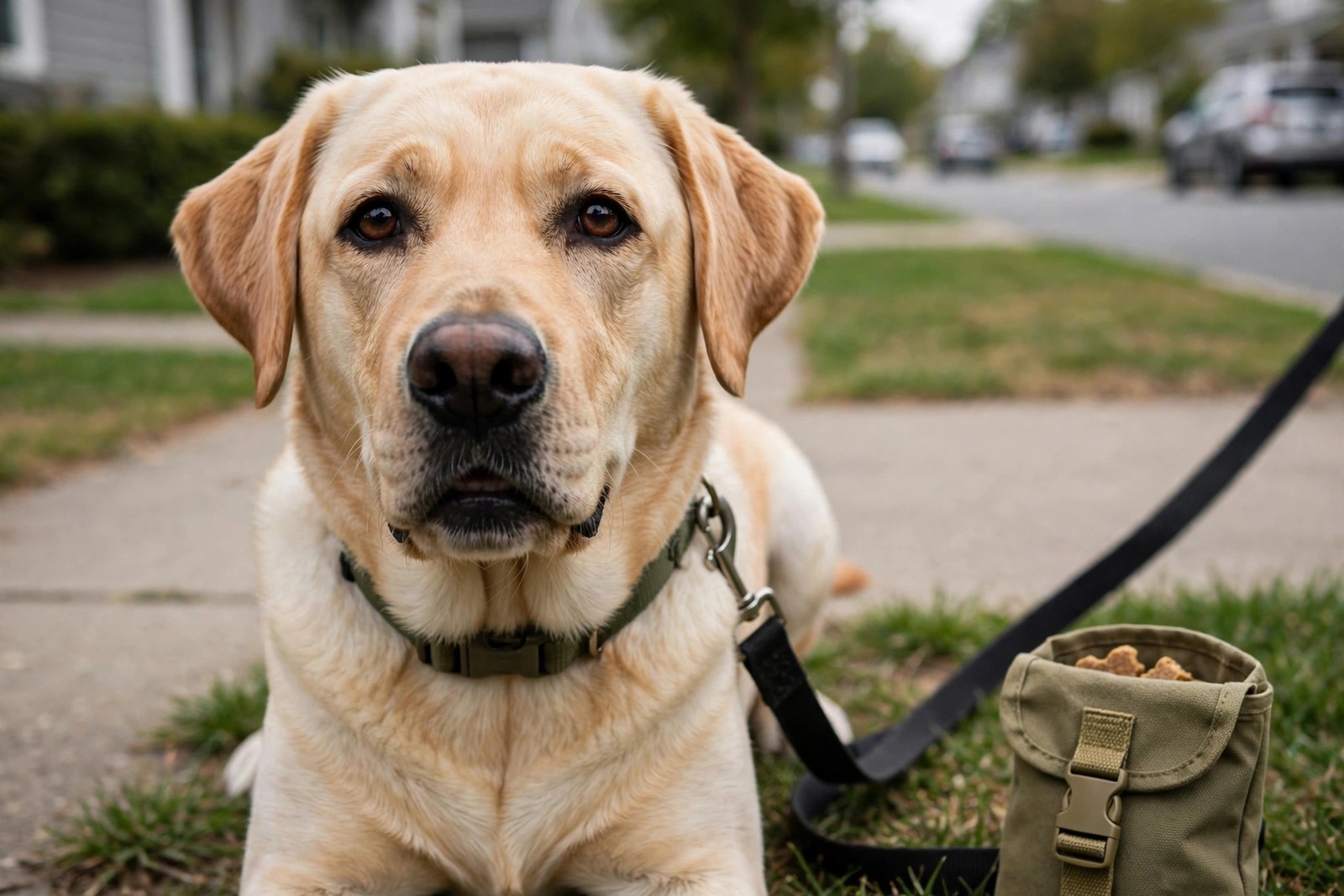
A Labrador's barking profile is best summed up as friendly volume. Labs have a surprisingly deep, carrying bark and they use it freely at the exciting edges of the day — the doorbell, the lead coming off its hook, the food bin opening, a favourite human's car in the drive — but the emotion underneath is almost always enthusiasm rather than suspicion. This was a gundog bred to work alongside people and other dogs, mark fallen birds, and wait quietly between retrieves, so steadiness and sociability run through the breed. A Lab is far more likely to bark at a visitor and then bring them a shoe in welcome than to mount any kind of sustained guard.
The Triggers That Set a Lab Off
Anticipation is the big one. Labs live for food, water, and company, and all three produce barking in a dog who has learned that noise speeds the good thing up: barking at the person preparing dinner, barking at the dog who will not play yet, barking at the gate because the walk always starts there. Young Labs, who stay exuberant and mouthy well into their second and third years, are the loudest offenders, especially when their exercise has been mostly lead-walking and their brains have had nothing to solve. Joining in is also classic Lab behaviour — one neighbourhood dog starts, and the Lab contributes a verse out of pure sociability.
When Lab Barking Deserves a Second Look
Because the breed norm is bursts rather than barrages, near-constant barking in a Lab usually points to the routine, not the dog. The most common pattern is the under-spent Lab left alone in a yard or kitchen for long stretches, barking from a mix of boredom, loneliness, and unburned energy, sometimes with chewing and digging as companion habits. Weight plays a quiet role too: an overweight Lab gets walked less because walking is harder, then barks more because it is walked less. Genuine alert barking exists in the breed — a strange noise at night will get a proper response — but a Lab who barks at every passer-by all day is telling you its day is too empty, and pain or illness should be ruled out if the pattern is new in an older dog.
Channelling a Big, Happy Voice
Labs are famously trainable when the reward is right, and food is usually right, so quiet is easy to pay for: capture and reward the pause after a door bark, teach a solid settle on a bed while dinner is made, and never let demand barking produce the meal, the throw, or the fuss it is asking for. Spend the energy properly — retrieving games with rules, swimming where it is safe, scent searches, and training woven into walks — because a Lab who has hunted for hidden toys and swum is a Lab who naps through the postman's visit. Socialise puppies broadly so the world stays ordinary, and keep meals measured, since a lean Lab is a more active, more content dog.
In a busy household a Lab's programme can quietly unravel, with one person skipping the swim and another topping up the bowl, which is why a visible rota suits this breed so well. Through KinsLe Care Teams, the morning walk, the evening retrieve session, and both measured meals can sit with named people and be stamped as done, keeping your Lab exercised, fed exactly once per meal, and far less inclined to comment on the day.