
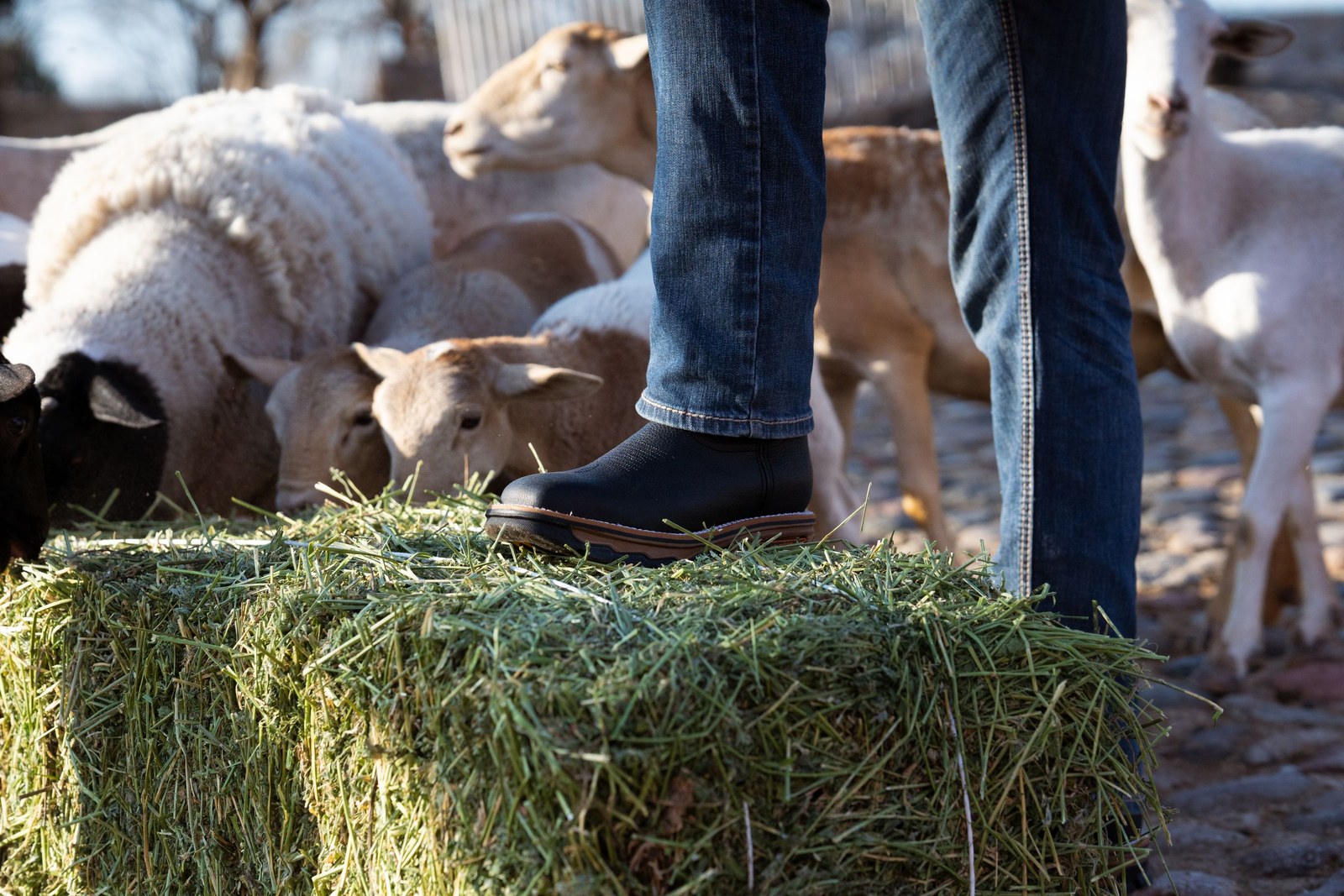
Yes — goats and sheep need their hooves trimmed regularly, typically every four to eight weeks, to keep them walking soundly. Trimming is basic preventive care, not a cosmetic extra. Left to overgrow, hooves curl, trap moisture and manure, unbalance the leg, and create the conditions for lameness and foot rot, especially on soft or wet ground.
How Often, and What Decides It
The four-to-eight-week window is a starting point, not a rule for every animal. Goats and sheep on rocky, dry, or abrasive ground wear their hooves down naturally and may need only light tidying. Animals on soft pasture, bedding, or mud grow hoof fast and wear it slowly, so they need trimming at the short end of the range — and sometimes sooner.
Individuals vary too. Older animals, fast-growing youngsters, and goats or sheep with slightly crooked legs grow uneven hooves that need more frequent attention. Build hoof checks into a routine you already do, like a monthly hands-on health pass, and trim what needs it then, rather than waiting for a visible limp.
Signs a trim is overdue include long, curling toes, hoof walls folding under, a rocking-horse stance, reluctance to walk to feed, and limping — particularly after wet weather. Pick up and clean out each foot when you check: mud and stones hide problems, and a strong foul smell from a foot deserves investigation.
What a Basic Trim Involves
You need proper hoof trimmers or shears for small ruminants, a rasp or hoof knife for tidying if you use one, gloves, and a helper or a stanchion to keep the animal calm and still. Clean the hoof first, then trim small amounts at a time: remove excess wall, level the sole carefully, and shape the hoof so the animal stands flat, with the toe at a natural length.
Little and often is the safe principle. Cutting too deep can draw blood and cause pain, so stop well short of pink tissue, and if you nick a foot, clean it and keep the animal on dry ground while you monitor it. If you encounter deep cracks, separation, discharge, swelling up the leg, or a foot that is hot and painful, that is beyond a routine trim — involve your veterinarian rather than trimming further and hoping.
Many owners learn trimming from an experienced keeper, a shepherd, or a farrier-style hoof care provider and practice under guidance first. There is no shame in paying for help while you learn — a bad trim teaches an animal to dread the process.
Making Hoof Care a Habit, Not a Crisis
Hooves get neglected because each individual trim is skippable — until three skipped trims become a lame goat. Put the herd on a schedule, group animals so you trim a few at a time rather than facing the whole flock in one exhausting day, and keep notes on the feet that grow fastest so they get checked first next round.
Finding Hoof Care Help Through KinsLe
If you would rather not learn solo, or your flock has grown beyond a weekend's trimming, KinsLe's Pet Services Directory helps you find local groomers, vets, sitters, and trainers — and for farm flocks, it is a starting point for locating experienced local animal care professionals and asking who offers hoof care for goats and sheep in your area. Read a provider's details, make contact, and confirm their small-ruminant experience before booking.
Regular trims booked before anyone is limping keep the whole herd more comfortable and mobile. Pet Services Directory through KinsLe is where a flock owner can search for nearby animal-care professionals and ask which of them trim small-ruminant hooves on regular rounds.