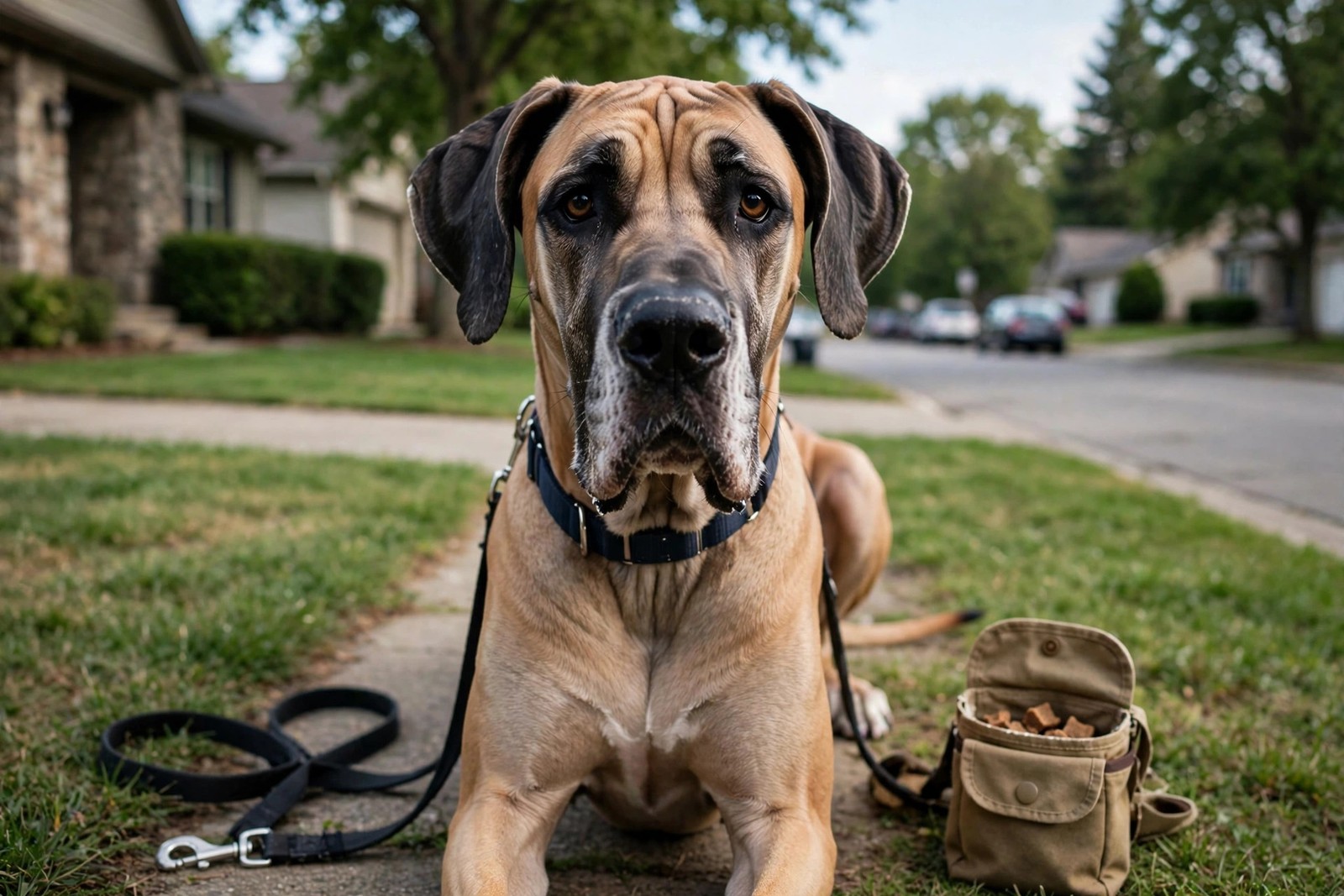
Moderately — with an asterisk the size of the dog. A Great Dane's coat itself is unremarkable: short, smooth, and single, shedding steadily through the year like most short coats, with a noticeable lift in spring. But shedding is measured by households in hair per home, not hair per square inch, and a full-grown Dane carries that coat over an enormous frame, often well past a hundred pounds. The total result is a lot of hair from a supposedly easy coat.
What Dane Hair Is Like at Home
The individual hairs are short and fairly stiff. They do not form tumbleweeds or mat into anything, because there is no undercoat and no length to tangle. Instead they distribute themselves evenly and stubbornly: worked into rug pile, woven into sofa fabric, and spread across every surface a Dane leans, sits, or shakes against — and a Dane's shake starts at the head and travels the entire considerable body, broadcasting loose hair efficiently around a room.
Pale fawn and harlequin coats announce themselves on dark floors and clothing; blue and black coats do the opposite. Many owners notice the shedding most in spring, when the coat turns over more actively, and again in centrally heated homes in winter, where warm dry air keeps a low level of shedding running when it might otherwise ease off.
A Dane puppy sheds little, which can lull new owners. The volume scales with the dog, so the hair you live with at eight months is a fraction of the adult reality simply because the adult is several times the size.
The Easiest Grooming Routine of Any Large Breed
Here the Dane pays you back. Five to ten minutes once a week genuinely covers it:
- Work over the whole dog with a rubber grooming mitt or soft bristle brush, in the direction of growth. The mitt doubles as stroking, which most Danes lean into happily, and its static lifts hairs a brush leaves.
- In the spring peak, add a second session a week. That is the entire seasonal adjustment.
- Bathe only when needed. Bathing a Dane is a logistical event involving a walk-in shower, a hose outdoors in warm weather, or a professional groomer's facilities, so spot-cleaning muddy legs and using a damp cloth between baths preserves everyone's sanity.
- Use the weekly session to run your hands over joints, ribs, and skin. On a dog this size, lumps and sore spots are easy to miss in daily life and easy to feel in a deliberate once-over.
No trimming, stripping, or clipping is ever involved, and shedding sprays and special diets are unnecessary for a healthy Dane doing ordinary shedding.
Hair Loss That Needs a Vet
Even, steady shedding with healthy skin underneath is normal at any volume. Book a vet visit for patchy baldness, thinning along the back or flanks, flaky or crusty skin, sores the dog keeps licking, or shedding that arrives with lethargy or weight change. Large, fast-grown breeds have their share of thyroid and skin issues, and on a short coat, abnormal patterns are conspicuous once you know your dog's normal — one more reason the weekly hands-on session matters. Senior Danes often thin a little with age, but a vet should confirm that is all it is.
The Verdict for Giant-Breed Homes
Choose a Dane and you accept visible hair as part of the furniture of life, in exchange for almost no grooming work: no mats, no groomer appointments, no hour-long brushing sessions. A washable throw sized for a very large dog, a vacuum that copes with short hair in rugs, and dark or light bedding chosen against your dog's colour manage the rest. And when you travel, KinsLe's Care Pass makes the handover simple by giving your house-sitter a temporary, scoped link to your Great Dane's feeding, walking, and weekly mitt-brushing routine, with no account needed.