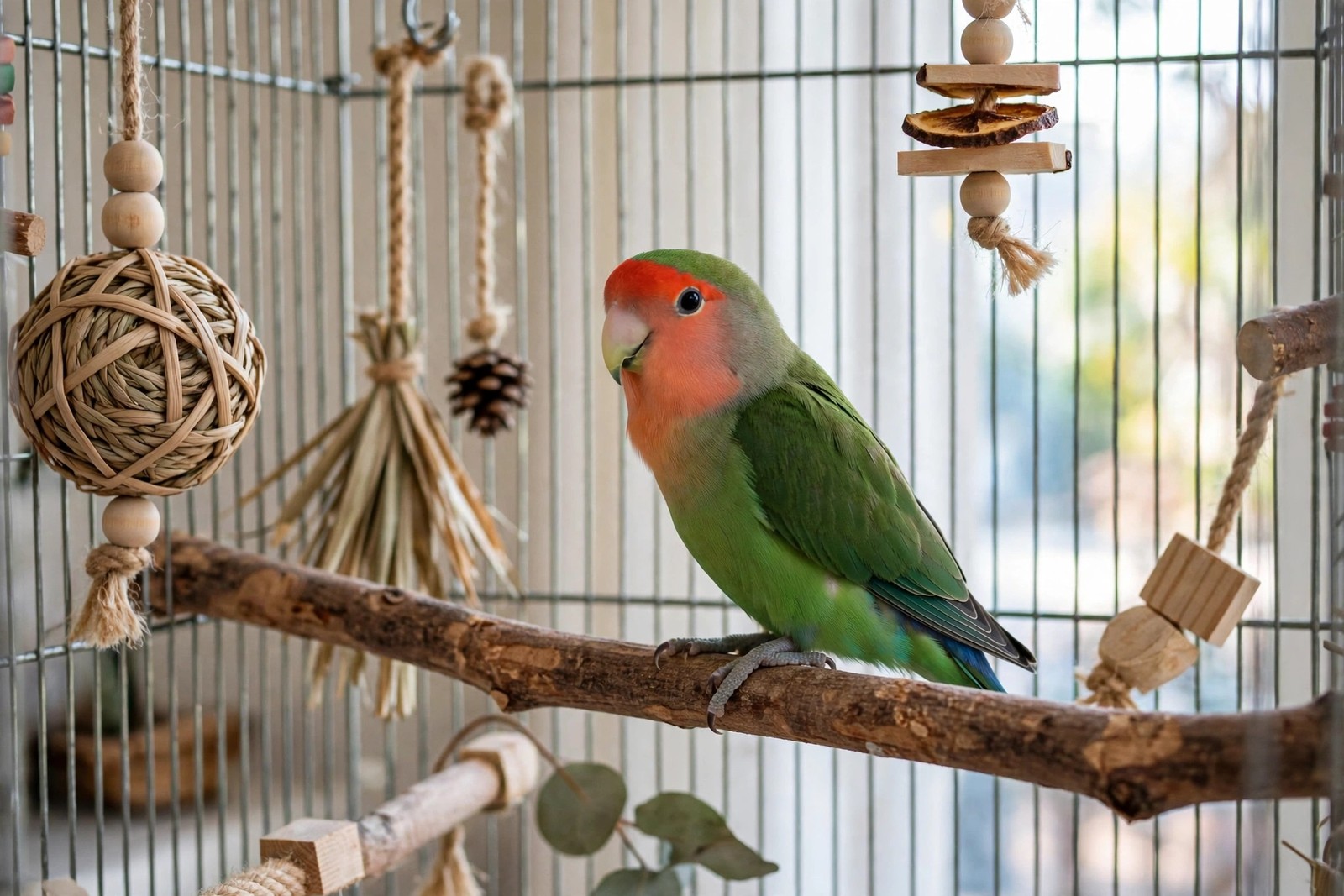
No. For a pet lovebird you are not breeding, a nest box is not a comfort item — it is a hormonal trigger, and providing one is one of the most common well-meaning mistakes lovebird owners make. The bird does not need it to sleep, to feel safe, or to be happy. Lovebirds in the wild roost on branches, and a pet lovebird sleeps perfectly well standing on a perch, head tucked back, in a quiet covered cage. What a box adds is not rest. It is a message, received loud and clear by the bird's body, that breeding season has arrived.
What a Nest Box Switches On
A dark, enclosed, defendable cavity is the central signal lovebirds use to begin breeding behaviour. With a box, hut, tent, or even a cosy enclosed corner available, expect some combination of the following:
- Hormonal behaviour: increased vocalisation, regurgitating food for a favourite person or toy, wing displays, and restless, driven energy that was not there before.
- Territoriality: a bird who was handleable begins guarding the cage, lunging, and biting hands that reach in, because the cage is now a nest site to defend.
- Nest building: relentless shredding of paper, bark, and toys into strips, carried and tucked into the box.
- Egg-laying in females, which is the serious consequence and deserves its own section below.
Why Egg-Laying Is a Health Risk, Not a Curiosity
A female lovebird with a nest site can lay eggs whether or not a male exists — the eggs are infertile, but her body pays the full cost of producing them. Repeated laying draws heavily on her calcium reserves, softening bones over time, and each egg carries a risk of egg binding, where an egg becomes stuck and cannot be passed. Egg binding is an emergency: a straining, fluffed, weak bird sitting on the cage floor needs an avian vet the same day, not observation at home. Chronic layers can also develop infections and prolapse. None of this is rare or theoretical; it is the routine caseload of avian vets, and the nest box is very often where the story started. If your bird has already laid, do not simply remove eggs the moment you find them without advice — speak to an avian vet about how to wind the cycle down safely, because abrupt removal can prompt the body to replace them.
What to Provide Instead
A non-breeding lovebird needs stimulation and rest, not a nest:
- A natural-wood perch of comfortable diameter for sleeping, placed high in the cage, with 10 to 12 hours of covered, dark, quiet sleep each night. Consistent long nights also help keep hormones settled.
- Foraging toys — food hidden in woven toys, paper cups, or cardboard puzzles designed for birds — which give the shredding and busy-beak instincts a job that is not nest building. Replace them as they are destroyed; that destruction is the enrichment working.
- Time out of the cage daily for flight and interaction with you. A bonded, exercised bird with a full day has far less drive to convert its cage into a nursery.
- Remove obvious nest triggers as you spot them: piles of shreddable material accumulating in a cage corner, access to dark gaps behind furniture during out-of-cage time, and any hut or tent sold as a bed.
If Hormonal Behaviour Has Already Started
Remove the box or hut, rearrange the cage furniture to break the sense of an established nest site, tighten the sleep routine to a full dark night, and reduce stroking of the bird's back and wings, which lovebirds read as mate behaviour. Most birds settle over two to three weeks. If egg-laying, aggression, or distress continues, an avian vet's guidance is the right next step rather than stronger home measures.
The rule for shared households is that everyone must hold the same line, because one person reinstalling a cute hut undoes the rest. KinsLe Care Teams helps you hold it by assigning your lovebird's evening cover-down, out-of-cage time, and daily cage checks to named people, each timestamped, so the no-nest routine stays consistent whoever is on duty.