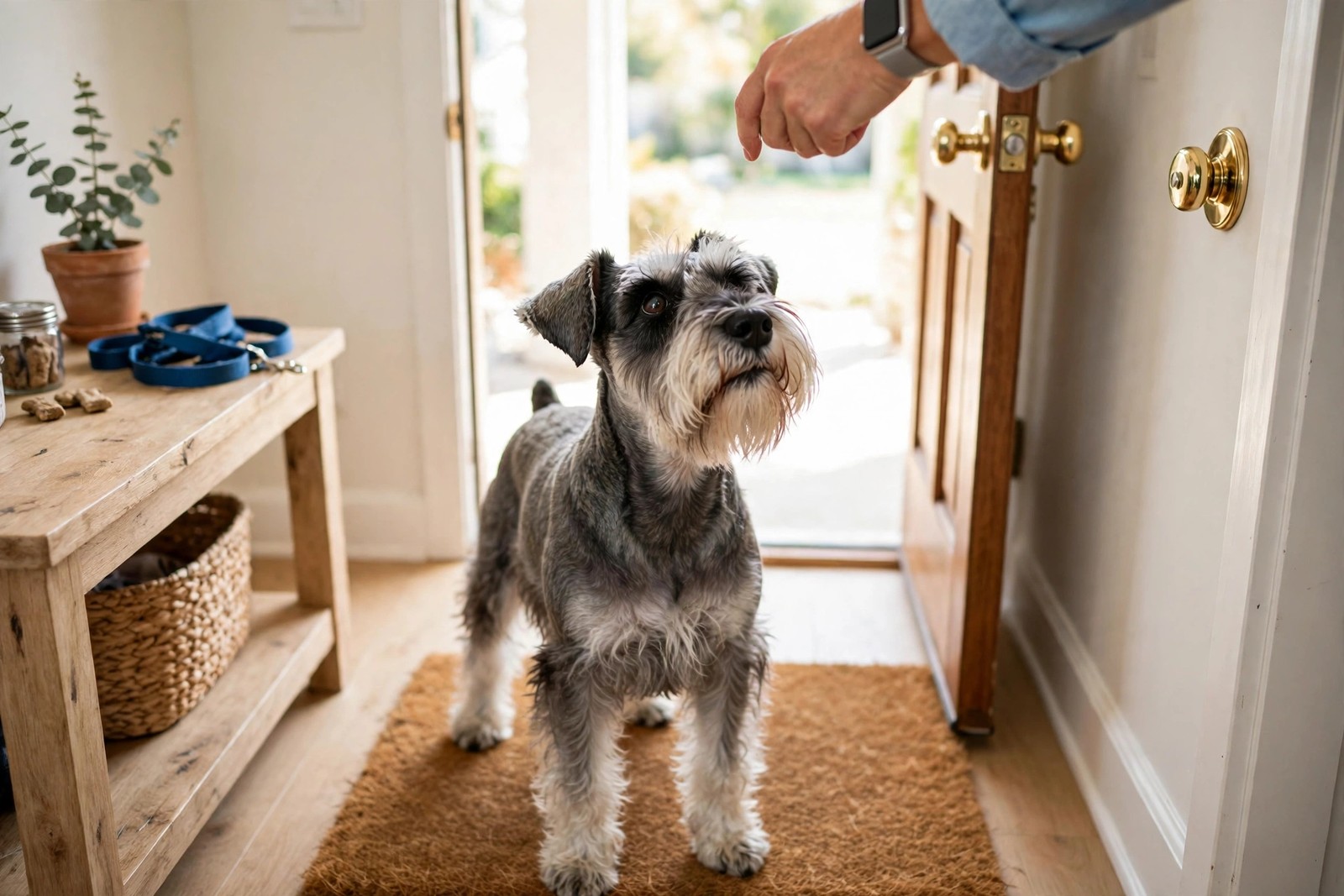
Yes — if you rank small breeds by willingness to make noise, the Miniature Schnauzer sits near the vocal end, and it is honest, purposeful noise. The breed was developed in Germany as an all-purpose farm dog, small enough to hunt rats in stables and bold enough to guard the yard and ride along with the cart. A dog bred to notice arrivals and announce them does not retire that habit because the yard became a garden and the cart became a car. Expect a Schnauzer to report the doorbell, the neighbours, the cat on the fence, and dogs passing on the pavement — clearly, repeatedly, and with terrier-style determination.
Why Schnauzer Barking Persists
Two traits make this breed's barking sticky. The first is alertness: the dog genuinely detects more, earlier — a Schnauzer often starts before you have heard anything at all. The second is persistence, a terrier-family quality; where many dogs bark, check your reaction, and stop, a Schnauzer tends to keep going until the situation resolves or it is given something else to do. Shouting it down rarely works, because from the dog's side the household has joined the alarm. Barking also spikes in the classic small-dog traps: being carried past triggers instead of walking through them, and being answered with attention every time the volume rises.
Desensitizing the Doorbell, Step by Step
The door is where most owners want relief first, and it responds well to a graded plan. Start with a recorded or softly knocked door sound at low volume while the dog is calm; reward quiet looking, not barking. Raise the volume over days, always staying below the level that sets off a full performance. Add the second half of the routine: after the sound, the dog goes to a mat or bed and is paid generously for settling there. Within a few weeks most Schnauzers can hear a real knock, glance at you, and head for the mat — the alert instinct is satisfied by reporting to you instead of to the street.
Exercise and Nose Work Drain the Rest
A Schnauzer's barking budget shrinks when the dog is properly tired, and for this bright breed mental work counts double. Scatter part of breakfast in the grass to be hunted by nose, rotate short trick-training sessions through the day, and let walks include genuine sniffing time rather than a brisk march past every smell. Evening is the danger window — an under-occupied Schnauzer saves its energy for the hours when the street is full of returning neighbours — so schedule the main play or training session before that peak rather than after it.
When It Is More Than Alertness
Barking aimed at windows for hours while the house is empty, barking paired with pacing or frantic greetings, or a sudden change in an adult dog's pattern points past watchdog behaviour toward anxiety or discomfort, and a vet or behaviourist is the right next call. Also take new barking seriously in an older Schnauzer who has previously been settled; pain and failing hearing both change how dogs react to the world. Note when the barking happens for a week before the appointment — the pattern is the most useful thing you can hand a professional.
The training above only holds if everyone answers the dog the same way, which is where shared households usually unravel. KinsLe's Care Teams lets you assign the doorbell practice, the morning nose-work feed, and the pre-evening play session to different family members as shared duties, so your Miniature Schnauzer hears one consistent set of rules and the barking work is never left to chance.