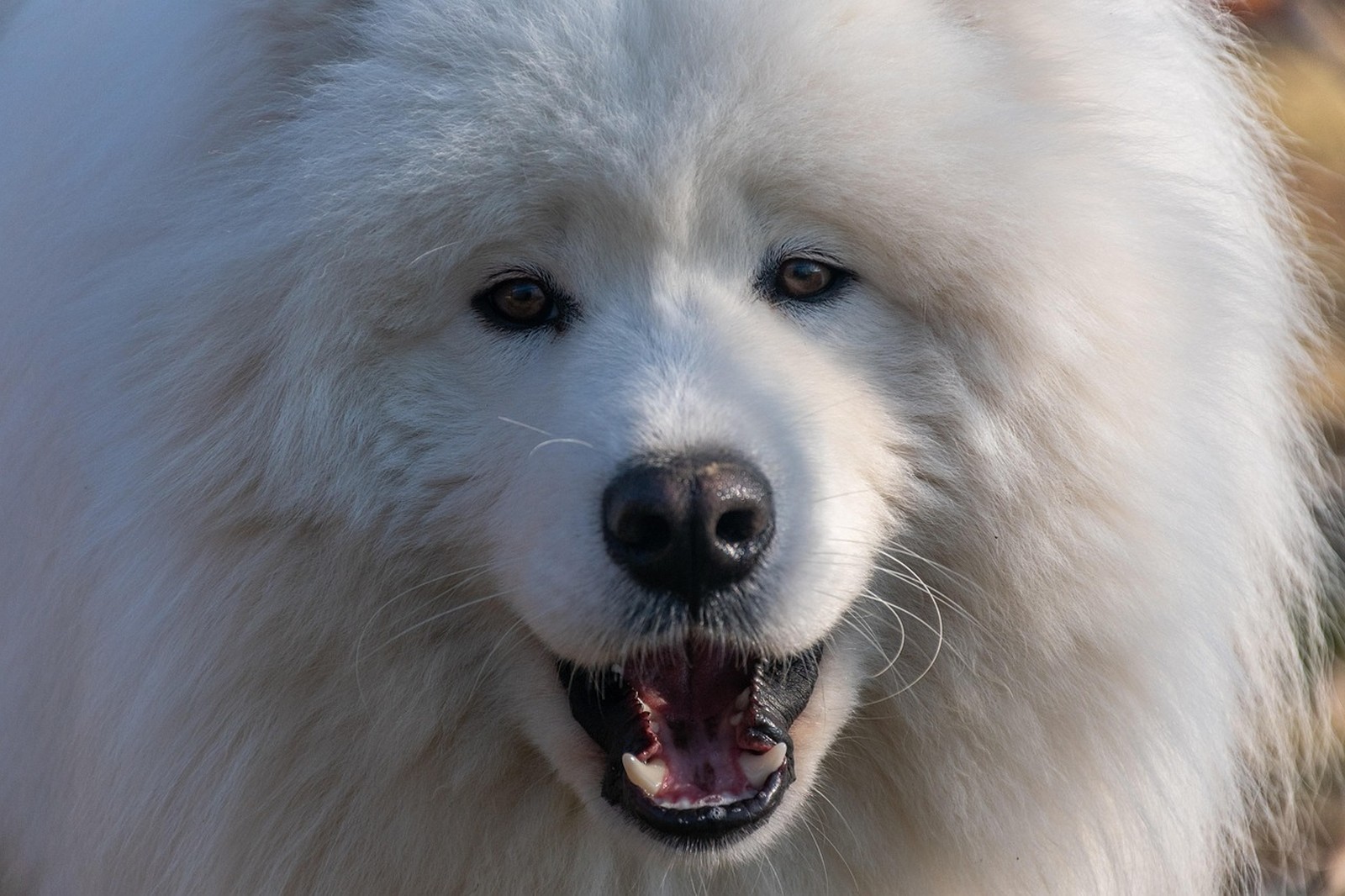
Yes — and barking is only the first instrument in the Samoyed's orchestra. This Siberian spitz breed worked alongside nomadic reindeer herders, herding the deer, hauling sledges, and sleeping in the tents as a living blanket, and a dog who lives that closely with people becomes a communicator. The modern Samoyed alerts with a sharp, carrying bark, howls when a siren passes or another dog starts up, and holds forth in the long, musical woo-woo talking the breed is famous for — a greeting, a request, and a running commentary in one. Owners who want a quiet dog should take that repertoire seriously before falling for the smile.
Sorting the Sounds: Alert, Chorus, and Conversation
Alert barking is functional and usually brief: a visitor, a stranger at the fence, an animal in the garden. Howling is social contagion — one siren or one distant dog starts it, and a Samoyed joins the way its ancestors joined a camp chorus; it is rarely a sign of distress by itself. Talking is the attention register, and it is the one owners accidentally train hardest, because a dog who woo-woos at the treat cupboard and gets paid learns to file all requests at higher volume. Naming which sound you are hearing tells you what to do: acknowledge the alert, ignore or redirect the chorus, and pay only the quiet version of a request.
Boredom Is the Volume Knob
A Samoyed is an endurance athlete in a white coat, bred to work all day in serious cold, and a couple of short walks do not touch that engine. The under-exercised Samoyed is a genuinely noisy dog — barking at the fence, singing in the garden, and finding the household's return home worth a full aria. Build the day around real work: a long morning outing with steady trotting on varied ground, sniffing time, pulling and retrieving games where the ground allows, and training that makes the dog think. Heat matters too — this is an arctic breed, so exercise belongs in the cool hours in summer, with the big effort shifted to morning and evening.
Training a Dog Who Loves an Audience
Standard barking fixes apply, with one breed-specific warning: a Samoyed finds your shouting genuinely encouraging, because group noise is the point. Work instead on a quiet cue built in calm moments, a solid recall away from the fence, and a settle routine on a mat indoors. Teach a speak-then-quiet pairing if the dog is a committed performer — letting the dog bark on cue, then rewarding the stop, often gives owners their first real off switch. At the fence line, management beats training for a long while: bring the dog in when the street is busiest, and do not leave a known singer alone in the garden to rehearse.
When the Noise Changes Character
A Samoyed who howls and paces mainly when left alone, especially with drooling or destruction at doors, is showing separation distress rather than enjoying a singalong, and that needs a vet or behaviourist and a gradual leaving plan. New night-time vocalizing in an older dog, or barking that arrives with appetite, weight, or coat changes, also earns a vet visit — this breed's thick coat can hide a thinning body underneath, so put hands on the dog, not just eyes. Keep a week's note of when the noise happens before you go; the pattern usually names the cause.
A vocal, high-energy breed stays liveable when the exercise, training games, and quiet practice happen every day regardless of whose shift it is. KinsLe's Care Teams lets you assign the long morning outing, the evening training game, and the settle practice to different family members as shared duties, so your Samoyed's outlets are guaranteed — and the whole street hears less of the repertoire.