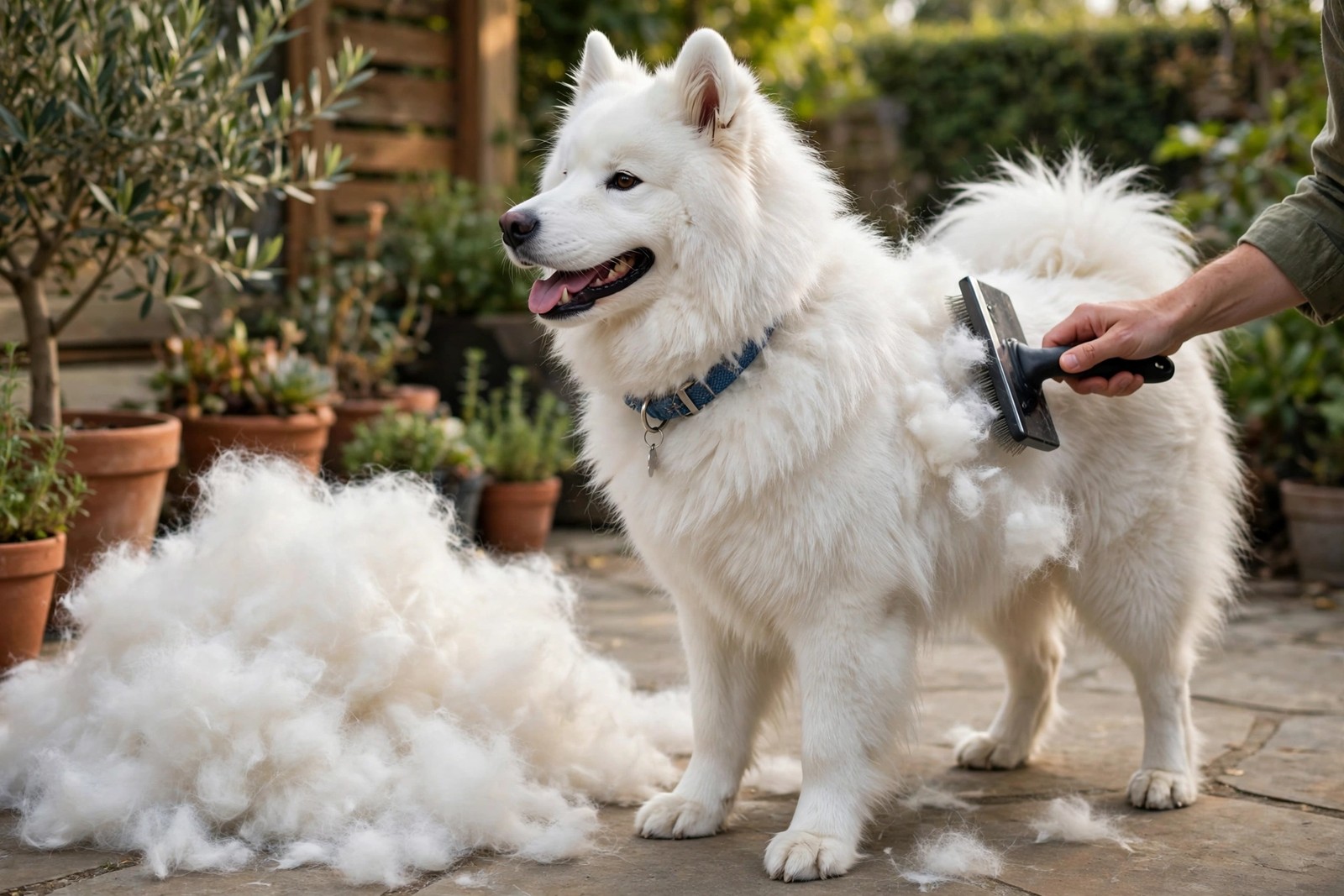
Yes, Samoyeds shed a great deal — this is one of the heaviest-shedding breeds, and its admirers accept a permanent drift of white hair as part of the package. The coat that creates the breed's cloud-like look is a true northern double coat: a very dense, soft undercoat for insulation beneath a longer, harsher outer coat that stands off the body. White hair releases steadily through the year, and then the undercoat blows out in seasonal sheds that typically happen twice a year, when brushing produces bag after bag of soft white wool and the dog briefly looks noticeably slimmer. Anyone choosing a Samoyed should choose that workload with open eyes.
Brushing a Coat This Dense Without Felting It
The central skill is getting to the skin. A Samoyed's undercoat packs and felts if only the surface is brushed, and felted undercoat traps moisture against the skin, blocks airflow in warm weather and turns bathing into an ordeal. Brush two or three times a week normally, and daily during a coat blow, using line brushing: part the coat, hold the upper hair back, and brush the layer beneath from the skin outward with a slicker, then check with a comb. Work the known felting zones every session — behind the ears, the armpits, the chest where a harness sits, the trousers and the tail. Sessions of fifteen to twenty minutes, done calmly with the dog standing or lying on a raised surface, beat one exhausting monthly marathon for dog and owner alike.
Surviving the Twice-Yearly Coat Blow
When a blow starts, you will know: hair comes away in clumps on furniture, tumbleweeds of white collect in corners, and brushing yields a dog-sized pile in minutes. Handle it with frequency rather than force:
- Brush daily in short sessions, section by section, instead of trying to clear the whole coat at once.
- Bathe once the loose undercoat is mostly out, with a thorough brush-through before the bath and a full dry afterwards, since a damp packed coat felts faster.
- Vacuum the dog's main rooms a little and often during the blow rather than staging weekend rescue missions, and put washable throws where the dog sleeps.
- Watch the skin as more of it becomes visible: redness, sores, bald patches or persistent itching are vet-visit signs, not shedding.
The White-Hair Household, Planned Honestly
Samoyed hair has properties all of its own. It is white, so it shows on every dark surface and dark outfit while disappearing, mercifully, on pale ones. The texture is dry and comparatively odour-light, and individual hairs tend to sit on fabric surfaces rather than weaving in as deeply as some shorter coats do, so a lint roller and a shake outdoors handle clothing reasonably well. What does not work is pretending the shedding is a phase: puppies shed less because the adult undercoat has not fully arrived, and many owners are caught out when the first full adult blow lands.
Never Shave the Snow Coat
Each blow season tempts someone to ask for the coat off, and the answer should stay no. The double coat insulates against cold and also shields the skin from sun and heat; a shaved Samoyed is more exposed to sunburn and overheating, not cooler. The two layers regrow at different rates, so shaved coats can return patchy and felt faster, and the guard hairs that give the coat its self-cleaning, dirt-shedding quality may take a very long time to come back fully. If the coat has already felted into mats through a busy period, a professional groomer may need to clip out the worst mats for the dog's comfort — that is welfare work, not a shedding solution — and the fix afterwards is the routine: two or three brushing sessions a week, daily during blows. Households that roster that routine explicitly, instead of relying on whoever notices the tumbleweeds first, keep a Samoyed's coat healthy year-round, and KinsLe Care Teams helps by letting you assign the regular brushing and the blow-season daily sessions as recurring duties, each marked complete with a timestamp.