
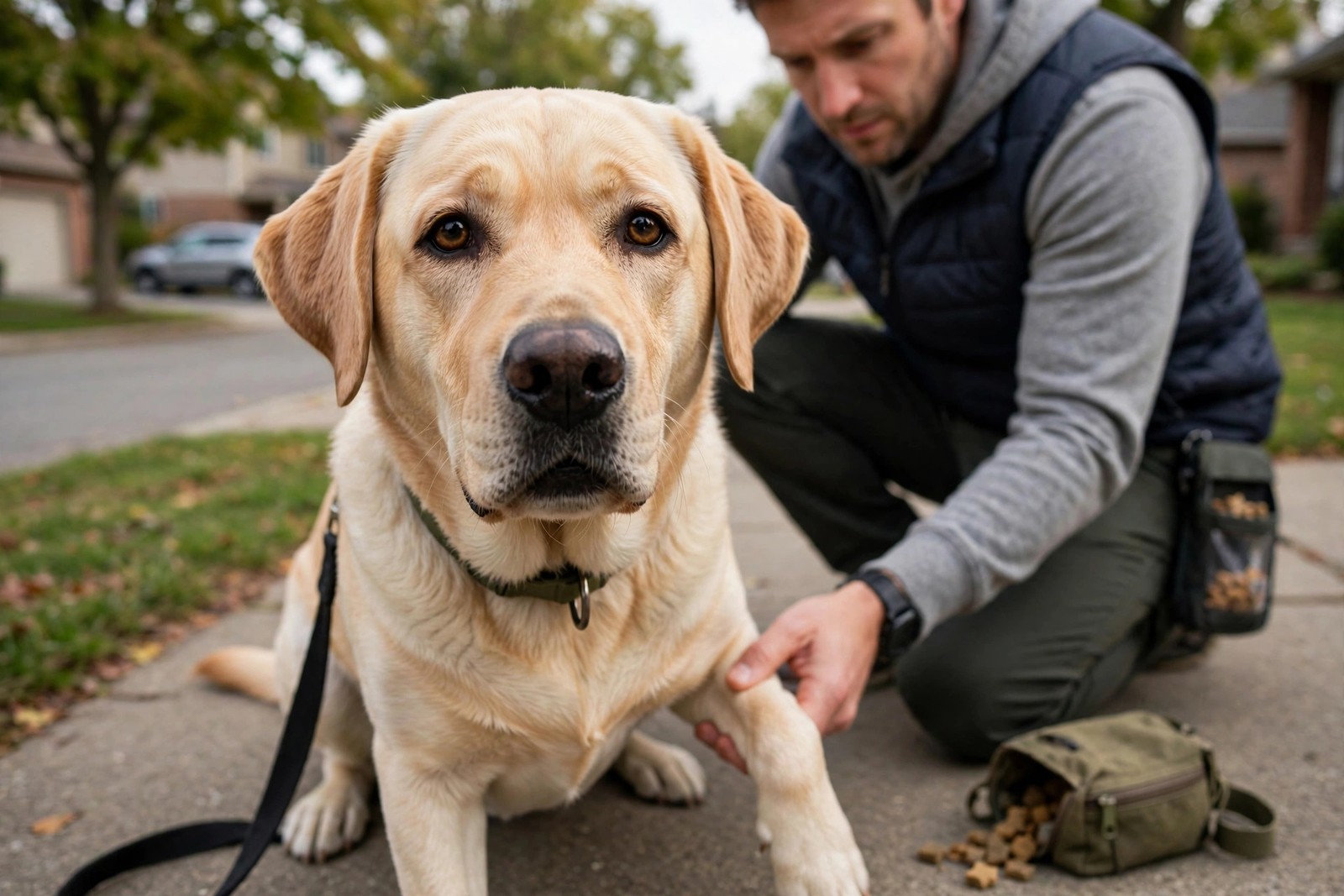
Generally yes, and the reputation is earned. A well-bred, well-socialised Labrador is typically patient, playful, and deeply people-oriented, and many seem to genuinely seek out children's company. Labs forgive accidental bumps that would offend a more sensitive breed, join games enthusiastically, and settle happily in the middle of family chaos. For school-age children especially, a Lab can be a devoted, confidence-building companion.
The cautions are physical, not temperamental, and they deserve equal weight in your decision.
The Real Risk: Size Plus Enthusiasm
An adult Labrador commonly weighs 25 to 36 kilograms, with a powerful tail, a hard head, and a joyful habit of turning quickly when excited. To a toddler, that is a dog at face height who can knock them flat without meaning any harm at all. Young Labs jump up in greeting, mouth during play, and charge through games. None of that is aggression, but a two-year-old cannot manage it, and a fall or a fright early on can colour how both child and dog feel about each other.
So the rule is simple: toddlers and Labs are supervised, always, with an adult close enough to step in — not watching from the kitchen doorway. Use baby gates to give both sides breaks. A Lab who can retreat to a quiet bed, and a toddler who cannot follow, prevent most problems before they start.
What Children Need to Learn
Children need teaching just as the dog does. No climbing on the dog, no tight hugging around the neck, no pulling ears or tail, and never taking food, chews, or treasured toys from a Lab's mouth — even the gentlest dog deserves that respect, and food guarding is easiest to prevent by simply never creating the test. Teach strokes along the side, not pats on top of the head, and the idea of consent: if the dog walks away, the game is over.
Older children can be given real, supervised roles: holding the lead with an adult on a quiet street, scattering treats for a find-it game, or practising a sit cue with food rewards. That kind of involvement builds the bond families picture, far more than rough-and-tumble wrestling, which mainly teaches a young Lab that children are exciting things to jump on.
Choosing and Introducing Your Lab
Meet the individual dog, not just the breed description. With a puppy, ask how it has been raised around household noise and children. With an adult rescue, ask what is actually known about its history with children and watch how it responds to normal family bustle — relaxed and wiggly is what you want; tense, avoidant, or frantically aroused means a slower plan or a different dog.
Set the home up before arrival: a dog-free play space for very young children, a child-free rest space for the dog, and food fed in peace in one fixed place. In the first weeks, keep meetings short, calm, and rewarding, and let the dog choose to approach rather than being led over for inspection.
Handled that way, the classic pairing works for the classic reasons: patience, humour, and loyalty in generous supply. Beyond those handling habits, there is one plainer kind of help: open the dog's profile to the relatives you pick through KinsLe Family Sharing.