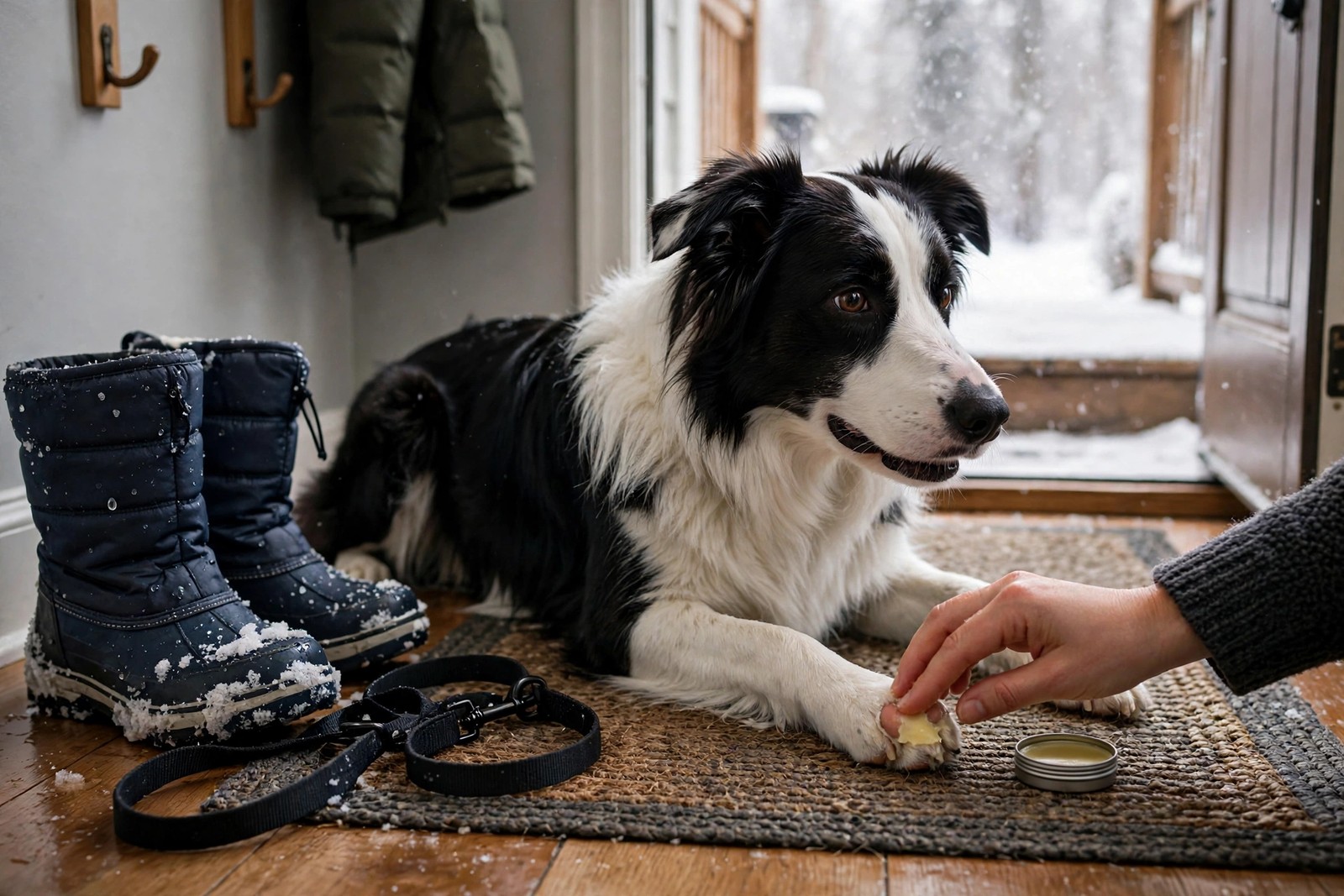
Paw balm is not a winter essential for every dog. It earns its place when cold ground, ice, packed snow, and road salt or grit are leaving the pads dry, rough, or cracked. A dog doing short walks on clear pavements with smooth, comfortable pads may need nothing beyond a rinse, while a dog walked daily on salted streets or icy trails usually benefits from balm, booties, or both.
What Winter Actually Does to Paws
Salt and grit are the main culprits. De-icing salt draws moisture out of pad skin and stings in tiny cracks, grit works like sandpaper between the toes, and snow packs into hard ice balls in the hair between the pads, pulling with every step. Check the paws after each walk: look for redness between the toes, pads that feel rough or look flaky, small cracks at the pad edges, and a dog who sits down mid-walk, licks his feet persistently at home, or limps only on cold ground. Those signs say the paws need help now, not at the end of winter.
Using Balm Properly
Rinse the paws in plain lukewarm water after salted walks, or wipe them thoroughly, then dry between the toes. Spread a thin layer of balm over each pad, ideally just before a meal or a chew so your dog is distracted while it soaks in rather than licking it straight off. The product must be made for dogs and safe if licked, because licking is guaranteed; never use human hand creams, lip balms, or petroleum-based products from your own cabinet, which may contain ingredients a dog should not swallow. Applying balm before a walk also gives pads a light protective layer against salt, though it wears off and never replaces the rinse afterwards.
When Booties Are the Better Answer
On heavily salted streets, sharp ice, or very long cold walks, booties protect better than any balm because the paw never touches the surface. Introduce them indoors first: one boot, praise and a treat, short practice walks around the house, then a brief outing, since most dogs do the high-stepping comedy walk for the first few sessions. The fit matters — a boot that twists or slips off in snow is worse than none. Trimming the hair between the pads level with the pads also helps, because shorter hair collects far less ice.
What Balm Cannot Fix
Balm softens dry pads; it does not treat damage. A crack that bleeds, a pad that is swollen or hot, limping that continues indoors, or licking focused on one spot on one paw deserves a vet visit, since thorns, cuts, and infections hide between toes. If pads crack every winter despite balm and booties, raise it at your next vet check rather than layering on more product. KinsLe's Care Teams lets everyone who walks your dog share the same note — rinse, dry, thin balm layer, booties on salted routes — with each walk's paw check marked done, so cracked pads get spotted early instead of being noticed by three different walkers.