
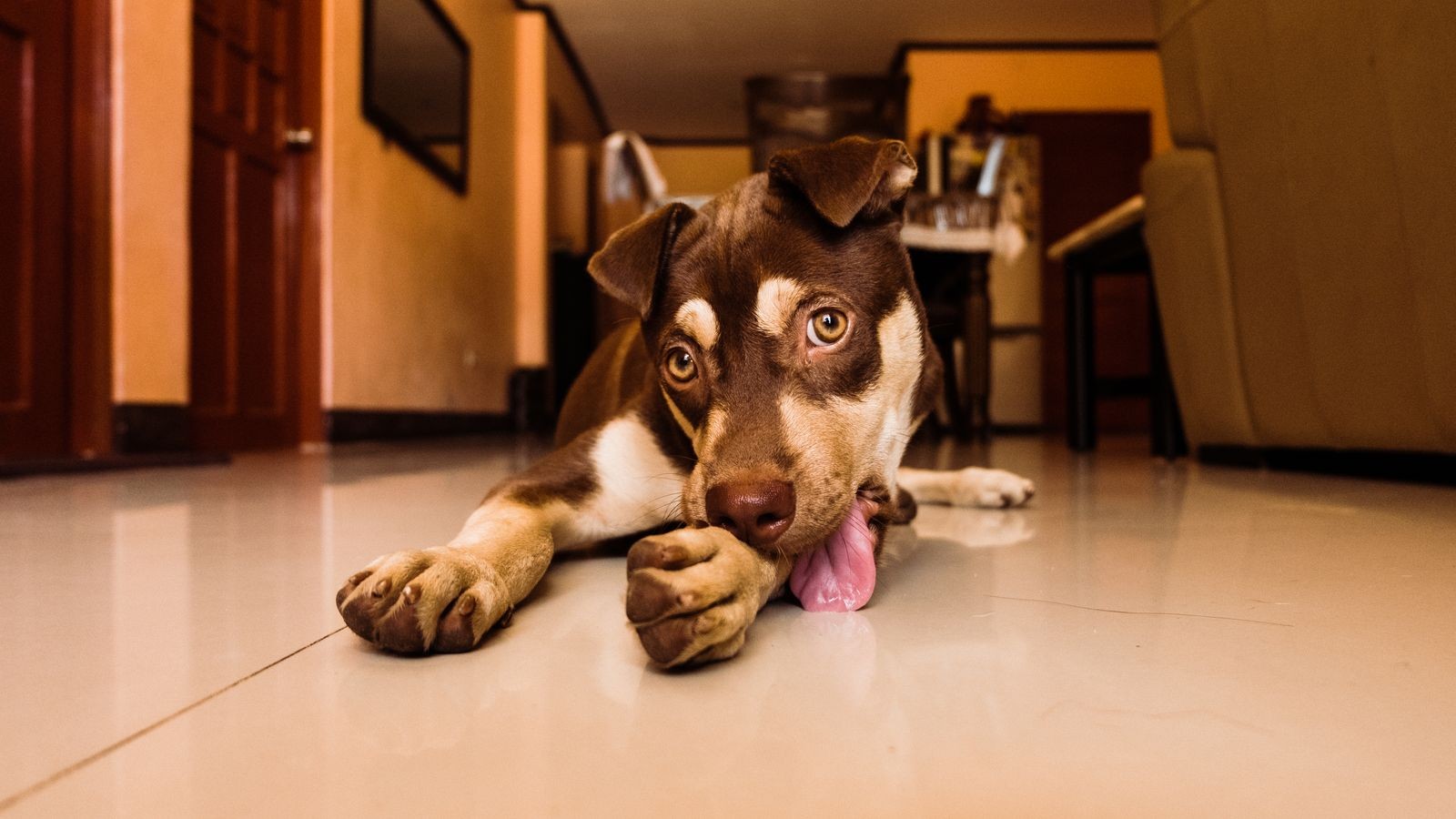
Seasonal allergies in dogs usually show up on the skin, not with sneezes — think itchy paws, licking and chewing at the feet, recurring ear trouble, and scratching that reliably worsens at the same time each year and eases off when the season changes.
While people get hay fever in their noses, allergic dogs get it in their skin. Pollen lands on the coat and paws, and a sensitive dog reacts by itching and licking. If your Beagle is comfortable in winter and chewing her feet every late summer, that pattern is a major clue.
The Seasonal Pattern to Look For
Start with timing. Environmental allergy signs often flare in spring, peak again when grasses or ragweed are heavy, and quiet down after frost or in the depths of winter — though where you live and how much time your dog spends outdoors shift the exact months. Indoor dust and storage mites can blur the pattern because they are present all year.
Then look at location. Allergic itching in dogs commonly targets the paws, belly, armpits, groin, ears, and around the eyes and muzzle. Saliva staining — rusty-brown discoloration on pale paws from constant licking — is a classic footprint of a dog who has been working at her feet for weeks.
Other pieces that fit the picture include:
- Recurring ear inflammation that returns in the same seasons
- Red, irritated skin between the toes or a musty paw odor
- Sneezing or watery eyes in some dogs, but usually alongside the skin signs
- A dog who is itchier after walks through grass or rolling outdoors
Sorting Allergies From Look-Alikes
Fleas, skin infections, and food reactions can all imitate seasonal allergies, and more than one problem can run at once — an allergic dog who scratches her skin raw often grows a secondary infection on top. That is why a vet visit beats pattern-guessing alone. Your vet will rule out parasites and infection, examine the ears and skin, and weigh the history you bring.
You can strengthen that visit enormously by arriving with dates, not impressions. When did the licking start this year? Did it follow a move, new walking route, or garden work? Does bathing or wiping paws after walks reduce it that evening? Specific answers point the investigation in the right direction.
Practical Steps That Help Itchy Dogs
You cannot remove pollen from the world, but you can reduce what sits on your dog. Wipe paws and belly with a damp cloth after walks during flare season, bathe with a gentle, vet-recommended shampoo at the frequency your vet suggests, keep up consistent flea prevention so one problem does not hide inside another, and wash bedding regularly.
Do not start leftover medications or random supplements hoping something sticks, and be cautious with any product not meant for dogs. If itching is breaking skin, keeping your dog awake, or producing sores and odor, that is a vet visit now, not at season's end.
Notes That Reveal the Pattern
A single itchy week tells you little; a record across seasons tells you a lot. Recording allergy notes, flare dates, and vet findings in KinsLe's Pet Passport — the records packet for vaccines, medications, allergies, and documents — helps your vet spot the seasonal pattern with you and share that history cleanly at each visit. Across successive springs, dated flare entries kept in the Pet Passport record on KinsLe let a clinician compare timing, paw licking, and ear flare-ups year to year.