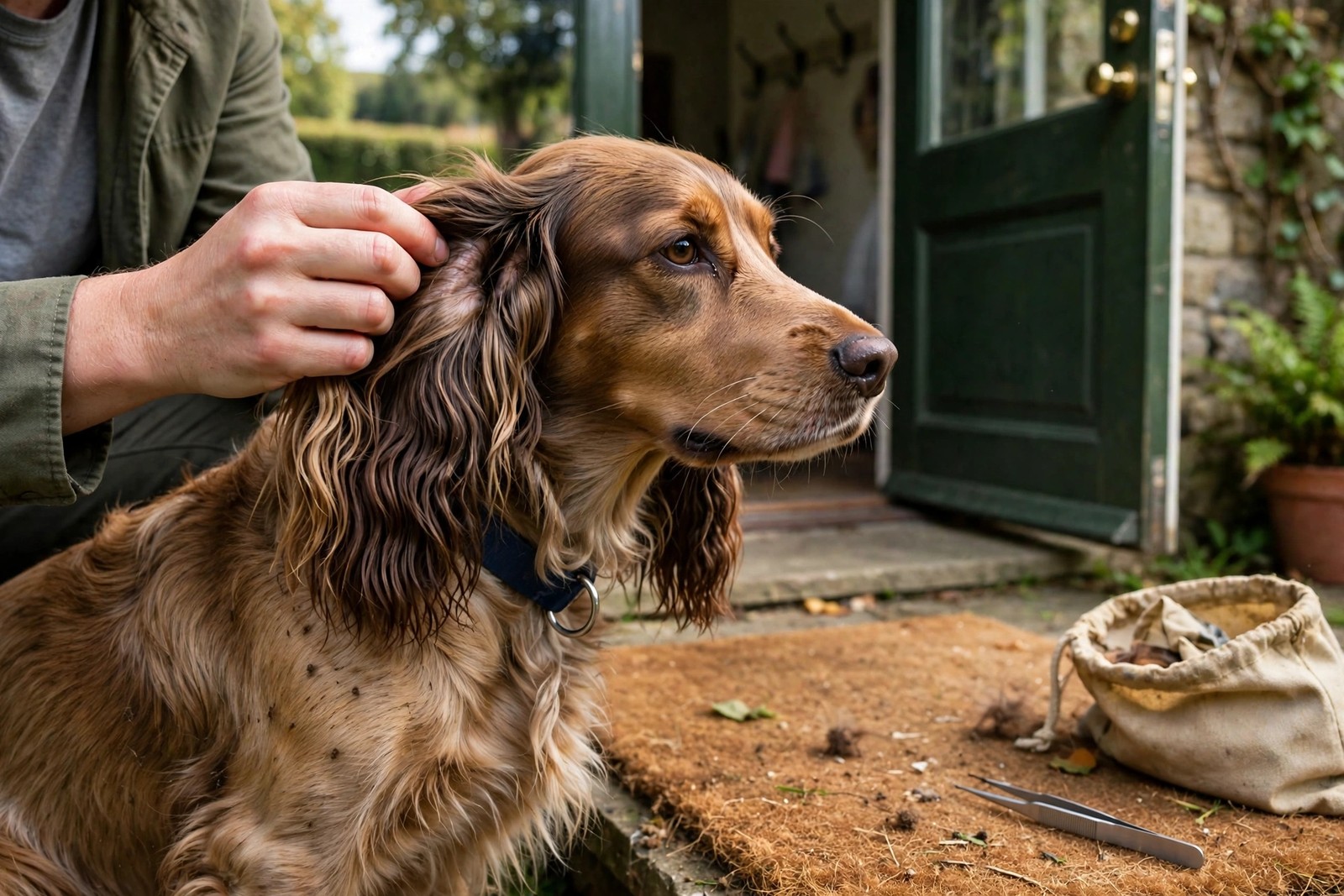
Build a fixed ritual at the door after every countryside walk: run your hands against the coat across the whole body, then part the hair and look closely at ears, armpits, groin, between the toes and under the collar. Long coats hide both ticks and burrs from a glance, yet your fingertips find them quickly — a tick feels like a small firm bump fixed to the skin, and a burr catches like a knot that was not there at breakfast. Keep the lead on, work in good light by the door, and reward stillness so the check becomes part of coming home rather than a wrestling match after every walk.
The door check, in a set order
Use the same order each time so no area depends on memory. Start with the head: lift each ear flap, look at the rim and the warm fold at the base, and run a thumb around the edge where ticks settle. Move down the neck and slip two fingers under the collar all the way round, since the collar line stays warm and damp and hides attachments well. Work along the back and sides against the grain, then lift each front leg for the armpit, part the longer hair in the groin, and finish with the feet — spread every toe, check between the pads, and feel up the feathering on each leg where burrs collect in strings.
Burrs out by hand, before they tighten
Deal with burrs during the same check, while they sit on the surface of the coat rather than worked deep into it. Hold the hair below a burr so pulling does not tug the skin, tease the strands apart with your fingers a few at a time, and slide the burr out along the direction the hair grows. A comb helps only after your fingers have loosened the bulk; dragging a comb through a tight burr first rips hair and teaches your dog to dread the door. Check the tail underside, chest fringe and behind the ears twice on walks through long grass or hedgerows, because those areas pick up burrs in layers that a single pass misses.
Removing a tick, step by step
Tick removal is the one procedure worth doing promptly at home rather than leaving the tick in place while you wait. Part the hair so you can see the skin clearly, take fine-tipped tweezers, and grip the tick as close to the skin surface as you can reach. Pull upward with one steady, even pressure — no twisting, no jerking, and nothing applied to the tick beforehand — then check that the mouthparts have come away with it. Clean the bite spot and your hands, place the tick in a sealed container or tape it to your dated note, and record where on the body it was attached and roughly how engorged it looked. Watch the site over the following days for spreading redness or swelling, and watch your dog for tiredness, lost appetite or stiffness, contacting your vet about anything that changes rather than waiting it out.
A summer rhythm the whole household can keep
After every countryside walk is the frequency that matters in summer, because a tick found the same evening has fed for far less time than one found at the weekend bath. Keep the tweezers, a small torch, antiseptic wipe for the skin spot and a notebook in one pouch by the door so the kit is never the reason a check gets skipped. Note each tick with its date and body site; a cluster of finds from one route tells you which field edge or woodland path to avoid in peak weeks. When several people walk the dog, writing the routine into KinsLe as Care Teams duties — door check, burr clear, tick log — means the evening walker can see the lunchtime check was done and timestamped, and no walk goes unchecked because each person assumed another had done it.