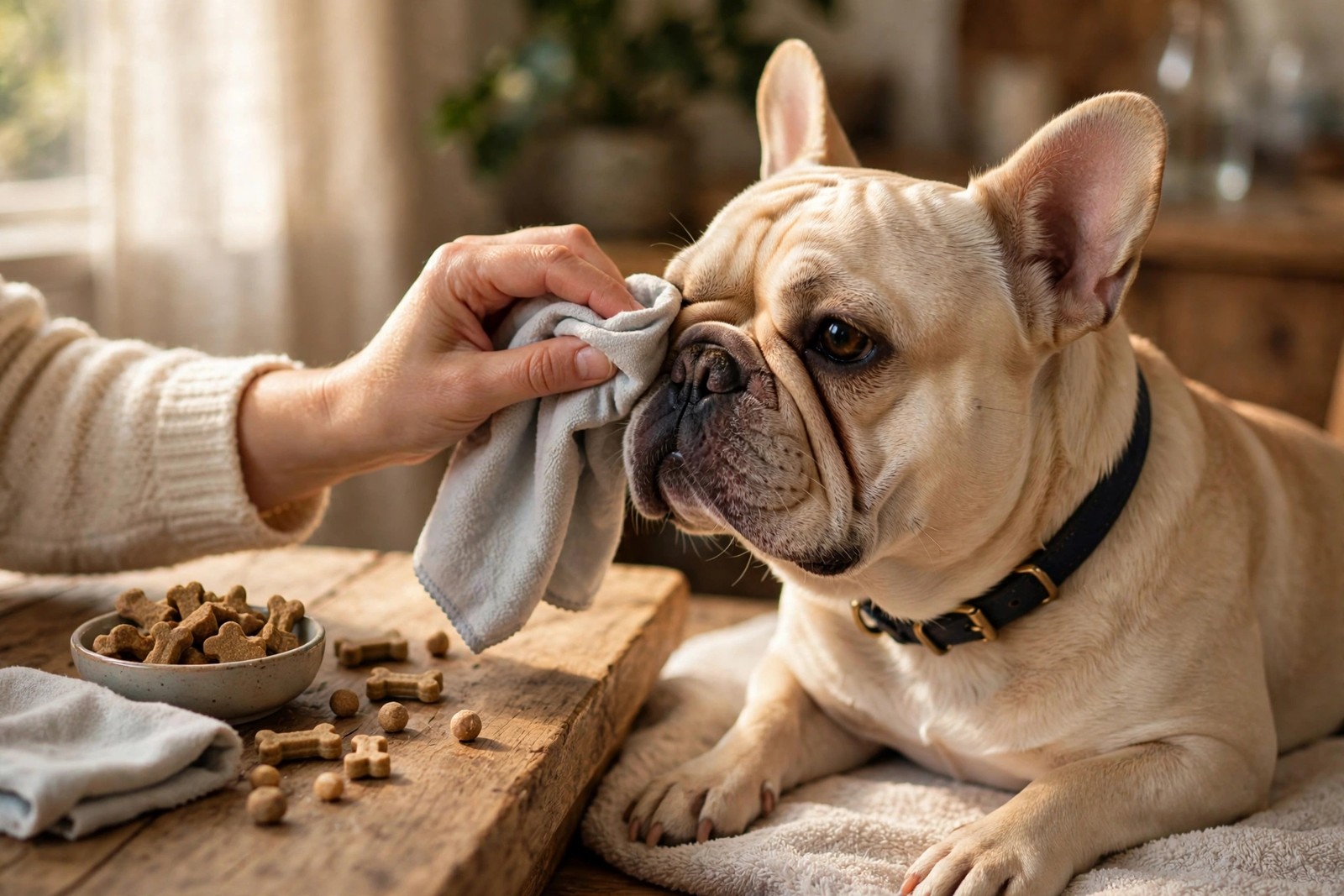
Clean a flat-faced dog's facial folds daily: soften any residue, wipe inside each fold with a soft cloth dampened with plain water, then dry every fold thoroughly, working gently around the nose rope and the creases beside the eyes. A flat face concentrates the whole wrinkle problem into a few square inches: a heavy fold over the nose, creases running down from the eyes, and skin that meets skin with almost no airflow between. Those folds collect tears, saliva, food and dust all day and dry out almost never on their own, which is why the face of a flat-faced breed is a daily job rather than a weekly one, and why technique around the eyes and nose needs more care than folds anywhere else on the body.
Know the folds on a flat face
Map your dog's individual folds before you settle a routine, because flat-faced breeds vary: some carry one deep nose rope above the nose, others add diagonal tear-track creases, chin folds that catch food, and small creases where cheek meets jaw. Run a fingertip gently through each one in good light and feel its depth; a shallow crease needs a single pass, while a deep nose rope needs its full length opened, wiped and dried in sections. Note any fold where tear moisture runs constantly, since that fold collects quickly and deserves first attention each session.
The daily clean, fold by fold
Settle your dog at a height where you can see into the folds, with a damp cloth, a dry cloth and treats laid out before you begin. Soften crusted residue by holding the damp cloth against it for a few seconds, then wipe along the depth of each fold with light strokes, lifting the skin gently with your other hand so the cloth reaches the base rather than skimming the opening. Change to a clean area of cloth as it picks up debris, and take special care beside the eyes: wipe away from the eye, never across it, and never let a cloth that has cleaned a dirty fold touch the eye area. Finish by drying with the same patience — part each fold, press the dry cloth into its full depth, and check with a fingertip that the skin feels dry, because on a flat face the distance between wiped and dry is exactly where soreness starts.
What never goes in a facial fold
Keep harsh antiseptics, scented wipes, powders and leftover skin creams out of facial folds unless your vet advises a named product for your dog, since a closed fold holds residues against thin facial skin for hours and the eyes sit millimetres away. Plain water handles the daily load; a fold that seems to need something stronger is telling you it needs examination, not chemistry. Never scrub at red skin, never prise a fold open against resistance, and never continue through flinching or pawing — a dog who objects newly to a familiar routine is reporting pain in the only way available. Warmth, patience and a hard stop at resistance protect both the skin and your dog's trust in the routine.
When the face needs the vet instead
Book a veterinary check when any fold shows redness that persists after gentle cleaning, a sour smell, discharge, swelling, or hair loss along the crease, or when your dog rubs her face on furniture, paws at one side, or squints on the side of a tear-track fold. Sore facial folds commonly need proper treatment rather than increased wiping, and the vet may also want to judge whether a very deep fold is trapping moisture beyond what home care can manage. Bring a short history: how often you clean, what the fold looked like when the change began, and whether appetite or breathing comfort has shifted alongside it. Anchoring the daily session to a fixed cue, such as the final meal, keeps the habit unbroken, and entering it in KinsLe as a Care Teams duty with a completion tick means a partner covering one evening follows the identical face routine instead of improvising beside those eyes.