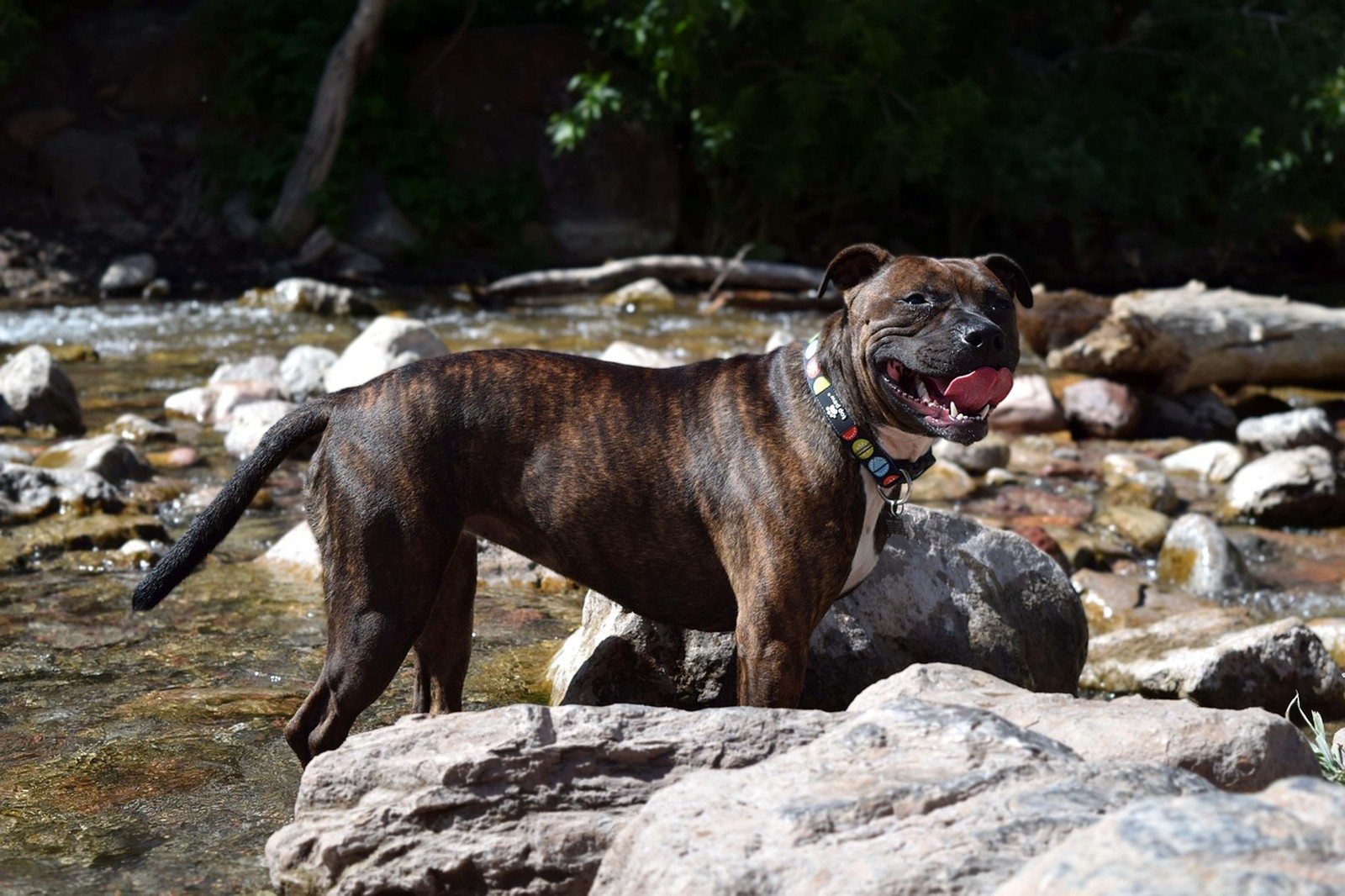
A People Dog That Deserves Careful Sources
The Staffordshire Bull Terrier is a strong, affectionate, people-obsessed breed that suffers from two directions: careless breeders producing unsound dogs, and public misunderstanding that follows the dog rather than its behaviour. Your protection is a meticulous source. Start with the breed club's referral, breed shows and events where you can meet dogs and breeders, and rescues experienced with bull breeds, whose assessors understand Staffy body language and exuberance.
Ask breeders where puppies are raised and how they are socialised. Staffy puppies should grow up in the home, handled constantly, meeting visitors and household noises, because this breed's whole identity is closeness to people. Meet the mother and as many adult relatives as you can; you are looking for dogs that greet you with loose, wiggly delight and settle happily for a fuss.
Inherited Tests Worth Asking About
Responsible Staffy breeders test for the breed's known inherited problems. Ask about screening for hereditary eye problems, hip awareness, and the DNA test available for a metabolic condition that affects this breed, and ask to see results for both parents rather than accepting a verbal summary. A breeder who tests can also explain what a carrier result means for breeding choices, and that fluency tells you the testing is genuine practice rather than decoration.
Temperament testing matters equally. Ask how the breeder judges their breeding dogs around children, strangers, and other dogs, and whether any dog in the line has shown aggression. Staffies can be choosy with other dogs as adults even when beautifully socialised, and an honest breeder will discuss that possibility instead of promising universal dog-park harmony.
What Good Bull-Breed Rescues Do Differently
Staffies are among the most common dogs in general rescue kennels, and the best rescues, whether breed-specific or experienced all-breed organisations, assess each dog individually rather than by reputation. Look for rescues that foster in homes or spend serious time with kennelled dogs, and that report concretely: lead strength, response to handling, feelings about other dogs at a distance and up close, behaviour with children, and any guarding or anxiety they have seen.
Ask how long the dog has been assessed and by whom, and whether the rescue provides post-adoption support and a returns promise. Be wary of any rescue that rushes a strong, bouncy dog into an inexperienced home without questions; good matching protects this breed more than most, because a failed placement reinforces unfair assumptions about the next Staffy too.
Puppy Socialising or Adult Substance
A Staffy puppy needs early, generous socialisation with people of all ages, careful introductions to other dogs, and kind boundaries around mouthing and jumping, delivered by someone home often enough to be consistent. A fostered adult arrives house-trained more often than not, with its dog sociability and people manners already observable, which suits many households. Choose according to the time and upper-body honesty you have: even a polite Staffy is a powerful dog on a lead.
A Strong Dog Needs a Complete File
At handover, collect the inherited test results, vaccination and microchip records, current food, exercise and play routines, and notes on the dog's social history, handling preferences, and anything that overexcites or worries it. For a breed judged quickly by strangers, a complete, honest record is also your evidence of the dog's real life and character.
Through KinsLe Transferrable Profiles, character references and care knowledge alike survive the change of address.