
The Direct Answer: Fix the Causes, Not Just the Symptoms
Get algae under control by correcting what feeds it — before you ever reach for chemicals. Shorten your lighting period, feed only what fish eat in a couple of minutes, keep up with regular water changes, and physically remove algae during maintenance by scraping glass and wiping decor. In freshwater planted tanks, adding fast-growing live plants starves algae of nutrients by outcompeting it. Chemical algaecides should be the absolute last resort: they stress fish, can crash your beneficial bacteria, and the algae simply returns if the underlying light-and-nutrient imbalance remains. Safe algae control is methodical, not dramatic.
Step One: Tame the Light
Light is algae’s engine, so it’s your first lever. Put tank lights on an outlet timer for 6–8 hours a day — consistency matters more than duration, since erratic photoperiods favor algae over plants. If the tank sits near a window, relocate it or shield that side; daylight is far more intense than aquarium lighting and you can’t control its duration. For planted tanks, consider a “siesta” schedule — lights on morning and evening with a midday break — which plants tolerate well but disrupts algae’s photosynthesis rhythm. And check bulb age: fluorescent tubes older than a year shift toward algae-friendly spectrums even when they still “look fine” to your eyes.
Step Two: Starve It at the Source
Every uneaten flake becomes algae fertilizer, so feeding discipline is powerful. Offer only what your fish consume in two to three minutes, once or twice daily, and siphon out anything left after five minutes. Review your stocking honestly — more fish means more waste, and an overstocked tank will fight algae forever regardless of other fixes. Temporarily increase water changes to weekly 25–30% to export dissolved nitrates and phosphates faster than algae can use them. Rinse mechanical filter media in old tank water (never tap water, which kills beneficial bacteria) so trapped waste doesn’t keep leaching nutrients back into the tank.
Step Three: Recruit Natural Allies
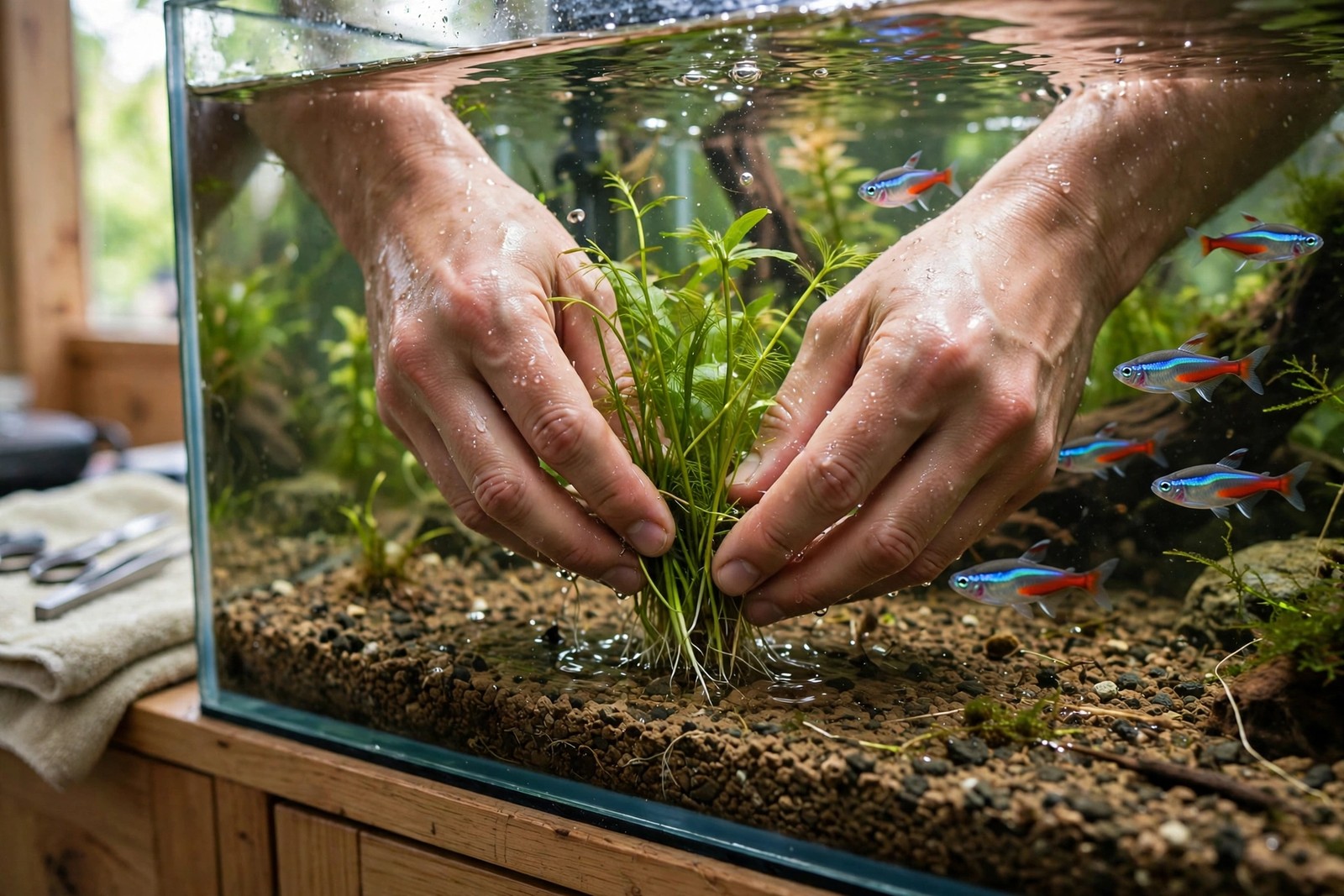
Nature offers cleanup crews that work around the clock. In freshwater tanks, nerite snails are algae-eating machines that can’t reproduce in freshwater — no population explosion to worry about. Otocinclus catfish and Amano shrimp handle soft algae and film admirably in community tanks, provided your fish won’t harass them. Fast-growing live plants like hornwort, anacharis, or water sprite compete directly with algae for nutrients while oxygenating the water. In saltwater setups, trochus and cerith snails plus hermit crabs form the classic crew. Match every addition to your tank’s size, inhabitants, and water parameters — a cleanup crew that becomes somebody’s lunch isn’t helping anyone.
When to Get Expert Eyes on Your Tank
If you’ve balanced light, feeding, and water changes for a month and algae still dominates, it’s time for in-person advice tailored to your specific setup. KinsLe’s Pet Services Directory helps you find a local aquatics store where experienced keepers can look at photos of your tank, test your water, and spot the imbalance you’ve been missing — sometimes it’s phosphates in your tap water, sometimes it’s a filter that’s undersized for your stocking. Bring your test readings and a tank photo; a good shop diagnoses fast.
Clear glass, healthy fish, zero chemicals needed — that’s the goal. When light, feeding, and water changes still leave algae winning after a month, use the Pet Services Directory on KinsLe to locate a nearby aquatics shop that can test your water and review tank photos in person.