
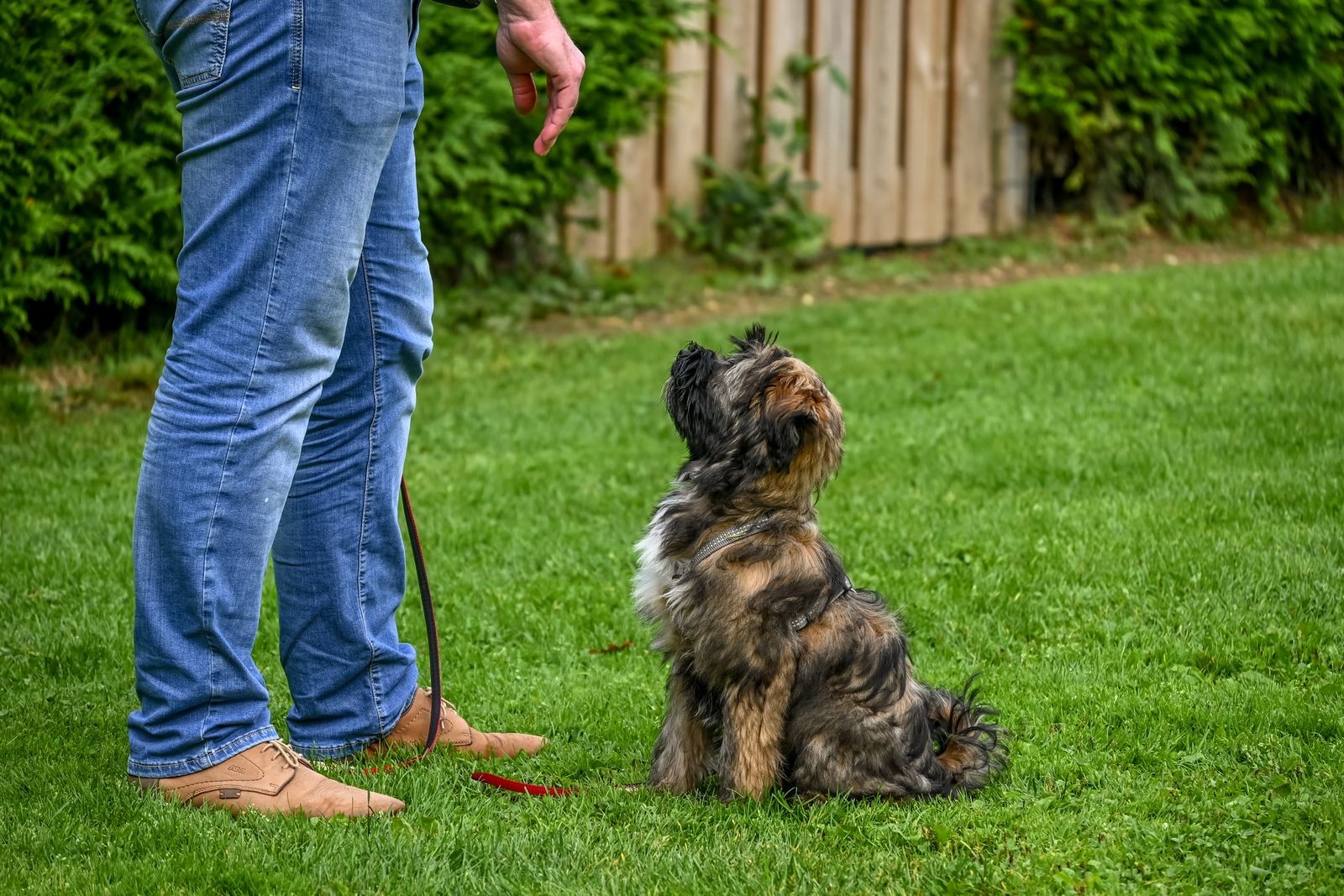
The fix for inconsistent training is boring but powerful: agree on the same cue words, the same house rules, and the same rewards, write them down where everyone can see them, and practice together in short family sessions. Dogs learn from consequences, not intentions — so if "off" means get down for you, nothing at all for your partner, and a game for your kids, your dog is not being stubborn. They are working with three different rulebooks.
Why consistency matters more than technique
Dogs are brilliant pattern-spotters. When a behavior pays off sometimes — the puppy who gets lifted onto the couch by one person after being told to stay off by another — the behavior becomes more persistent, not less, because intermittent rewards are exactly what keep habits alive. Inconsistent cues are just as confusing: a dog hearing "down," "lie down," "settle," and "floor" from four people has four puzzles to solve. Consistency shrinks the puzzle. The same word, the same expectation, and the same payoff, from everyone, every time, is what turns training from nagging into learning.
Write your family's dog dictionary
Start with a one-page agreement the whole household helps create:
- Cue words: one word per behavior ("down" means lie down; "off" means paws off the couch or person), plus your dog's release word and recall word
- House rules: is the dog allowed on furniture? Are table scraps banned entirely, or only begging? Who may give treats, and how many per day?
- Reward rules: what earns a treat, what earns praise and play, and what earns nothing but calm redirection
- Safety rules for kids: no hugging around the neck, no taking toys or food from the dog, and always an adult present for training games
Stick the list on the fridge. When guests or grandparents visit, walk them through it in thirty seconds — dogs cannot tell the difference between a family member and a well-meaning rule-breaker.
Run short family practice sessions
Fifteen minutes together beats a week of everyone freelancing. Pick one skill, like recall in the hallway or a polite sit at the door, and take turns handling the dog while everyone else watches for timing: mark the right behavior the instant it happens, reward within a second or two, and keep the rate of rewards high for beginners. Rotate roles so kids practice handling with supervision and adults see exactly where the dog gets confused. End while it is still fun. These sessions calibrate the humans as much as the dog, and they quickly reveal disagreements — settle those away from the dog, kindly, then update the fridge list.
Keep daily care consistent too
Training consistency collapses if daily care is chaotic: a dog fed at random times by random people, walked by whoever remembers, and let out "sometime this morning" lives in a fog of unpredictability that bleeds into their behavior. Shared routines for feeding, walks, play, and bedtime make the whole day legible to your dog — and they stop the double dinner and the missed walk, both of which are surprisingly common in busy households.
Let Care Teams hold the routine
That is where KinsLe's Care Teams come in. Care Teams let you assign the daily duties — feeding, walks, medication, grooming — to specific family members, and each person marks tasks complete with a timestamp, so everyone can see at a glance what is done and what is still owed. The training plan stays visible alongside the routine that supports it, and the dog experiences one steady pattern no matter who is home. Consistency stops depending on memory and sticky notes, and starts being the default. The agreed cue list stays visible beside each person's feeding and walking assignments in the Care Teams plan on KinsLe, so practice and daily care pull together.