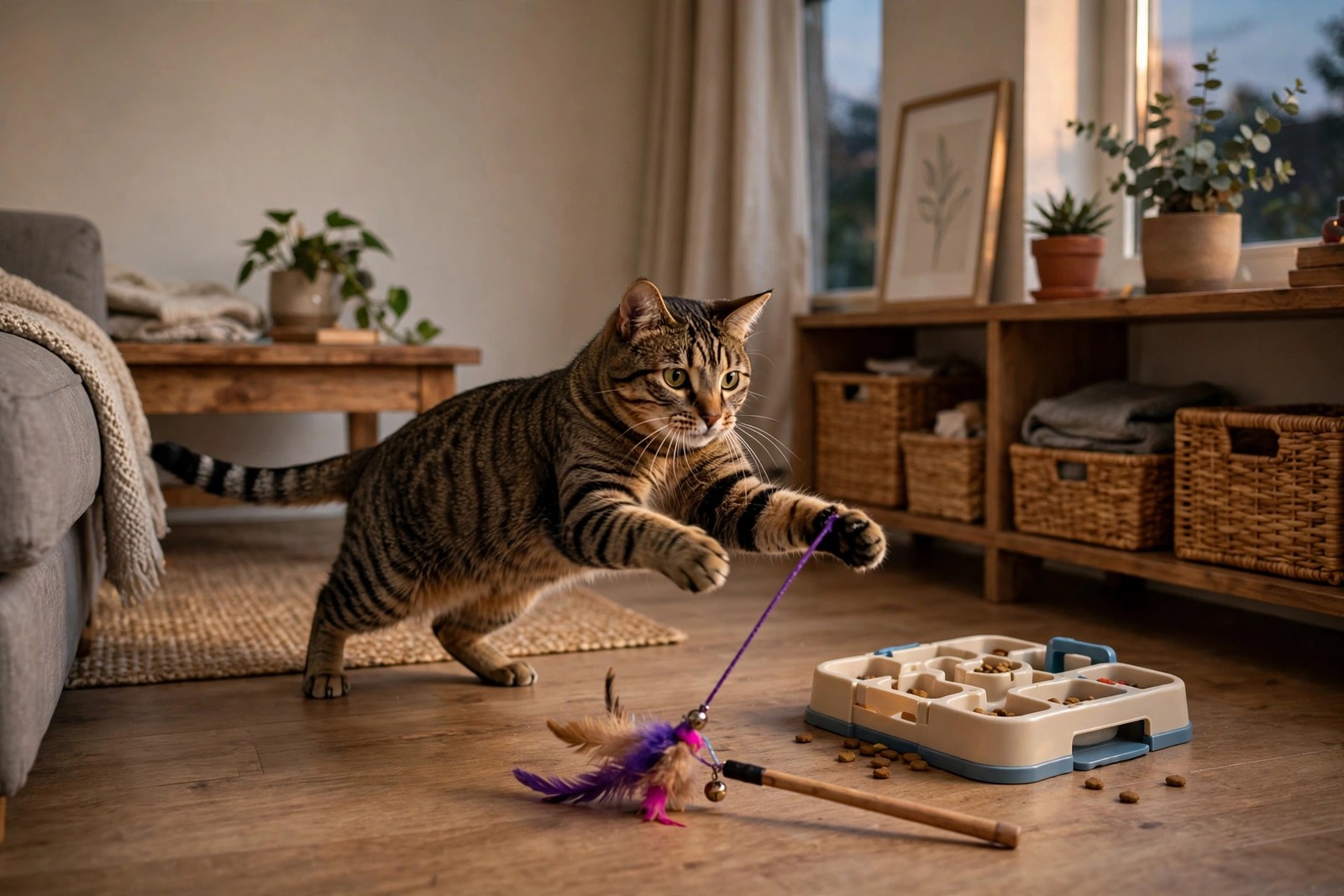
A cat that ricochets off the furniture, shreds the couch arm, and shadows every human movement for the hour before dinner is not being spiteful or even, usually, desperate with hunger. It is running on anticipation arousal. Cats are superb pattern learners, and yours has memorized the entire overture to dinner: keys in the door, shoes off, a bag set down, the first move toward the kitchen. Each cue raises the charge, the charge has no outlet, and destruction is what arousal does in a living room. The fix is structural: change what happens in the hours before dinner, and hold dinner itself exactly where it is.
Move the outlets earlier, in the right order
Begin furthest from dinner. A puzzle feeder set down earlier still, well before the usual frenzy would start, gives the cat paid work for its foraging brain at the point of the evening when it is still calm enough to enjoy it. The food delivered this way is part of the day's normal ration, offered as an activity rather than as an advance on dinner. Later, but still earlier in the evening than the old uproar, run a real play session: a wand toy worked like prey, with stalk, chase, pounce, and a catch at the end, followed by a few minutes of slower movement so the cat comes down the far side of the excitement instead of being left revving. A short quiet gap then separates play from dinner, so dinner arrives into calm rather than rewarding the peak.
Never feed early to buy quiet
The single most tempting mistake is opening the can at the first broken ornament. Feeding early works for exactly one evening: the noise stops, and the household exhales. Tomorrow the cat, having learned that uproar moves dinner, starts the performance earlier and escalates it sooner, and within two weeks the witching hour has migrated and grown teeth. Dinner stays at its time whether the hour before it was angelic or chaotic. If the cat's pestering is aimed at people, calm disengagement is the response: no snacks, no scolding attention, no negotiating.
Let a machine carry the dinner cue
An automatic feeder changes the social geometry of the evening. The cat learns to watch the feeder instead of shadowing people, because dinner now arrives from a device that keeps its own schedule whether anyone is in the kitchen or not. The arousal does not vanish, but it points at an object that never caves, never hurries, and never rewards escalation with an early serving.
Protect the house during the training weeks
Structure takes a few weeks to install, so in the meantime manage the targets. Move the breakables the cat has been knocking off, close the door to the room with the good upholstery during the danger hour, put a scratching post beside the couch arm that gets shredded, and make sure the litter box, water, and a resting spot are all reachable so the cat is not trapped in one charged room with nothing permitted in it.
One line for the whole household
The plan fails quietly when one person holds it and another slips the cat a handful of food at the first yowl. Everyone feeding, playing with, or walking past this cat needs the same times and the same refusal to feed early, written down rather than agreed in passing. Relatives you choose can receive access to its profile through KinsLe Family Sharing, even before they spend an evening in this cat's home. A visitor or pet sitter reads that written schedule and keeps the same line. KinsLe Family Sharing instead lets a grandparent you pick open its profile when that relative joins its evening.