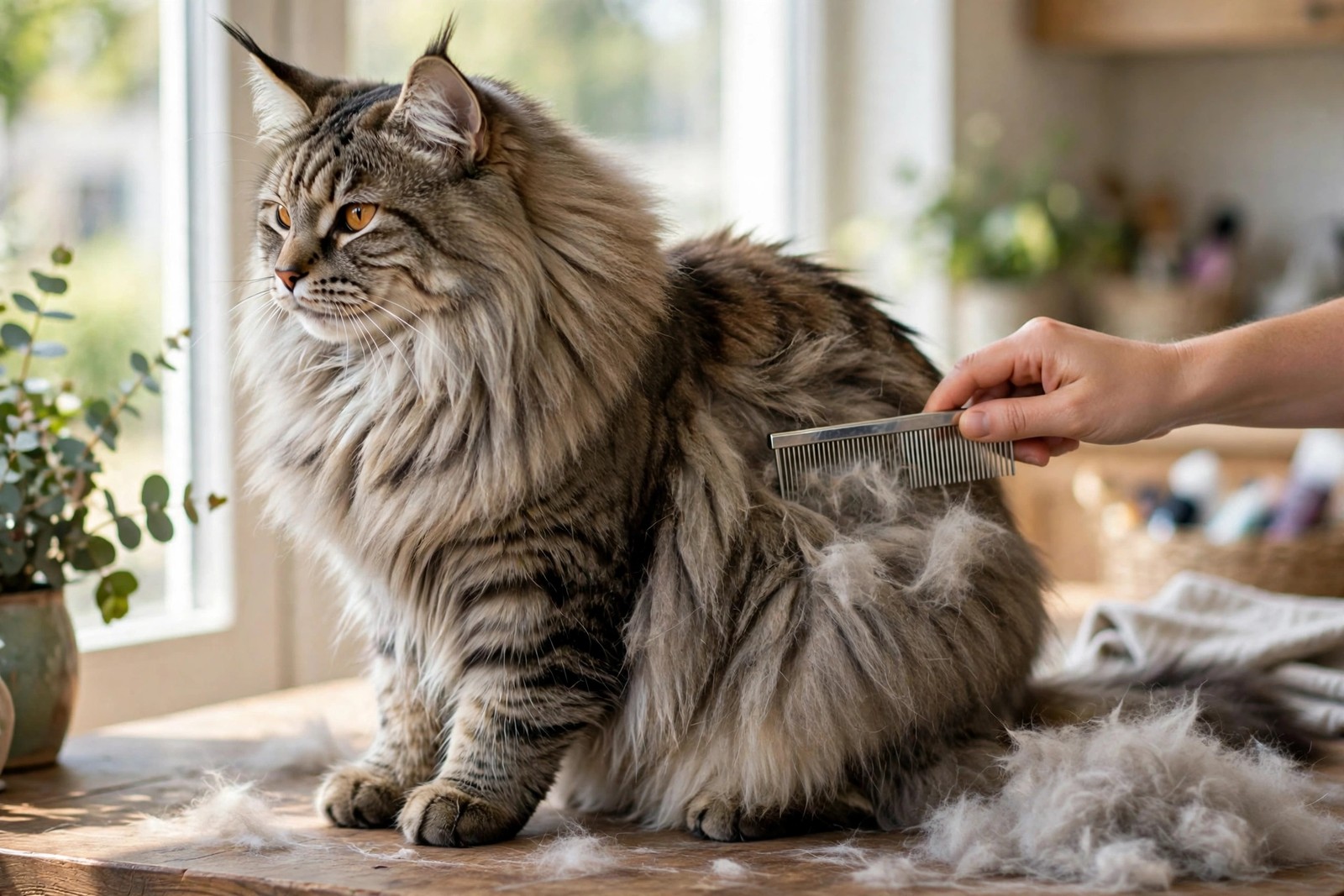
A heavy-coated cat, built in the mold of a Norwegian Forest Cat, does not shed like a shorthaired cat losing a few loose hairs. Twice a year the dense undercoat lets go in volume, and for several weeks the whole house is processing wool. The goal during that blow is simple: get the loose coat out with a comb, on your schedule, before the coat mats in the ruff and breeches or gets swallowed during grooming.
Comb to the Skin, in Lines
Surface brushing is the common failure: a brush skating over the top polishes the guard hairs while the undercoat underneath packs tighter, so the cat looks groomed and mats anyway. Work instead with a comb, parting the coat so each pass reaches through to the skin in narrow rows. Start behind the ears and move along the body in sections, lifting each one and combing from the root outward.
Little and often beats the heroic session. Five to ten calm minutes daily during the seasonal blow removes more coat, with far less protest, than one long struggle each weekend, and a cat who is combed daily in small sections rarely reaches the matted state that makes grooming painful. Outside the blow, several sessions a week usually hold the coat; when loose undercoat starts appearing on furniture and your hands come away webbed with hair after a stroke, step the rhythm back up to daily.
The Ruff and Breeches Mat First
Know where trouble starts. The thick ruff framing the neck and the long breeches on the back legs are the friction zones of this coat: the ruff rubs against collars, food bowls, and the cat's own grooming tongue, while the breeches catch against bedding, litter, and the backs of the legs with every sit and jump. Loose undercoat collects in both areas and felts quickly, so check them with your fingers at every session, feeling right down to the skin rather than trusting how the surface looks.
Work those zones first while patience is fresh, combing the breeches upward and outward in fine lines and easing the ruff out gently around the jaw and chest. Behind the ears and in the armpits deserve the same suspicion.
Mats Are Never Pulled Out
A mat is a knot anchored in living skin, and pulling or tearing one out hurts, damages skin, and teaches the cat that grooming is something to fight. Work a loose mat apart with your fingers first, splitting the felt into smaller strands, then comb from the outer ends inward a few hairs at a time, holding the base against the skin so the comb does not drag. A mat that is tight to the skin, large, or over a sore area is not a home project: clipping the mat out carefully, or handing the job to a professional groomer, is the correct call, and a veterinarian should see skin that looks red or broken underneath.
Groomed-Out Hair Is the Hairball Strategy
Every combful you remove is hair the cat does not swallow. Cats groom with a tongue built to pull loose coat inward, and during a heavy blow a thick-coated cat can take in a great deal of wool, which is where hairballs come from. Daily combing through the blow is therefore the core hairball strategy for this coat type, more effective than reacting after the coughing starts. Watch output as well as input: a cat who is straining, retching repeatedly without producing anything, or going off food during shedding season needs a veterinarian, not more combing.
Sharing the work keeps the daily rhythm alive for the whole blow, which can run for weeks. Relatives you choose can be given access to the cat's profile through KinsLe Family Sharing. A relative helping with tomorrow's combing can view the profile for this thick-coated cat first, via KinsLe Family Sharing.